

Construction Equipment Bore Repair: The Professional Guide to Reducing Downtime

Did you know that automated bore welders can slash your repair time by up to 75% compared to traditional manual welding? It's a massive efficiency gain when you're facing a tight deadline and a critical machine is sidelined. You've likely felt the frustration of watching an excavator sit idle because a pivot point has developed too much play. Professional construction equipment bore repair shouldn't require weeks of downtime or expensive component replacements.
This guide teaches you how to use the right tools to bring factory-level accuracy directly to the shop or the field. You'll discover how to utilize automated welding and precision line boring to restore worn bores to their original specs, effectively extending the service life of your heavy machinery. We'll walk through the essential equipment and techniques required to eliminate slop, reduce maintenance costs, and get your fleet back to work quickly.
Table of Contents
Understanding the Impact of Worn Bores on Construction Productivity
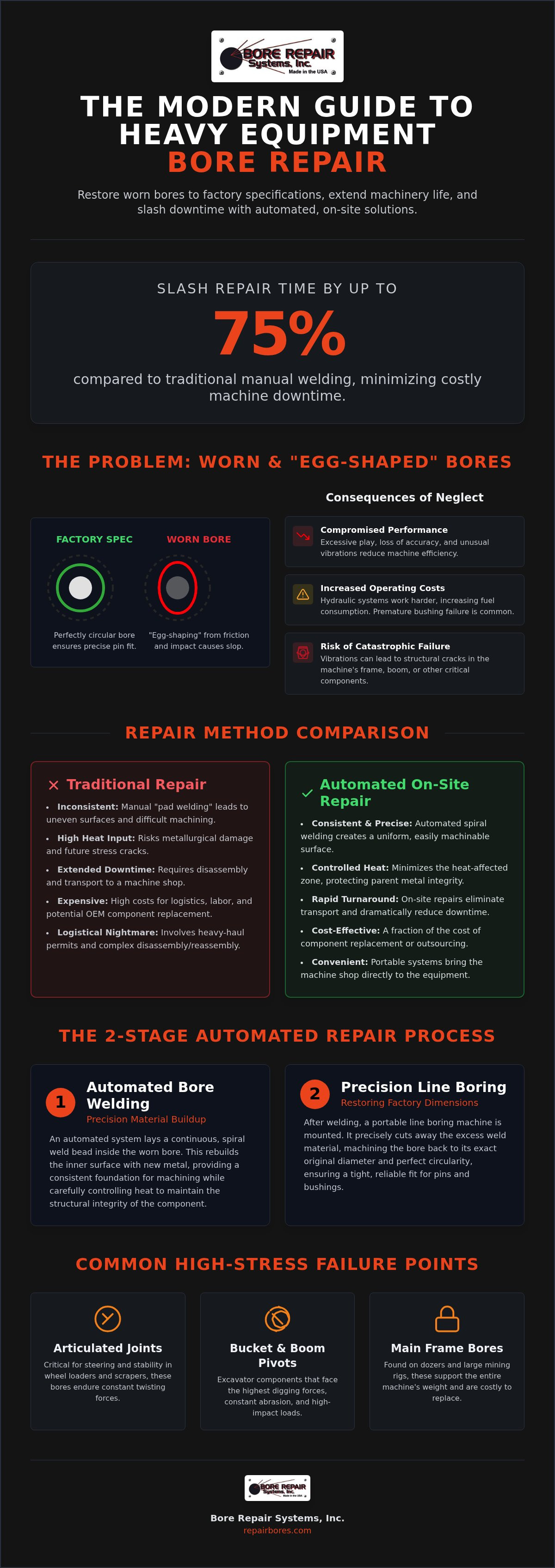
In the heavy equipment industry, construction equipment bore repair is the essential process of restoring worn pivot points to their original factory specifications. These bores act as the hinges for every movement an excavator or loader makes. When they lose their precision, the machine's productivity drops immediately. You aren't just losing accuracy; you're losing money on every cycle.
This degradation usually manifests as "egg-shaping." In machines like excavators and wheel loaders, constant friction and high-impact loads eventually crush the internal surface of the bore. Instead of a perfect circle, the hole becomes elongated. This creates a gap that allows pins to shift and hammer against the bore walls. You'll recognize the symptoms by excessive play in the linkage, unusual vibration, and bushings that fail long before their expected service life.
Neglecting these symptoms is a costly mistake. Slop in the joints forces the hydraulic system to work harder to maintain control, which increases fuel consumption. More importantly, the vibration caused by worn bores can lead to structural cracks in the machine's frame or boom. To fix these issues correctly, technicians rely on the principles of Boring (manufacturing) to ensure the final hole is concentric and sized perfectly for the pin.
Common Failure Points in Heavy Machinery
While every pivot point is susceptible to wear, certain areas are notorious for failure due to the nature of their work. High-stress zones include:
Articulated joints: Found in wheel loaders and scrapers, these bores are critical for steering and stability.
Bucket pin holes and boom pivots: These excavator components endure the highest digging forces and constant abrasion.
Main frame bores: In dozers and large mining equipment, these support the weight of the entire machine and are difficult to replace.
The Hidden Costs of Traditional Replacement
Choosing to replace a major component rather than repairing the bore is often a financial drain. OEM parts carry high price tags, but the logistics are what really kill the budget. Moving a massive assembly to a dedicated machine shop requires heavy-haul permits and significant labor for disassembly. Bore wear is a progressive failure that compounds over time. By using portable bore repair machines, you can perform the fix on-site, avoiding the logistical nightmare and restoring the component's integrity for a fraction of the cost of new iron.
The Mechanics of Automated Bore Welding and Line Boring
Professional construction equipment bore repair is a precise, two-stage mechanical restoration. You don't just patch a hole; you rebuild the foundation of the pivot point. This process starts by adding virgin metal to the worn surface and concludes with precision machining to restore the bore to its original design tolerance. This synergy ensures the repair is as durable as the original component, effectively resetting the clock on equipment wear.
The transition from buildup to machining requires a level of consistency that manual methods can't match. Using portable machine tools allows you to perform these high-precision tasks in-situ. You don't have to strip the machine to the frame or navigate the logistics of a heavy-haul transport. Instead, you bring the machine shop to the iron, maintaining tight tolerances in the field or the workshop.
Automated Bore Welding: Precision Buildup
Manual "pad welding" is often the weak link in traditional repairs. It introduces excessive heat and leaves inconsistent layers of metal that are difficult to machine. Automated systems solve this by laying a continuous, spiral weld bead. This method provides superior heat control, which is vital for maintaining the metallurgical integrity of the parent metal. When researching Field Welding Repair of Heavy Equipment, it's clear that controlling the heat-affected zone is critical to preventing future stress cracks.
By using an automated system, you create a uniform surface that minimizes tool chatter during the machining phase. If you're unfamiliar with how these systems integrate with your existing power sources, understanding what is a bore welder is the first step toward faster turnarounds. These tools eliminate the guesswork, ensuring that every pass is consistent and every bore is ready for the finish cut.
Line Boring: Restoring the Critical Dimension
Once the welding is complete, the line boring machine takes over to restore perfect circularity. A rigid boring bar is aligned through the center of the bore, often spanning multiple pivot points simultaneously. This ensures concentricity across the entire assembly. If the bores on either side of a loader arm aren't perfectly aligned, the pin will bind, leading to immediate hardware failure. Accuracy here is measured in thousandths of an inch, not fractions.
Proper setup is the most important part of the job. You must secure the mounting brackets and align the bar with precision before the first cut. To keep your equipment performing at this level, following a strict schedule for line boring machine maintenance is mandatory. If you're ready to bring this capability to your own maintenance team, you can speak with our experts about the right equipment for your fleet.
Comparing Repair Strategies: In-House vs. Outsourced Field Service
Choosing between in-house capability and outsourced field service is a pivotal decision for any fleet manager. While many shops default to calling a third party for construction equipment bore repair, this approach often creates a massive bottleneck. You're at the mercy of someone else's schedule, travel time, and labor rates. Bringing these repairs in-house isn't just about saving on the immediate bill; it's about reclaiming control over your iron.
The primary driver for this shift is the elimination of lead times. When a machine is down, every hour counts. Waiting for an outside technician to arrive can take days or even weeks during peak season. Our in-house line boring vs outsourcing guide explains how these delays compound into significant financial losses. By owning the tools, you dictate the timeline.
Financial Analysis of Equipment Ownership
The ROI on bore repair equipment is often faster than expected. For fleet owners, the break-even point usually occurs within the first few jobs. Instead of paying a premium for a specialized service, you're investing in a capital asset. This allows for tax advantages through depreciation that you won't get from a service invoice. Over the life of your fleet, the "per-hole" cost of repair drops significantly when you aren't paying for an outside contractor's overhead, profit margins, and travel expenses. This strategic approach to cost management is equally applicable to maintaining your shop's facility; for instance, Texas-based operators can consult with Crown Leveling Inc. to address foundation and slab leak issues before they become expensive structural liabilities.
Keeping repairs in-house eliminates the logistical nightmare of transporting large assemblies to external machine shops. You can perform repairs right in your own bay, often during scheduled downtime for other maintenance tasks. This strategy aligns with Heavy Equipment Maintenance Best Practices, which emphasize the importance of proactive care to prevent catastrophic failures. When you have the equipment on hand, you don't ignore minor wear because it's too expensive to fix; you address it before it becomes a structural issue.
When your own mechanics perform the work, you maintain total quality control. You know exactly what materials were used and that the tolerances were met. Modern automated systems have lowered the barrier to entry, making it feasible for any competent heavy equipment mechanic to learn these skills. You don't need a master machinist; you need the right tools and a commitment to precision. Keeping this expertise within your company builds a more resilient maintenance team that's ready for any mechanical challenge.
Best Practices for Executing Precise In-Field Bore Repairs
Success in the field isn't about luck; it's about following a repeatable, disciplined process. When you're performing a construction equipment bore repair, you're often working in less-than-ideal conditions. Whether you're in a muddy yard or a remote site, the environment shouldn't dictate the quality of your work. By sticking to these best practices, you ensure that every repair meets factory standards and eliminates the "slop" that plagues worn machinery.
Step 1: Assessment and Preparation
Before you strike an arc, you must understand the extent of the damage. Don't just eyeball the wear; use a dial indicator to map out the "egg-shaping" and check the surrounding area for stress cracks. If the parent metal is structurally compromised, the repair won't hold. Once the bore is cleared for repair, clean it until the metal is bright. Any trace of grease, paint, or rust will cause porosity in your weld bead, leading to a weak foundation. The centering process is the most critical step for ensuring the final bore is perfectly aligned with the machine's pivot axis.
Step 2: The Welding and Machining Cycle
Set your weld parameters based on the specific diameter of the hole. You need to build up enough material to allow for a clean machining pass without leaving "low spots" that require a second welding session. Generally, you should aim for a buildup of 1/8 to 1/4 inch of new metal. This thickness ensures the boring bar has enough material to work with during the rough cut. After welding, let the metal cool naturally to avoid creating brittle spots in the heat-affected zone. Execute a rough cut to remove the scale and high points, then follow with a finish boring pass to reach your final tolerance.
Overcoming Common Field Challenges
Field repairs often involve more than just a worn hole. You'll frequently encounter misaligned bores on twisted frames or boom arms where the two sides no longer share a common axis. In these cases, you need to use specialized misaligned bore repair techniques to re-establish a common centerline across the entire assembly. Managing equipment in extreme weather also requires care; in sub-zero temperatures, preheating the bore is necessary to ensure proper weld penetration and prevent rapid cooling cracks.
Having the right bore welding accessories on hand, such as various torch lengths and rigid mounting brackets, allows you to adapt to these variables without stopping the job. If you're unsure which system fits your specific fleet needs, contact our technical support team for a detailed equipment consultation.
Implementing a Professional Bore Repair System in Your Maintenance Workflow
Integrating construction equipment bore repair into your standard preventive maintenance program is the final step toward maximizing fleet uptime. When you stop treating bore wear as an emergency and start treating it as a scheduled service item, you eliminate the chaos of unplanned breakdowns. A professional system allows you to catch wear at the 1/16th inch mark rather than waiting for a catastrophic failure that requires days of structural welding. This proactive approach keeps your machines tight, accurate, and safe for the operators.
Success depends heavily on the company you choose to stand behind your equipment. Selecting a bore welding machine manufacturer that provides direct technical support is non-negotiable. You need a partner that understands the realities of a heavy-duty shop, not just a vendor shipping boxes from a catalog. Reliable support ensures that when you encounter a unique mechanical hurdle, you have an expert to call for a solution.
Training Your Team for Success
The most advanced machine in the world is only as good as the person running it. Transitioning your manual welders to automated system operators is straightforward because they already understand the behavior of molten metal. However, they must learn the nuances of precision alignment and digital control interfaces. Comprehensive line boring operator training bridges this gap, turning a standard mechanic into a precision machinist.
Safety is a major component of this education. Operators must understand the torque forces involved in portable machining and how to secure equipment properly in the field. For ongoing education and troubleshooting, utilizing bore welder and portable boring videos provides a visual reference that helps technicians master complex setups. This library of knowledge ensures that even if a technician hasn't performed a specific repair in months, they can refresh their skills quickly and get the job done right.
Scaling Your Repair Capabilities
As your fleet grows, your repair capabilities should scale with it. Choosing the right system size is critical; a setup designed for compact excavators won't have the rigidity needed for a large mining dozer. Start with a versatile base system and add line boring machine accessories like specialized facing heads or extra-long boring bars as your requirements expand.
If your workload allows, creating a dedicated bore repair station in your shop can further reduce downtime. Having a clean, organized area with dedicated power and mounting fixtures cuts setup time by 30% or more. This organization allows your team to move a component into the bay and start the welding cycle immediately. To find the right combination of tools for your specific machines, you can view bore repair products and compare system configurations that match your fleet's needs.
Take Control of Your Fleet Maintenance
Professional construction equipment bore repair is no longer a service you have to wait weeks for. By bringing automated bore welding and precision line boring in-house, you eliminate the logistical bottlenecks that keep your machines idle. You've seen how patented technology and proper training can restore equipment to factory specs right in your own shop. This shift doesn't just reduce immediate repair costs; it extends the service life of your entire fleet by catching wear before it leads to structural failure.
Bore Repair Systems provides the tools and the expertise to ensure your team succeeds from day one. Every machine features Made in the USA precision manufacturing and is backed by the expert training and technical support you need to tackle the toughest field repairs. Don't let worn bores dictate your project schedule or drain your maintenance budget. It's time to invest in a solution that prioritizes your uptime and mechanical integrity.
Browse our Professional Bore Repair Systems and Accessories to find the right configuration for your operations. Your equipment is ready to get back to work.
Frequently Asked Questions
How much time does it take to repair a standard excavator pin hole?
Repair time varies based on the hole size and wear depth. A standard repair typically takes between four to eight hours. This includes the setup, automated welding cycle, and final machining. Automated bore welders can reduce this window by up to 75% compared to manual methods. Having the right equipment on hand allows your team to complete the job in a single shift, getting the machine back to work without overnight delays.
Can I repair a bore without completely disassembling the machine?
Yes, portable machine tools are designed specifically for in-situ repairs. You don't have to strip an excavator down to the frame to fix a boom pivot. By mounting the line boring bar and bore welder directly to the component, you save dozens of hours in labor and transport. This capability is the primary reason fleet owners invest in construction equipment bore repair systems, as it keeps the work focused on the worn area only.
What is the difference between a bore welder and a standard MIG welder?
A bore welder uses a specialized torch and a motorized drive system to lay a continuous, spiral weld bead inside a hole. While a standard MIG welder requires a steady hand and multiple stops, the automated system maintains a consistent standoff distance and travel speed. This precision prevents excessive heat buildup and ensures a uniform surface. It creates a much better foundation for the subsequent machining process than any manual "pad welding" technique could provide.
Is it better to replace a worn component or repair the bore?
Is it better to replace a worn component or repair the bore?
Repairing the bore is almost always the more cost-effective choice for heavy machinery. Replacing a major structural component like a loader arm or an excavator boom is expensive and involves complex logistics. A professional repair restores the bore to factory dimensions and original metallurgical integrity for a fraction of the cost. It also avoids the long lead times often associated with ordering new OEM parts, though if a replacement is required, Storm Parts Australia provides a reliable source for high-quality components to help minimize your downtime.
Operating these machines requires a solid understanding of mechanical alignment and machining principles. While a skilled mechanic can learn the basics quickly, professional training is highly recommended to ensure accuracy. Specialized programs cover setup techniques, tool geometry, and safety protocols. Learning from experts helps your team avoid common mistakes like misalignment or incorrect feed rates. This education ensures your construction equipment bore repair jobs are completed to high standards every time you use the equipment.
Can automated bore welding fix egg-shaped or severely oval holes?
Automated systems are the ideal solution for restoring "egg-shaped" holes common in construction. The process involves filling the elongated areas with a consistent layer of new metal until the bore is undersized. Once the welding cycle is finished, the line boring machine cuts through the new material to create a perfectly round, concentric hole. This two-stage approach effectively erases the wear pattern and resets the pivot point to its original factory specifications.
How do I ensure the new bore is perfectly aligned with the original axis?
Alignment is achieved through a precise setup process using centering cones or a dial indicator. The boring bar must be positioned through the center of the worn bores before the mounting brackets are tacked into place. If you're repairing multiple holes on a single axis, the bar spans the entire distance to ensure they stay concentric. This mechanical link prevents the pin from binding and ensures the linkage moves smoothly through its full range of motion.
What are the safety requirements for using portable boring equipment in the field?
Safety begins with proper equipment stabilization and following OSHA 1926.600 guidelines for blocking or cribbing heavy machinery. Operators must wear standard personal protective equipment, including eye protection and welding gear. Because these machines involve high torque and rotating parts, keeping the work area clear of debris and ensuring all guards are in place is mandatory. Following ANSI Z49.1 standards for welding safety helps prevent fire hazards and respiratory issues when working in confined or remote environments.


Comments