

Line Boring Machine Maintenance: A Guide to Precision and Longevity
- slinger6
- Aug 10
- 12 min read

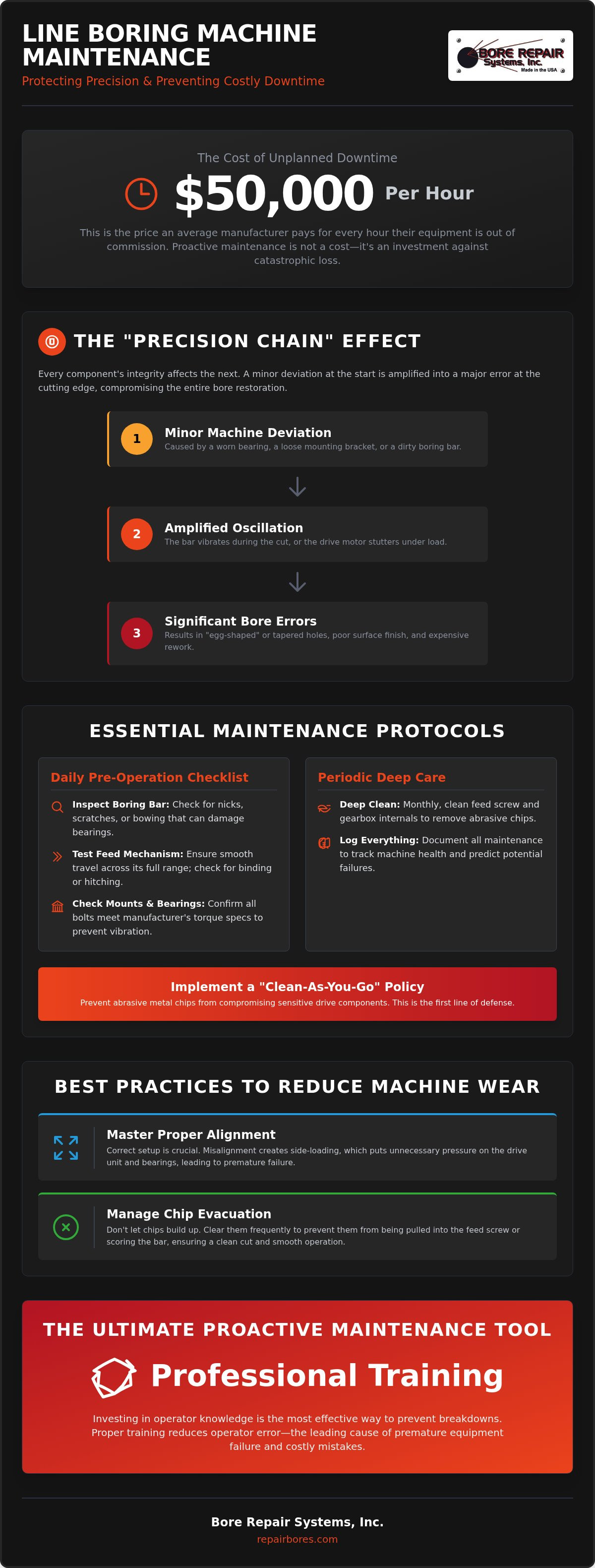
Unplanned downtime costs the average manufacturer $50,000 every single hour. In the world of field repairs, that is a price no professional can afford to pay. You rely on your equipment to deliver shop-level precision in harsh environments. When a boring bar vibrates or a bearing seizes, the resulting rework and component wear eat your margins. Proper line boring machine maintenance is not a luxury; it's the foundation of every successful job. You need your gear to work as hard as you do, without the threat of unexpected failure.
This guide outlines the specific protocols required to maintain tight tolerances and extend the life of your equipment. We will walk through a clear maintenance checklist and professional techniques to keep your bores consistent and your machine in the field where it belongs. By following these steps, you ensure your equipment remains a reliable partner for every heavy-duty repair. This allows you to focus on the work instead of fixing your own tools, ensuring every restoration meets the highest standards of mechanical integrity.
Table of Contents
Why Maintenance is Critical for Line Boring Machine Precision
Effective line boring machine maintenance is more than just a quick wipe-down after a job. It's the proactive care of the boring bar, the drive unit, and the mounting systems that hold everything together. In the field, your equipment faces grit, extreme temperatures, and high-torque demands. If you don't maintain the mechanical integrity of these components, the machine can't deliver the accuracy required for professional bore restoration. Think of maintenance as a way to protect the "Precision Chain."
The Precision Chain describes how every component relies on the next. A tiny deviation in the drive unit or a slight wobble in a bearing housing leads to massive errors at the cutting edge. Because Boring (manufacturing) is a process of enlarging a hole that has already been drilled or cast, any lack of concentricity is amplified. Neglecting your gear leads to expensive rework, destroyed tool bits, and permanent damage to costly boring bars. Taking a "Straight-Talking" approach to care means following simple, repeatable steps that prevent these thousand-dollar disasters.
The Impact of Neglect on Bore Accuracy
Vibrations are the primary symptom of a poorly maintained machine. When mounting brackets are loose or bearings are worn, the bar oscillates during the cut. This movement creates "egg-shaped" or tapered holes that won't accept a standard pin or bushing. The health of your drive unit also dictates the surface finish. A stuttering motor or a slipping feed mechanism leaves ridges in the bore, requiring extra passes and wasting time. A dirty boring bar is often the biggest culprit. Grit trapped between the bar and the bearing prevents the assembly from spinning true, which ruins concentricity immediately.
Economic Benefits of a Proactive Strategy
A disciplined maintenance strategy pays for itself by eliminating unscheduled downtime. Catching a worn seal or a loose gear before it causes a mid-job breakdown saves you from the $50,000-per-hour cost associated with stopped production. Beyond immediate repairs, consistent line boring machine maintenance preserves the resale value of your equipment. A well-cared-for machine remains an asset rather than a liability. It also ensures operator safety. Maintaining mechanical integrity under high torque prevents the machine from binding or kicking back, keeping the technician out of harm's way while ensuring the job is done right the first time.
Essential Daily and Periodic Maintenance Protocols
Reliable performance in the field starts with a "before, during, and after" mindset. You don't just set up the machine and walk away. Effective line boring machine maintenance requires a disciplined routine that treats the equipment as a precision instrument rather than just another heavy tool. Adhering to general OSHA Boring Machine Requirements regarding guards and safety chucks isn't just about compliance; it's about protecting the operator and the equipment from avoidable damage during high-torque operations.
Cleanliness is your first line of defense. Metal chips are abrasive and will quickly destroy seals or score a precision-ground boring bar if they enter the drive unit. Practice a clean-as-you-go policy. Wipe down the bar frequently and clear chips from the feed screw before they can be pulled into the internal nut. Using the right bore repair accessories, such as high-grade lubricants and specialized wipers, keeps your machine running at peak efficiency without premature wear.
Documentation is just as critical as the physical work. If you don't record when a gearbox was greased or when the motor brushes were last checked, you can't predict when the next failure will occur. A simple logbook helps you track the machine's health and ensures that every technician on the crew knows the status of the gear before they start a job.
Daily Pre-Operation Checklist
Start every shift by inspecting the boring bar for nicks, scratches, or any signs of bowing. Even a small burr can damage a spherical bearing as the bar passes through it. Check every mounting bolt and spherical bearing to ensure they meet the manufacturer's torque specifications. Loose mounts lead to vibration, which ruins the finish and puts unnecessary stress on the drive motor. Finally, test the feed mechanism for smooth travel across its entire range. If you feel any binding or hitching, stop and find the obstruction before you start cutting metal.
Monthly and Quarterly Deep Care
Every month, perform a deep clean of the feed screw and gearbox internals. Use only manufacturer-recommended lubricants; generic greases often lack the extreme-pressure additives required for high-torque gearboxes. Quarterly, inspect the electrical connections and motor brushes in your drive units. Worn brushes cause erratic RPMs, which directly impacts the quality of your bore. If your machine uses digital readouts or RPM controllers, verify their calibration against a manual tachometer to ensure the data you're seeing on the screen matches the reality at the cutting bit.
Component-Specific Care: Bars, Bearings, and Drive Units
Component-specific care is where the rubber meets the road. If you treat your boring bar like a piece of scrap metal, don't expect it to hold a thousandth of an inch on your next job. Effective line boring machine maintenance requires looking at each part of the system as a specialized asset. The boring bar is your primary reference point, while the bearings and drive unit provide the stability and power needed to move metal. If any single part of this triad fails, the entire operation stops.
Drive units are the workhorses of the system, but they aren't invincible. They require thermal management and clean power to maintain consistent torque. Overheating a motor or running it on a fluctuating power supply leads to "hunting" for RPMs, which ruins your surface finish. To keep these units safe and functional, always adhere to OSHA Machine Guarding Standards. Proper guarding doesn't just protect the operator; it prevents debris from being flung into the motor housing or gear train, extending the life of the internal components.
Boring Bar Preservation Techniques
Your boring bar is a precision gauge. Treat it accordingly. Metal dust is incredibly abrasive; if you don't remove it properly, you'll score the surface of the bar. Use a clean, lint-free cloth and a light solvent to wipe the bar down after every pass. Never use coarse abrasive pads that can alter the bar's diameter or finish over time. Proper storage is also vital for maintaining straightness.
Storage: Always store bars horizontally on multiple support points or vertically in a dedicated rack. Leaning a bar against a wall for long periods causes it to bow under its own weight, which ruins concentricity.
Burr Detection: Regularly run a stone over the bar to feel for raised burrs or nicks. A single burr can seize inside a spherical bearing, galling the bar and destroying the bearing in seconds.
Bearing and Feed System Lubrication
Bearings are the primary wear point in any line boring setup. Because they operate under high pressure and relatively low speeds, standard greases often fail. High-pressure industrial lubricants are non-negotiable for these components. You can spot bearing fatigue before it ruins a cut by listening for "chatter" or high-pitched squealing. If a bearing housing feels excessively hot to the touch during operation, it's either under-lubricated or already failing.
The feed screw is equally sensitive. A dirty feed screw causes uneven travel, which changes your chip load mid-cut. This leads to tool chatter and premature bit wear. Keep the threads clean and lightly oiled so the feed nut moves without resistance. This ensures a consistent, professional finish on every bore and reduces the strain on your drive unit's feed motor.
Operational Best Practices to Reduce Machine Wear
The way you operate your equipment in the field dictates the frequency of your line boring machine maintenance schedule. Misalignment and poor chip management are the two fastest ways to wear out a drive unit. If you don't align the machine properly the first time, you force the bearings to fight the bar. This side-loading generates heat and friction that standard lubrication simply can't overcome. A few extra minutes spent on precision setup prevents hours of mechanical troubleshooting later.
Effective chip removal is also vital for the health of your gear. If chips accumulate in the bore, the tool bit begins re-cutting them. This creates unnecessary tool pressure and vibration that travels back through the bar and into the gearbox. Always stay within the mechanical limits of your machine. Exceeding the maximum recommended cut depth doesn't just dull your bits; it strains the feed motor and can lead to permanent structural fatigue in the mounting brackets and drive internals.
Managing the Machining Environment
Working in the field exposes your gear to elements that a shop environment doesn't. When using bore welding accessories, ensure you are shielding the boring bar from weld splatter. Splatter creates hardened bumps on the bar that will destroy your spherical bearings during the next pass. In windy or high-traffic areas, set up chip shields to prevent abrasive dust from settling on oiled surfaces. Temperature also plays a role. In extreme cold, gear oil viscosity increases, which can cause the drive motor to pull excessive current. Allow the machine to warm up at a low RPM before starting a heavy cut.
Safe Setup and Breakdown Procedures
The way you assemble and disassemble the machine affects its long-term precision. Follow a specific sequence when tightening mounting brackets to prevent frame stress. Tightening one side completely before the other can tweak the alignment, leading to an inaccurate bore. When the job is finished, remove the boring bar with care. Dinging the finished bore or the bar itself during removal is a common mistake that leads to rework.
Perform a final wipe-down and oiling before the machine goes back in its case. This simple step prevents rust from forming during transport or storage in high-humidity environments. If you want to ensure your crew follows these best practices every time, consider our professional line boring and bore welding training services to standardize your field operations and maximize equipment life.
Maximizing ROI Through Professional Training
Operator error causes more premature equipment failure than any environmental factor. Even the most robust hardware can't survive a technician who ignores the signs of mechanical distress. Professional training is the ultimate preventative line boring machine maintenance tool because it addresses the human element of mechanical wear. When an operator understands the physical limits of the gear, they stop pushing it to the point of failure, preserving the accuracy of the boring bar and the longevity of the drive unit.
Why Trained Operators Save Equipment
Machining is a sensory job that requires more than just following a manual. A trained operator recognizes the difference between the healthy hum of a drive motor and the strained whine of a unit struggling with excessive tool pressure. This ability to "feel" the machine allows for adjustments mid-cut that prevent motor burnout and bearing fatigue. Training also focuses on the "light touch" required for precision alignment. Forcing a bar through misaligned spherical bearings creates side-loading that standard lubrication can't fix. Understanding the math behind feed rates and speeds ensures the machine stays within its designed torque curve, preventing the heat buildup that destroys internal gears.
Investing in Long-Term Reliability
Standardizing maintenance protocols across a fleet ensures every machine is treated with the same level of care, regardless of who is behind the controls. Without formal instruction, technicians often develop bad habits that might finish the immediate job but cause long-term damage to the boring bar's surface. Professional training reduces the risk of catastrophic damage, such as crashing a tool bit or stripping a feed screw. These errors don't just cost money in parts; they cause unscheduled downtime that stalls your entire operation.
Investing in your crew is an investment in your hardware. A well-trained team maintains the precision taught in their courses and ensures your equipment remains a reliable asset for years. To protect your equipment and improve your field results, register for our professional line boring training courses and turn your operators into seasoned precision experts.
Protect Your Precision and Your Bottom Line
Protecting the "Precision Chain" requires a disciplined approach to every field job. By integrating the daily checklists and component-specific care discussed in this guide, you ensure your hardware delivers consistent accuracy. Effective line boring machine maintenance turns your equipment into a predictable asset rather than a source of unscheduled downtime. This professional rigor protects your reputation and your margins, ensuring that every bore restoration meets strict mechanical tolerances without the need for expensive rework.
Bore Repair Systems, Inc. is here to support your success with durable, field-tested American manufacturing and expert technical support for every machine we sell. Beyond providing high-performance hardware, we offer comprehensive operator training programs to ensure your crew has the skills to maintain precision in the field. Shop professional line boring machines and accessories at Bore Repair Systems, Inc. to secure the tools you need for heavy-duty restoration. With a commitment to proper care and professional training, your equipment will remain a reliable partner for years to come.
Frequently Asked Questions
How often should I lubricate my line boring machine's drive unit?
Lubricate external grease points daily and check gearbox oil levels every 50 hours of operation. High-torque environments or extreme temperatures may require more frequent attention. Always use manufacturer-recommended lubricants to ensure the internal gears don't seize under heavy loads. Consistent lubrication prevents heat buildup and protects the drive unit from premature wear during long field repairs. This habit ensures your machine remains ready for the next heavy-duty task without failure.
What is the best way to clean a boring bar after a heavy repair job?
Use a clean, lint-free cloth and a light solvent to wipe the bar down immediately after every pass. Never use coarse abrasive pads or steel wool, as these can alter the bar's precision-ground diameter. Removing metal dust and grit prevents these particles from entering the spherical bearings. A clean bar is essential for maintaining concentricity and preventing galling during the next machining cycle. Always treat the bar like a precision gauge to ensure longevity.
My machine is making a chattering sound; is it a maintenance issue or a tool bit problem?
Chatter is often a symptom of poor machine rigidity or loose mounting brackets rather than just a dull bit. Start by checking the torque on all mounting bolts and spherical bearings to ensure the setup is solid. If the machine is secure, then inspect the tool bit for wear or an incorrect cutting angle. Proper line boring machine maintenance involves verifying that the entire precision chain is tight before blaming the tooling. This systematic check saves time.
Can I use standard motor oil to lubricate the feed screw and bearings?
Don't use standard motor oil for feed screws and bearings because it lacks the extreme-pressure additives required to withstand high-torque loads. Motor oil is designed for internal combustion engines, not the slow, heavy pressure of line boring. Instead, use high-pressure industrial lubricants or specialized gear oils recommended by the manufacturer. These products are designed to stay on the surface under heavy pressure, reducing friction and preventing the metal-on-metal contact that leads to catastrophic component failure.
How do I check if my boring bar has become bent or warped?
Check for a bent bar by placing it on a precision-level surface and using dial indicators while rotating the bar slowly. You can also use a machinist's straightedge to look for gaps along the length of the bar. Even a few thousandths of an inch of run-out will cause vibration and inaccurate, egg-shaped bores. Regular checks are vital if a bar was stored incorrectly or dropped. Catching a warp early prevents you from ruining a finished bore and wasting material.
What are the essential spare parts I should keep on-site for emergency maintenance?
Keep a set of spherical bearings, motor brushes, and a variety of tool bits on-site for emergency repairs. These are the components most likely to wear out or sustain damage during heavy-duty field work. Having these parts ready prevents a minor maintenance issue from turning into a multi-day project delay. Also, consider carrying extra mounting bolts and a spare feed nut to ensure the job stays on schedule. Preparation is the key to minimizing downtime in remote locations.
How does temperature affect the performance and maintenance of portable boring units?
Extreme cold increases gear oil viscosity, which can cause drive motors to pull excessive current and potentially trip breakers. In high-heat environments, lubricants can thin out, leading to insufficient protection for bearings. Metal components also expand and contract with temperature shifts, which can affect your alignment. Always allow the machine a warm-up period in cold weather and monitor bearing temperatures closely when working in the heat. Environmental awareness is a critical part of maintaining machine health.
Should I disassemble the drive unit for cleaning after every field job?
Don't disassemble the drive unit after every job unless you suspect internal contamination or mechanical failure. A thorough external wipe-down and inspection are usually sufficient for daily line boring machine maintenance. Reserve full disassembly for quarterly deep-care intervals or when the motor brushes need replacement. Repeatedly opening the housing in the field increases the risk of introducing grit and dust into the precision gear train. Keep the internal components sealed to protect the precision-ground gears.


Comments