

Catastrophic Failure from Worn Linkage: Causes, Warning Signs, and Solutions

Updated: 11 minutes ago
A linkage can keep moving after its joints have started damaging the parts around them. That’s how catastrophic failure from worn linkage develops: excess clearance shifts loads, affects alignment, and puts connected components at risk. By the time movement becomes obvious, a pin, bore, or surrounding structure may need more than a simple adjustment.
If you’re seeing looseness, unusual noise, uneven movement, or visible wear, it’s reasonable to ask whether the machine can keep working. Continuing to operate without assessing the damage can turn a repairable wear issue into a larger rebuild. Symptoms alone don’t show how far the damage has spread or confirm its cause.
This article explains how linkage wear progresses, which signs to inspect, and what to document before choosing a repair path. You’ll learn how to assess pins, bushings, bores, and alignment, then compare options based on confirmed damage, required precision, and in-house capability. When wear reaches a bore, bore welding and line boring equipment can support an in-house repair workflow, while operator training helps build the skills for accurate work.
Table of Contents
How Worn Linkage Can Set Up Catastrophic Heavy-Equipment Failure
Linkage wear is usually progressive. Material wears away from connected parts, or clearance grows between them, so a joint no longer moves within its intended fit. That differs from sudden breakage, such as a pin snapping. Wear can develop over time and remain difficult to see until movement changes, an inspection finds it, or a related failure draws attention to the joint.
A worn joint doesn’t automatically lead to catastrophic failure. The risk depends on the machine’s design, the location and extent of wear, applied loads, and operating conditions. As clearance increases, a pin may shift or move unevenly. That can change alignment and how force passes through the joint into connected parts. Catastrophic Failure Defined describes a sudden, complete failure with serious consequences. In a linkage system, progressive wear may be one factor contributing to such an escalation.
Unchecked joint clearance can alter alignment and concentrate contact, potentially accelerating wear or damaging connected components.
Which linkage components are exposed to wear?
Many heavy-equipment linkages use pin-and-bushing joints, though designs differ by machine and function. The pin connects moving parts, while a bushing may provide a replaceable bearing surface between the pin and the surrounding structure. The bore holds the pin-and-bushing assembly in position and helps maintain alignment as the joint moves.
Consider an excavator linkage connecting a bucket, link, and boom or stick. Wear at one pin joint may create extra movement at that connection. If the bore or surrounding material is also worn, replacing the pin alone may not restore the intended fit. Similar principles of joint wear and articulation also affect heavy-duty field support vehicles, where resources from precision-offroad-4x4.myshopify.com explain how specialized suspension engineering protects rigs on demanding Australian terrain. Other machines use different layouts, so identify the specific joint and consult its service information before drawing conclusions.
Why does early wear matter?
Clearance changes how a joint moves. Instead of rotating smoothly within its intended fit, parts may shift before making contact. That can change where surfaces bear against each other and how loads travel through the linkage. Under some conditions, uneven contact may contribute to additional wear in the pin, bushing, bore, or connected structure.
That progression isn’t guaranteed. Loads, attachment use, operating conditions, and the condition of neighboring parts all matter. A clunk, visible movement, or uneven motion is a reason to inspect, not proof that linkage wear caused the symptom or any secondary damage. Record what you observe and compare measurements with the applicable equipment specifications. Don’t rely on a universal wear threshold: limits and inspection methods are machine-specific, and the manufacturer’s service information should guide the assessment.
How Linkage Wear Can Progress from Clearance to Secondary Damage
Clearance is a condition to investigate, not a diagnosis. In a pin-and-bushing joint, dimensional wear may allow more movement than intended. That extra movement can change where parts meet and how the joint carries load. If the machine continues working, wear could progress, but the outcome depends on the joint design, duty cycle, lubrication requirements, and maintenance history.
Clearance and alignment matter because a loaded joint needs its components to meet and move as designed. Excess movement can shift contact and load to unintended areas.
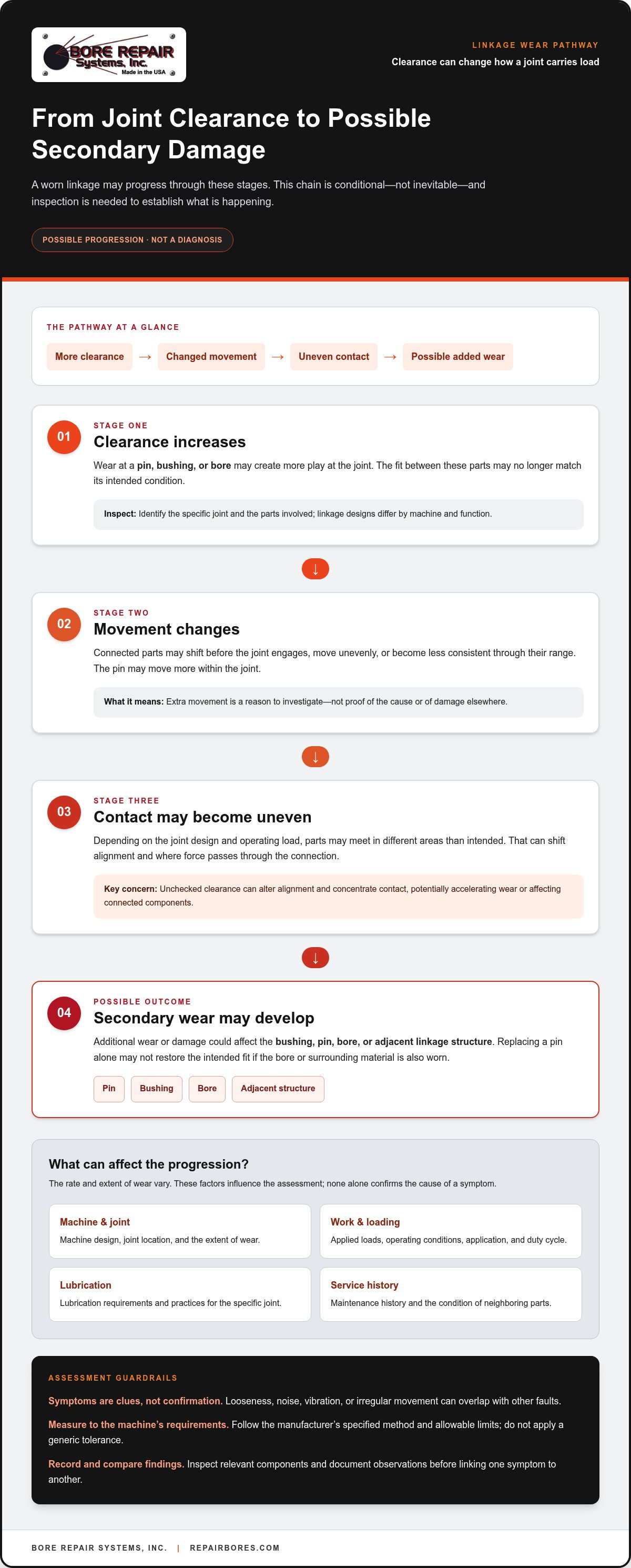
A possible progression looks like this:
Clearance increases. Wear at a pin, bushing, or bore may create more play at the joint.
Movement changes. The connected parts may shift before the joint engages or move less consistently through their range.
Contact becomes uneven. Depending on the design and operating load, contact may concentrate on areas that weren’t intended to carry it.
Secondary wear may develop. The bushing, pin, bore, or adjacent linkage structure could sustain additional wear or damage.
This chain is conditional, not inevitable. The rate and extent of wear can vary with the machine’s application, loading, lubrication practices, and service history. Broader factors such as maintenance and operating practices also contribute to heavy-equipment failure, as discussed in Causes of Heavy Equipment Failure in Heavy Equipment. That context doesn’t prove linkage wear caused a specific machine problem. Inspection must establish what’s happening at the joint.
What changes as a pin-and-bushing joint wears?
As material wears away, the fit between the pin, bushing, and bore may change. The pin could move more within the joint, and the connection may no longer maintain its intended alignment through movement. The amount and direction of that change depend on the joint’s construction. Use the equipment manufacturer’s specified measurement method and allowable limits. Don’t apply a generic tolerance to a different machine or linkage.
How can wear affect connected components?
Where the design supports a direct load path, uneven contact may place added stress on a mating link or the structure around a bore. Those parts could wear or deform, but symptoms such as noise, vibration, or irregular movement don’t confirm linkage wear as the cause. Hydraulic, structural, or drivetrain issues can produce overlapping signs and may be separate faults. Inspect the relevant components and record findings before connecting one symptom to another.
For teams considering an in-house response to confirmed bore damage, matching equipment and operator capability to the repair task is part of the decision. Discuss bore-repair equipment and training needs as you assess that path.
Comparing Linkage Repair Paths When Wear Is Confirmed
Once inspection confirms wear, choose a repair path based on the measured condition, component design, and applicable service specifications. A symptom alone doesn’t tell you whether a pin, bushing, bore, or complete assembly needs attention. Compare the scope of damage with the precision required and the equipment and skills available to carry out the work.
Alignment is central to that decision. A replacement part won’t correct a damaged or misaligned bore by itself. For a closer look at why alignment matters, see these misaligned bore repair techniques.
When might replacing a component be considered?
Component replacement may be appropriate when inspection shows damage limited to a replaceable part and the machine’s specifications support that approach. Evaluate the replacement part’s fit, the condition of mating components, assembly requirements, and availability. For maintenance operations also managing transport and utility vehicle drivelines alongside heavy machinery, specialist suppliers such as Ozi Auto Parts provide critical mechanical components when worn assemblies must be renewed. Replacing a pin or bushing won’t necessarily address wear in its bore. Don’t assume replacement is always faster, cheaper, or more reliable. Let the inspection findings and requirements guide the choice.
When might bore restoration be part of the repair?
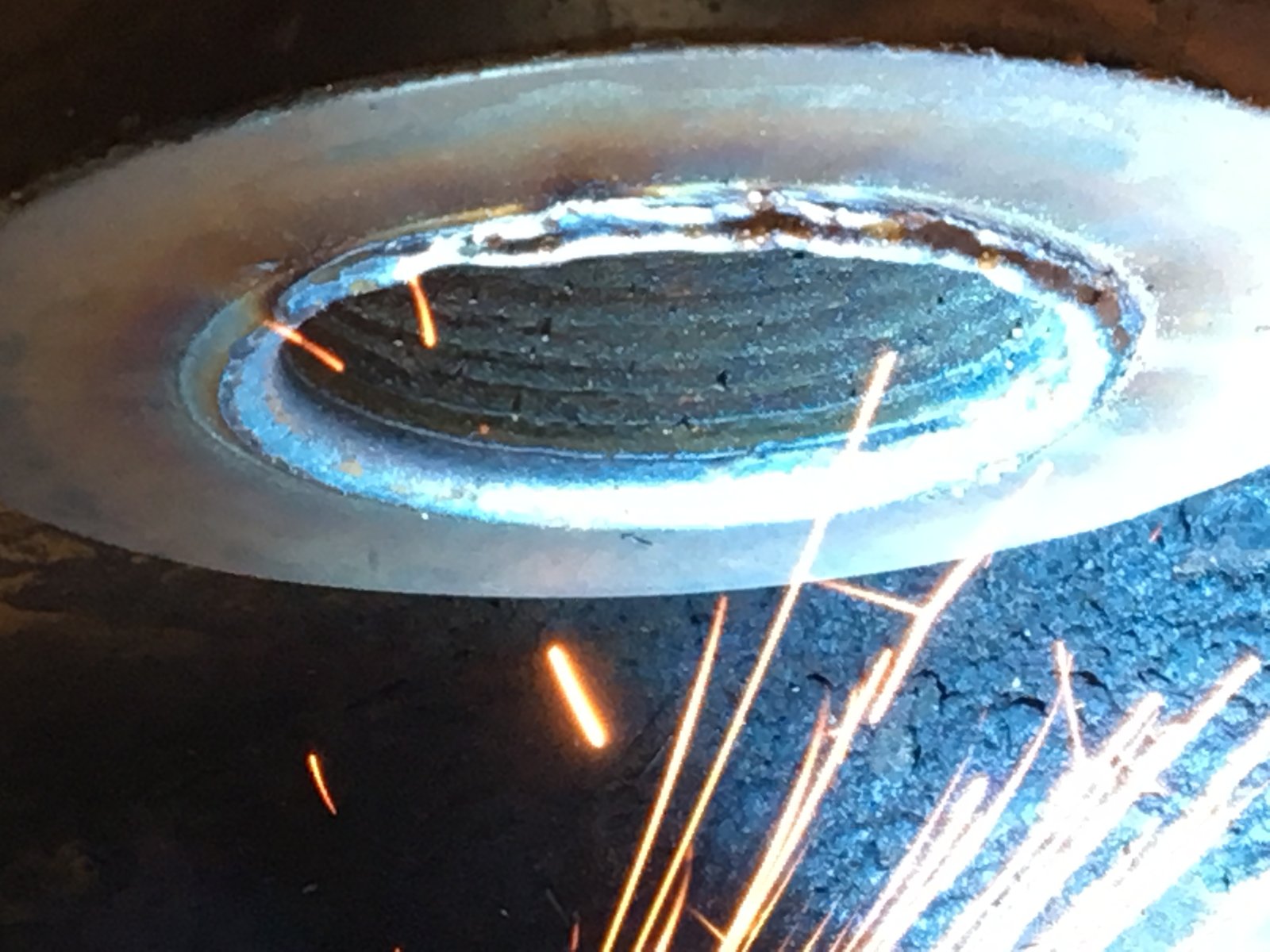
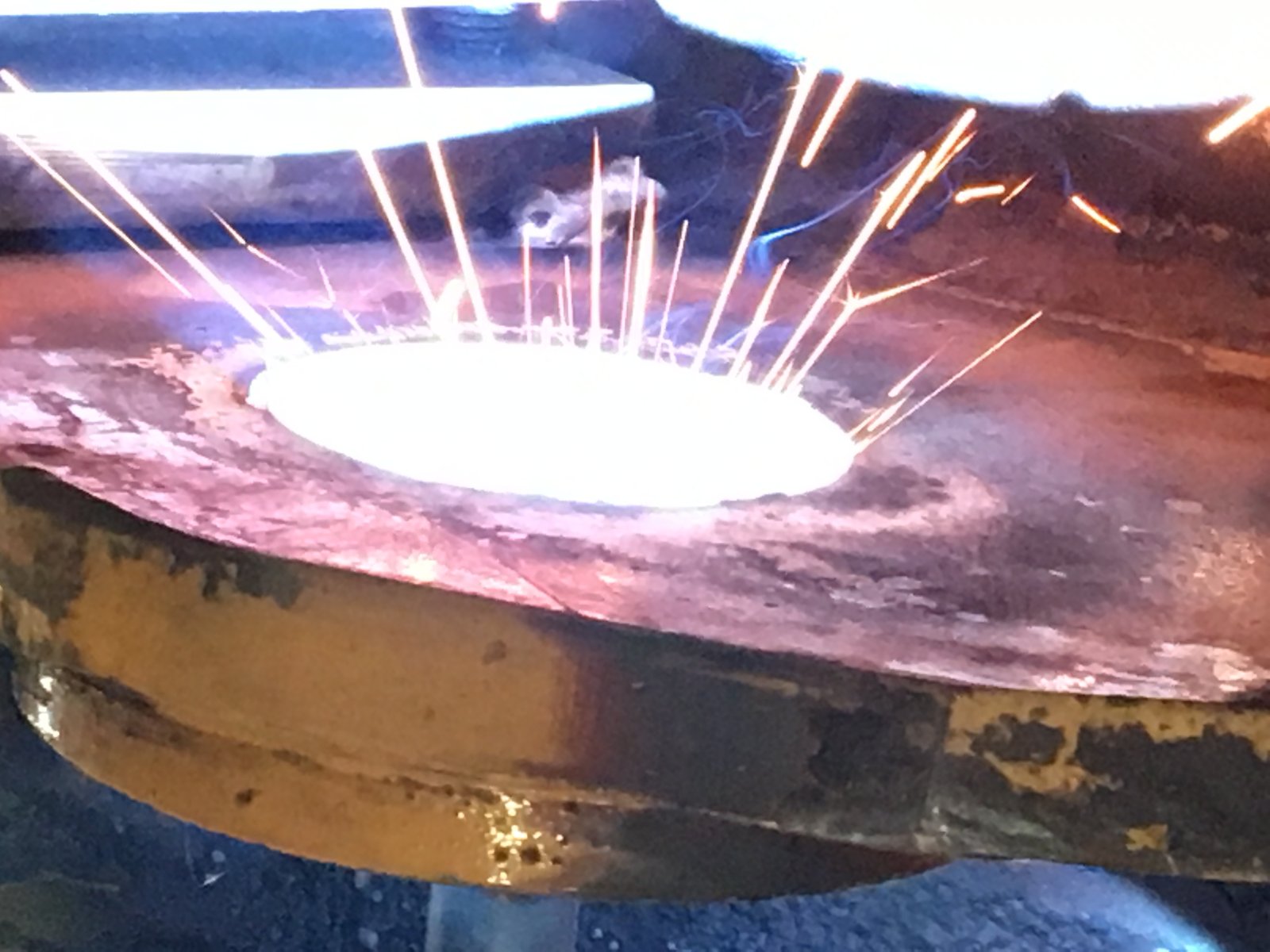
If a bore is damaged or out of specification, evaluate whether machining-based restoration fits the repair. Bore welding can restore material to a worn area, and line boring can machine the bore to the required geometry. The work demands control of alignment and dimensions, so follow the applicable repair specifications rather than relying on general settings. A bore welder performs the material-restoration stage of this process.
Broader assembly replacement may be worth evaluating if inspection finds extensive damage or if component-level options don’t meet service requirements. The right response to potential catastrophic failure from worn linkage is not automatically the largest repair. It’s the path supported by documented condition, equipment specifications, and the team’s ability to achieve the required precision.
Inspecting Worn Linkage: A Practical Sequence for Maintenance Teams
A consistent inspection record helps teams separate observed symptoms from confirmed damage. Follow the equipment manufacturer’s procedures for safe isolation, access, and measurement. If the linkage appears unsafe or damage is suspected, don’t assume continued operation is acceptable. Leave that decision to qualified personnel working under applicable equipment and site procedures.
Use this sequence to guide the assessment:
Review reported symptoms. Record what operators noticed, when it occurs, and which movement or task was underway. Treat the report as a reason to inspect, not as a diagnosis.
Prepare for safe access. Follow the machine documentation and site procedures for securing the equipment and reaching the joint. Don’t improvise an isolation or access method.
Inspect the identified area. Look for visible condition changes and follow approved procedures for checking movement or taking measurements. Avoid drawing conclusions from one observation alone.
Document the findings. Label the component and location. Record observations, measurements, and the methods used, then add photographs where they can clarify the condition.
Compare with specifications. Use the correct manufacturer’s service information to interpret measurements and identify repair requirements. Escalate uncertain or severe findings for qualified technical assessment.
What symptoms and evidence should teams record?
Write down abnormal movement, impact marks, visible deformation, or unusual joint noise as observations. Note the machine and linkage component, operating context, and available maintenance history. Use consistent labels and photograph the same areas clearly and repeatably so later reviewers can identify the joint and compare records over time. A symptom may point to an inspection area, but it doesn’t establish the cause.
How should inspection findings guide next steps?
Compare measurements with the limits and repair procedures for that specific machine. Record the measurement method and any conditions that could affect the result. If readings are uncertain, damage appears severe, or the repair requires precision bore work beyond the team’s capability, pause the decision and seek a qualified technical assessment. Linkage damage should not be used to explain hydraulic, structural, or drivetrain symptoms without evidence.
Precision bore-repair work depends on suitable equipment and operator skill. Teams developing these capabilities can include line boring operator training in their planning. A clear inspection record helps define the repair need before selecting equipment or training.
Documented findings help maintenance teams assess whether the risk of catastrophic failure from worn linkage calls for component replacement, bore restoration, or a broader repair. Bore Repair Systems, Inc. provides bore-repair equipment and training for teams developing in-house capability. Discuss bore-repair equipment and training.
Building an In-House Response to Linkage Bore Damage
In-house bore repair can be worth evaluating when a team regularly encounters damaged bores and has the space, equipment, and operator capability to perform the required work. It isn’t the right choice for every operation. Repair frequency, component types, required precision, and the condition of each assembly all shape the decision. Compare developing in-house capability with other repair arrangements or replacing components, based on confirmed damage and maintenance needs.
What should a team assess before developing in-house capability?
Start with the work itself. Review the types of linkage components the team handles, how often bore damage occurs, and the precision required by applicable specifications. Then assess operator experience, available workspace, and the practical requirements of setting up and performing the work. This helps distinguish a recurring need from a repair that may be better handled through another arrangement. Avoid basing the decision on assumed savings or downtime reductions.
Repair frequency: Consider how often bore restoration appears in the team’s documented repair needs.
Component mix: Identify the types and configurations of bores the team expects to address.
Precision needs: Use equipment-specific requirements to understand the accuracy the work calls for.
Team readiness: Assess operator skills, workspace, and the time available to build and maintain capability.
Match any planned capability to actual repair tasks. A damaged bore may call for restoring material, machining the bore, or both, depending on inspection findings and repair specifications. Don’t select equipment based only on a broad machine category. Consider the workpiece, access, and precision requirements as part of the decision.
How do equipment and training fit together?
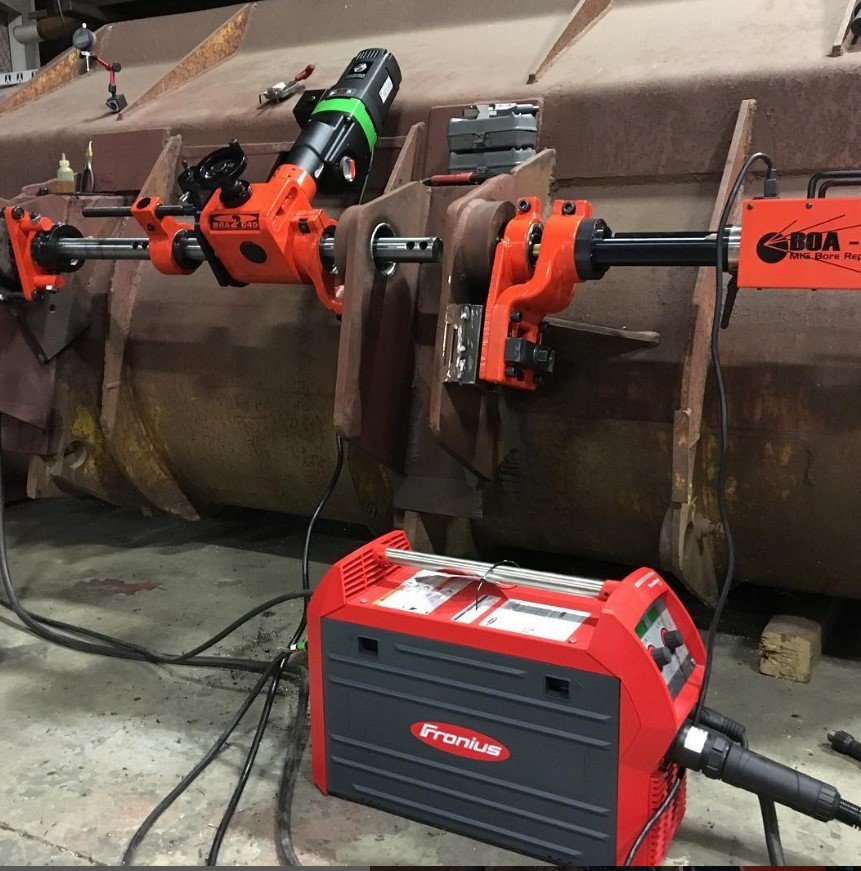
Equipment and operator capability are connected parts of the workflow. Bore welders can support restoring material in a damaged bore, while line boring machines support machining the bore to the required dimensions and alignment. Portable machine tools and bore-repair accessories may also fit into a team’s planned setup, depending on its applications. Bore Repair Systems, Inc. offers bore-repair equipment to support teams planning this work.
Training helps operators develop the skills involved in line boring and bore welding. Include it in the capability plan alongside machine selection, repair procedures, and the specifications that govern each job. Training isn’t a substitute for following equipment documentation or applicable repair requirements. It helps teams prepare operators to use bore-repair equipment as part of a controlled in-house workflow.
Before investing in an in-house response to the risk of catastrophic failure from worn linkage, define the repair tasks and precision needs clearly. Contact Bore Repair Systems, Inc. to discuss bore-repair equipment and training for your team.
Turn Linkage Findings Into a Clear Repair Plan
Make the next step a defined maintenance decision, not an open-ended concern. Use the inspection record to assign responsibility for reviewing the findings, identifying applicable repair requirements, and deciding whether the work fits your team’s capabilities. A consistent process gives technicians and decision-makers a shared basis for action when a joint shows wear.
Reducing the risk of catastrophic failure from worn linkage starts with getting the right information to the people planning the repair. Keep component records and service references together so future inspections can build on what the team has already learned. For bore damage, consider how equipment and operator training could support your in-house repair goals.
Explore Bore Repair Systems, Inc.’s bore-repair equipment and training for your team, then put the findings to work in a practical plan. A clear process and the right capabilities help your team approach the next repair with greater confidence.
Frequently Asked Questions
Can worn linkage cause catastrophic failure?
Yes, worn linkage can contribute to catastrophic failure if it compromises a joint or places connected parts under damaging loads. The risk depends on the machine, the joint’s condition, and how the equipment is used; wear doesn’t guarantee a sudden breakdown. For example, a joint supporting a loaded attachment deserves prompt assessment if movement changes or damage is visible. Follow the equipment’s procedures and have qualified personnel determine whether it’s safe to operate.
Is linkage looseness always caused by a worn pin or bushing?
No. A worn pin or bushing is one possible cause, but looseness can also relate to wear in the bore, a damaged mounting point, or another issue in the joint assembly. Some movement may also be part of a design’s normal operation. Identify the exact joint and compare its condition with the correct service information before replacing parts. Don’t diagnose the cause from a noise or movement report alone.
Can lubrication restore a worn linkage joint?
No. Lubrication can’t replace material that has worn away or return a pin, bushing, or bore to its original dimensions. Use the lubricant and maintenance interval specified for the machine, since lubrication needs vary by design. If looseness or other symptoms remain, assess the joint rather than treating additional grease as a repair. Record what was lubricated and when, so maintenance history can inform the inspection.
What information should a maintenance team record before repairing linkage?
Record the machine and component identity, the joint’s location, reported symptoms, visible condition, and any movement observed during inspection. Add photographs with consistent labels, plus measurement results and the method used to obtain them. Note relevant operating context and maintenance history, including lubrication records where available. This detail helps the repair team compare findings with manufacturer requirements and distinguish the affected joint from nearby components.
Does every worn linkage bore need line boring?
No. Line boring is not automatically required whenever a linkage bore shows wear. The right approach depends on the bore’s measured condition, component design, and applicable repair specifications. A finding may support another repair path, while a bore that’s damaged or outside allowable limits may need machining-based evaluation. Confirm dimensions using the manufacturer’s approved method before deciding. Avoid applying a general tolerance or repair method to a different machine.
Can a maintenance team repair linkage bores in-house?
Yes, if the team has suitable equipment, workspace, procedures, and operator capability for the specific repair. Evaluate the types and frequency of bore work, required precision, and training needs before building an in-house workflow. Bore welders, line boring machines, portable machine tools, and accessories support different bore-repair tasks. Line boring and bore welding training can help operators develop relevant skills, but every job must follow equipment documentation and repair specifications.
Comments