

The Hidden Costs of Mobile Machining Services: What Contractors Don't Tell You

Why does the invoice from an outside machining contractor almost never match the original estimate? If you manage heavy machinery, you already know the frustration of watching critical iron sit idle for days just waiting on a third-party service truck. Between portal-to-portal travel fees, mobilization surcharges, and unexpected standby delays, the hidden costs of mobile machining services quickly turn a routine pin joint repair into a massive operational expense.
You shouldn't have to absorb unpredictable billing or deal with premature bushing wear caused by rushed, inconsistent contractor tolerances. In this guide, you'll uncover the true cost of outsourced machining delays, evaluate the real financial tradeoffs between outside contracts and in-house capability, and learn how to establish dependable maintenance schedules that protect your bottom line.
Table of Contents
The Visible Invoice vs. The True Cost of Mobile Machining Services
Unpacking Contractor Surcharges: Travel, Delays, and Schedule Vulnerabilities
The Hidden Operational Penalties: Quality Variance, Inconsistent Tolerances, and Rework
Financial Analysis: Outsourced Field Services vs. Capital Equipment Ownership
Eliminating Contractor Dependency: Transitioning to In-House Precision Bore Repair
The Visible Invoice vs. The True Cost of Mobile Machining Services
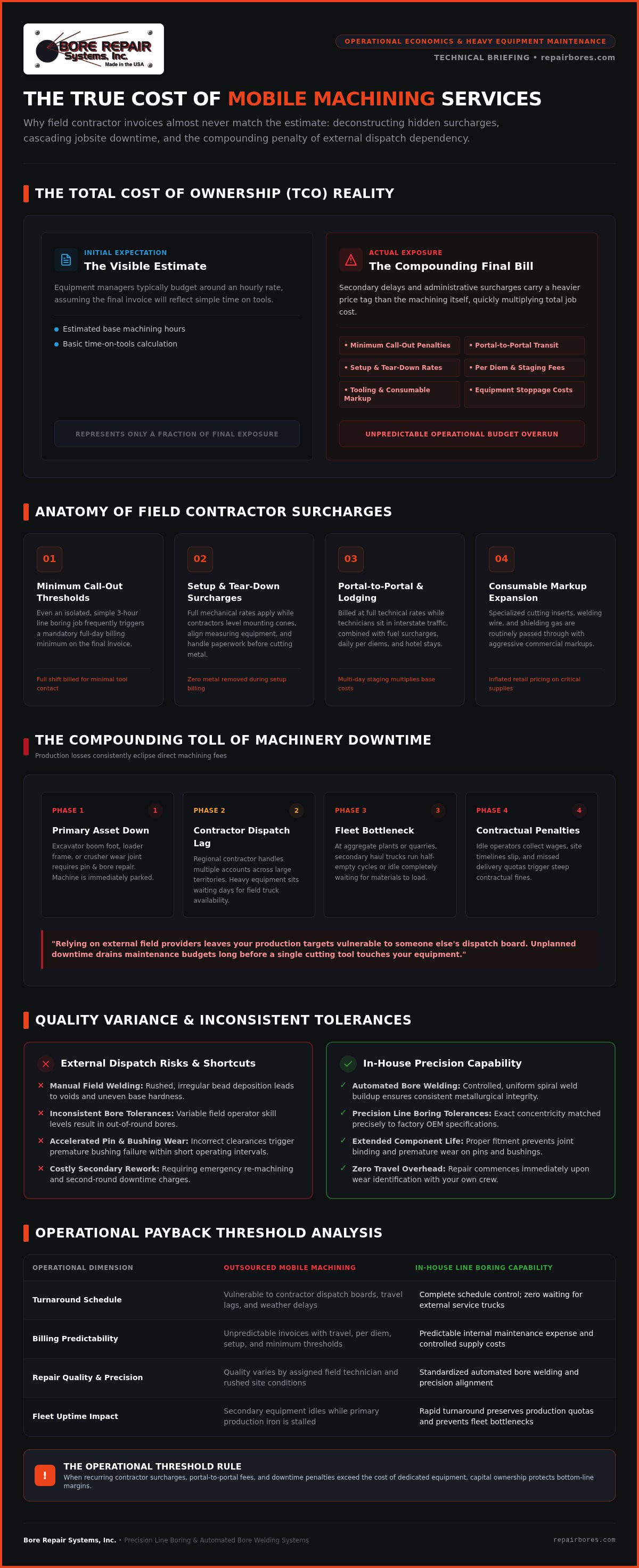
A contractor's quote rarely tells the whole story. Most equipment managers look at an hourly rate and assume the final invoice will reflect simple time on tools. It doesn't. Evaluating outside repairs requires an honest look at Total Cost of Ownership, where secondary delays and administrative surcharges carry a heavier price tag than the machining itself. When an excavator boom foot or crusher frame wears out, the billed hours on the invoice represent only a small fraction of your financial exposure.
Deconstructing the Quoted Hourly Rate vs. Final Invoices
Service agreements often hide significant markup behind attractive initial estimates. Once the work order closes, the final bill expands with charges that were never part of the initial conversation:
Minimum call-out thresholds: Even a simple three-hour line boring job often triggers a full-day billing minimum.
Setup and tear-down fees: Contractors bill their standard technical rates while leveling mounting cones and setting up measuring tools before cutting any metal.
Ancillary consumables: Specialized tooling inserts, welding wire, and shielding gas are routinely billed with aggressive commercial markups.
These billing practices reveal the true hidden costs of mobile machining services. You pay full mechanical rates while a technician unpacks tools, runs calibration passes, and completes administrative paperwork.
The Compounding Price of Machinery Downtime
Machining fees pale in comparison to lost site productivity. When a primary production asset goes down, your operation bleeds capital every hour that unit sits parked. If a front-end loader is down at an aggregate quarry, secondary haul trucks run half-empty cycles or idle waiting for material. Operators still collect wages, project timelines slip, and missed delivery quotas trigger steep contractual penalties.
Third-party service dispatchers work on their own timeline, not yours. Waiting days for an available mobile field truck turns an isolated bore repair into an operational bottleneck that stalls whole crews. These compounding downtime losses expose the real hidden costs of mobile machining services, draining maintenance budgets long before a single cutting tool touches your equipment.
Unpacking Contractor Surcharges: Travel, Delays, and Schedule Vulnerabilities
Mobilizing a third-party machining crew involves far more logistics than backing a service truck up to an excavator. The minute a contractor leaves their shop, the billing clock starts running. These ancillary logistical fees represent significant hidden costs of mobile machining services that caught-off-guard maintenance managers rarely anticipate when reviewing initial labor estimates.
Mobilization, Portal-to-Portal, and Per Diem Expenses
Portal-to-portal agreements require you to pay full technical rates while a technician sits in traffic on the interstate. Add mileage fees, fuel surcharges, and equipment transit costs, and you end up funding several hours of travel before any bore measurement begins. For multi-day projects, overnight lodging, per diem meals, and daily staging charges accumulate rapidly on the invoice.
If an initial repair runs longer than estimated, staging penalties kick in for each additional shift. What was budgeted as an eight-hour single-bore cleanup easily balloons into multiple days of travel and subsistence charges, multiplying baseline labor costs through pure geographic distance.
The Cost of Schedule Friction and Dispatch Delays
Outside service providers juggle multiple client accounts across vast territories. If a regional contractor gets tied up on an emergency job two hundred miles away, your plant maintenance schedule gets bumped down the priority queue. Bad weather, service truck mechanical issues, or transit delays push your arrival window even further out.
These persistent dispatch bottlenecks create severe operational friction. Rather than waiting on outside availability, operations teams evaluate the strategic advantages of bringing bore repairs in-house to protect their schedules. Unpredictable contractor schedules lead directly to poor operational outcomes, reflecting the classic Cost of Poor Quality where external delays compound downtime across your entire equipment fleet.
Relying on external field providers leaves your production targets vulnerable to someone else's dispatch board. The hidden costs of mobile machining services aren't just line items on an invoice; they are lost shifts, idle crews, and delayed production deadlines. If recurring third-party dispatch fees continue to inflate your maintenance spend, reach out to an equipment specialist to explore how acquiring dedicated boring and welding systems eliminates outside scheduling risk entirely.
The Hidden Operational Penalties: Quality Variance, Inconsistent Tolerances, and Rework
Poor field workmanship inflicts far more financial damage than travel surcharges or dispatch delays. When an outside contractor rushes a line boring job to catch their next appointment, the resulting metallurgical and alignment errors degrade your machine's structural integrity. These secondary mechanical failures represent the most destructive hidden costs of mobile machining services, cutting component life short and triggering premature rebuild cycles.
Manual Welding Inconsistencies vs. Automated Bore Welding
Field mechanics often rely on manual stick or hand-held MIG torches to build up worn pin eyes. Human hands cannot deliver the steady feed rate and precise heat management required for structural weld buildup. This inconsistent application leaves behind voids, slag inclusions, and localized hard spots. When a line boring tool meets these hard spots, the cutting insert chatters, chips, or deflects, leaving gouges along the bore wall.
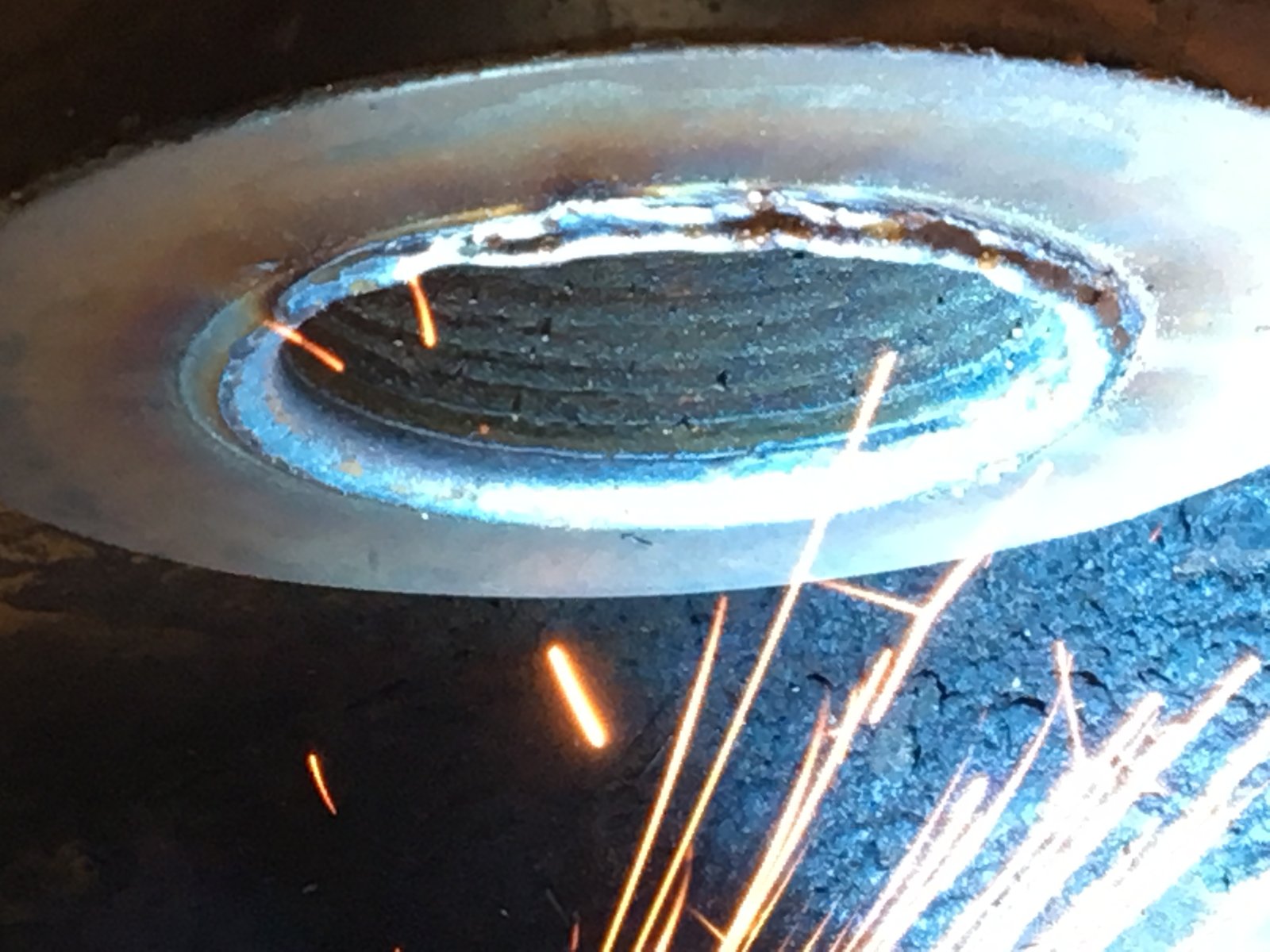
Uneven manual heat distribution also warps the surrounding parent metal, introducing taper and eccentricity before finishing passes begin. Automated spiral bore welding eliminates these defects by depositing smooth, concentric beads with uniform penetration. Without automated deposition, contractors often produce metallurgical inconsistencies that compromise bore durability from day one.
Tolerance Drift and Accelerated Component Wear
Imprecise boring cuts destroy the critical tolerances required for modern heavy equipment. If a technician cuts a bore out of round or misses the original centerlines, the pin and bushing assembly cannot seat correctly. Uneven clearances concentrate extreme working loads onto narrow contact points rather than distributing them evenly across the joint. Pins groove prematurely, bushings gall, and hydraulic cylinders face severe side-loading.
Remedying an off-axis cut demands complex misaligned bore repair techniques that require complete re-welding and re-machining. Calculating your equipment's true Total Cost of Ownership (TCO) means including the cost of these early component failures. When a contractor's sloppy bore work fails after a few hundred operating hours, you face another teardown, new replacement pins, and days of lost production. When you challenge the contractor, they often point to harsh operating conditions or greasing practices, leaving your maintenance department to fund the rework.
Financial Analysis: Outsourced Field Services vs. Capital Equipment Ownership
Writing checks to outside service providers feels like an unavoidable operational expense. Over several quarters, however, those cumulative bills represent capital that could fully fund internal repair machinery. Evaluating equipment ownership versus third-party dependence shifts line boring from an unpredictable expense into a high-yield capital investment. When you compare multi-year contractor invoices against tooling acquisition, the balance tips quickly toward owning the capability.
Calculating the Break-Even Point for Internal Bore Repair
Determining your break-even point starts with auditing annual maintenance ledgers. Add up every third-party line boring invoice across the previous two years, including travel fees, standby penalties, and consumable line items. For operations running heavy earthmoving fleets, mining spreads, or processing equipment, pin joint failures recur with predictable regularity.
Most fleet operations discover that completing just a handful of multi-bore overhauls in-house offsets the entire acquisition cost of a boring machine and automated bore welder setup. Consult the Professional Bore Welder Systems Buying Guide to evaluate system capabilities and tool configurations suitable for your equipment mix. Once your internal crew handles those initial repairs, the system continues operating with minimal consumable overhead, permanently removing third-party labor markups.
Operational Independence and Long-Term Value Creation
Purchased equipment remains an active balance sheet asset rather than an unrecoverable service fee. Owning portable machine tools gives your maintenance department immediate operational advantages:
Capital depreciation benefits: Machinery investments qualify for capital asset depreciation schedules, reducing tax liabilities.
Retained workforce skill: Developing internal machining competency keeps technical talent engaged while eliminating contractor dispatch logistics.
Asset versatility: Modular systems adapt across multiple machine sizes, from compact excavators to heavy haul truck pivots.
New revenue potential: Internal service shops can take on work for regional partners, turning a maintenance cost center into a billable profit center.
Continuing to absorb the hidden costs of mobile machining services drains cash flow without generating long-term equity. Bringing precision machining tools into your own shop establishes predictable operating schedules, builds internal team capability, and keeps your equipment working without waiting on an outside provider. Ready to assess the numbers for your fleet? Contact our technical team today to calculate your exact equipment payback timeline and identify the right system for your shop.
Eliminating Contractor Dependency: Transitioning to In-House Precision Bore Repair
Breaking free from outsourced service schedules starts with understanding your actual repair volume. Review your fleet work orders from the past 12 to 24 months. Identify recurring bore repairs across excavators, articulated haulers, loaders, and stationary processing plants. Auditing wear patterns shows you exactly which pin connections wear down first, giving you the operational baseline needed to configure internal tooling. Once you have this data, transitioning to an in-house setup eliminates the hidden costs of mobile machining services for good.
Selecting the Right Portable Machining and Welding Hardware
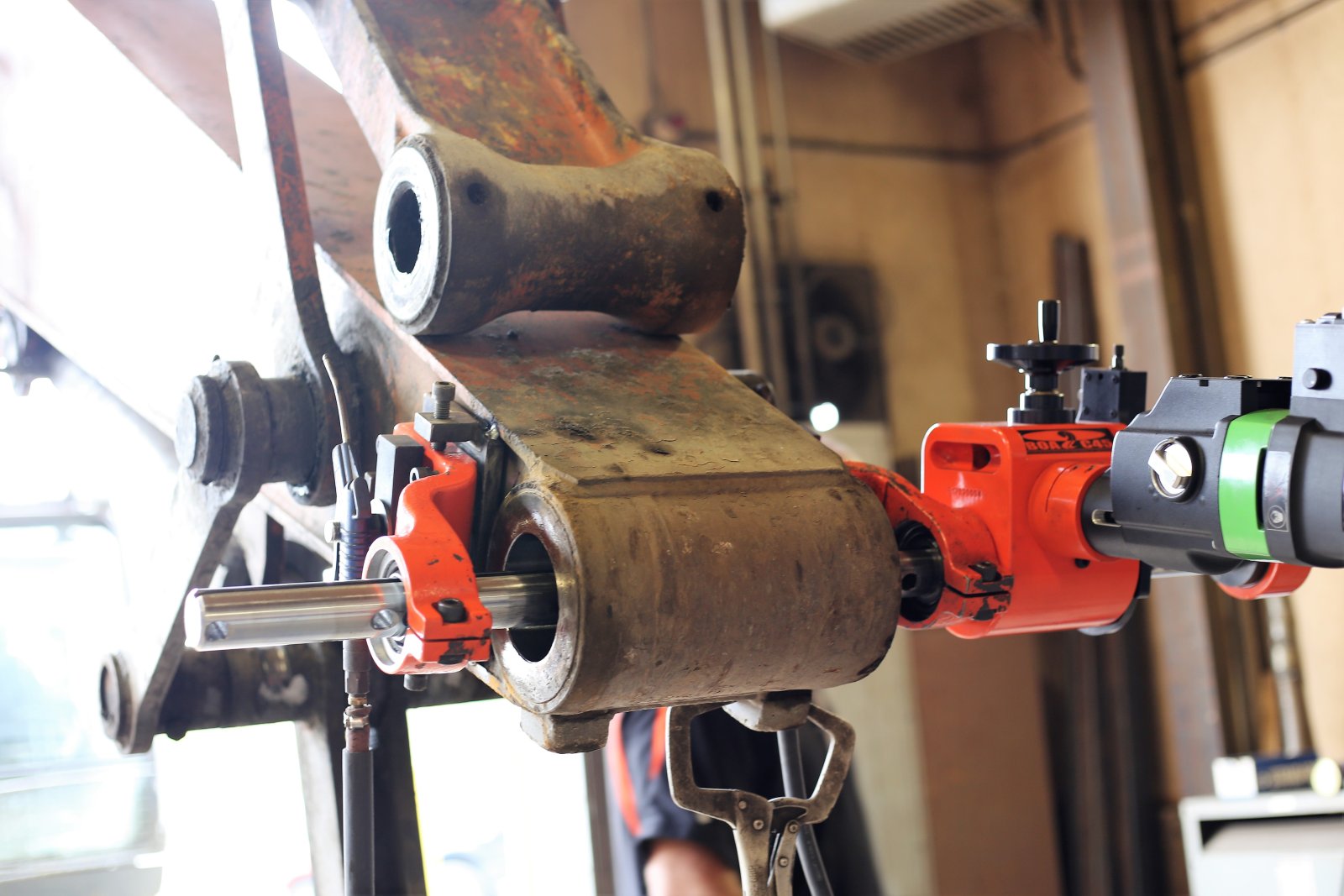
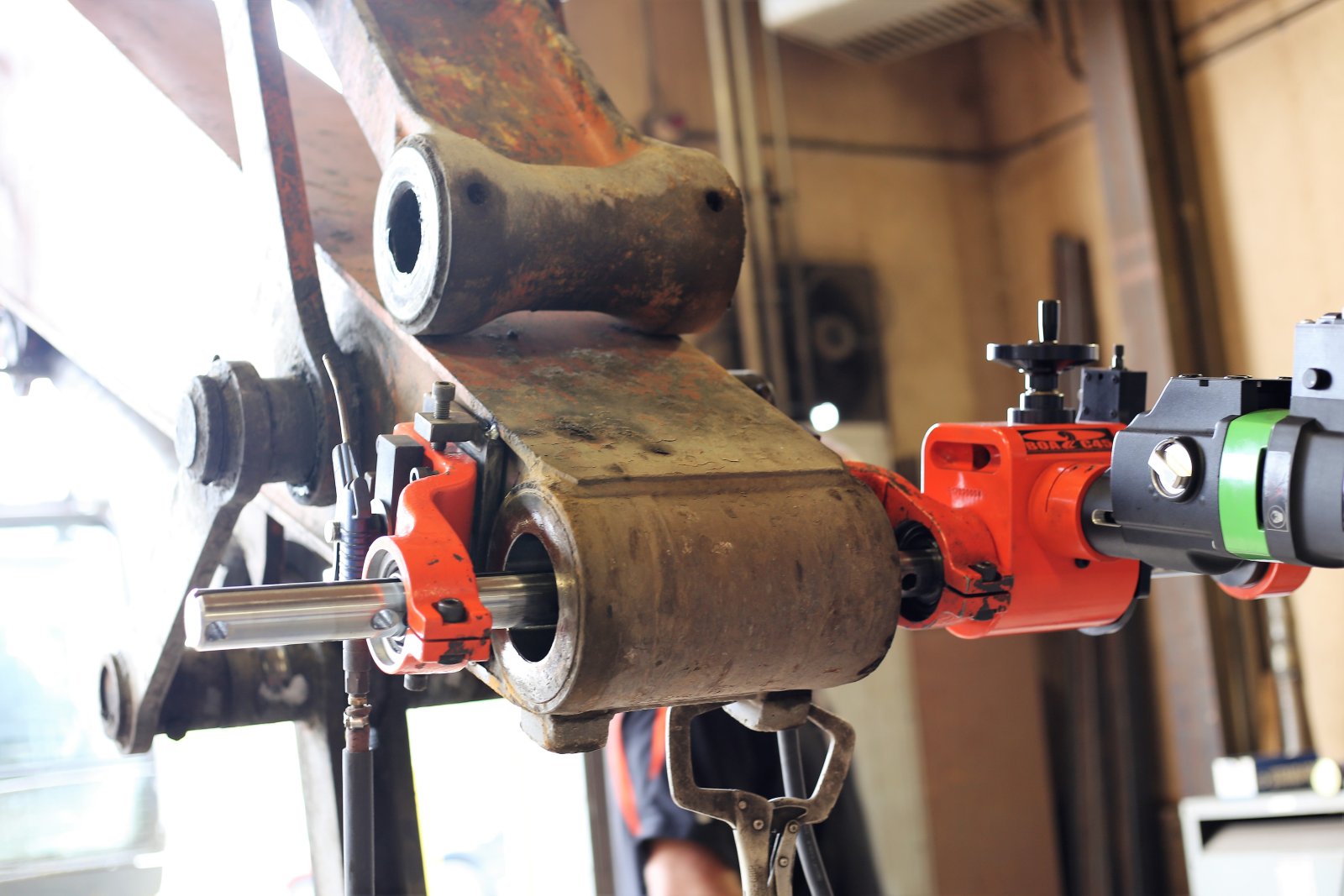
Select hardware that matches the diameter ranges and clearances of your equipment fleet. Choose boring bar diameters, drive units, and mounting fixtures sized to handle your most common pin bores without sacrificing rigidity. Pairing a portable line boring machine with an automated spiral bore welder guarantees concentric, repeatable weld deposition across every pass. This setup avoids manual weld defects and ensures uniform machinability. Integrating specialized bore welding accessories, like centering cones and modular mounting brackets, simplifies blind bore setups and tight-clearance repairs.
Overcoming the Operator Skill Gap with Targeted Training
Many equipment managers hesitate to bring repairs in-house because they assume line boring requires decades of manual machining experience. That assumption is outdated. Modern automated bore welders and rigid portable boring systems streamline the mechanical setup, removing the guesswork from arc control and feed rates. Any competent shop mechanic or heavy equipment technician can master the workflow with the right instruction.
Investing in structured, hands-on line boring operator training bridges the knowledge gap in days, not years. Technicians learn proper bore alignment, tool geometry, and automated weld setup in a controlled environment. By establishing consistent, in-house refurbishment workflows, your maintenance team can restore factory tolerances the moment play is detected. To regain control over your maintenance schedule, contact our technical team to discuss equipment and training tailored to your shop's needs.
Take Control of Your Maintenance Schedule and Bottom Line
Relying on third-party field contractors means paying technical rates for windshield time, absorbing expensive dispatch delays, and risking inconsistent manual welds that destroy pins and bushings. These compounding expenses represent the true hidden costs of mobile machining services. Every shift your production iron sits idle waiting on an outside service truck is revenue your operation never recovers.
You don't have to remain at the mercy of an outside dispatch board. Backed by decades of American engineering patents in automated bore welding, field-proven modular line boring machines, and comprehensive hands-on operator training programs, Bore Repair Systems, Inc. - Bore Repair Made Easy with our USA made Lineboring and Boreweld solutions equips your internal team to achieve shop-level precision in your own yard. Bringing bore maintenance in-house restores factory tolerances immediately, protects your equipment lifecycle, and eliminates third-party scheduling bottlenecks.
Stop paying for someone else's highway miles and take ownership of your uptime. Contact our technical team to eliminate contractor costs and bring bore repairs in-house today.
Frequently Asked Questions
What are the most common hidden fees on mobile machining invoices?
The most common hidden charges include portal-to-portal travel time, mobilization fees, minimum shift call-outs, and marked-up consumable supplies. Contractors bill full hourly technical rates while driving to your site, then add surcharges for mileage, fuel, lodging, and per diem expenses. You also pay for non-machining tasks like unloading equipment, calibration passes, and tool tear-down, which quickly elevates the total invoice well beyond the initial labor quote.
How much equipment downtime is typical when waiting for a mobile machining contractor?
Facilities typically wait anywhere from three days to several weeks for an outside mobile machining crew to arrive on-site. Regional contractors juggle overlapping service calls, meaning your machine sits idle while their crews finish previous jobs or handle unexpected travel delays. This waiting period often costs operations more in missed deadlines, idle secondary equipment, and disrupted production schedules than the actual repair bill itself.
Why is manual bore welding inferior to automated bore welding in the field?
Manual stick or hand-held MIG welding produces erratic heat input, resulting in voids, cold laps, and hard spots throughout the deposit. In contrast, automated bore welders rotate smoothly to deposit uniform, concentric beads with consistent penetration. This mechanical consistency eliminates tool-destroying hard spots, prevents base metal warping, and provides a stable, uniform foundation for boring tools to machine back to original factory tolerances.
Can existing shop mechanics learn to operate line boring machines effectively?
Yes, any competent equipment mechanic or shop technician can master precision line boring with structured hands-on training. Modern modular line boring machines and automated bore welders remove the manual guesswork of arc control and feed alignment. With proper manufacturer-led instruction on setup geometry, mounting alignment, and cutting tool selection, shop technicians quickly gain the proficiency required to hold tight tolerances on every bore repair.
How many bore repairs does it take to justify buying line boring equipment?
For most heavy equipment operations, completing just three to five comprehensive bore repairs in-house fully offsets the purchase price of dedicated equipment. Factoring in the hidden costs of mobile machining services, such as travel surcharges, minimum hour minimums, and secondary downtime, in-house systems pay for themselves rapidly. Once you cross that initial break-even threshold, the machinery functions as a permanent company asset that protects your long-term maintenance cash flow.
What happens if a mobile machining contractor cuts a bore out of alignment?
Cutting a bore off-center causes rapid pin wear, bushing galling, and severe structural stress across connected linkages. Fixing an off-axis cut requires complete re-welding and re-boring to establish the proper centerlines. Resolving these mistakes often triggers lengthy warranty disputes with contractors, who frequently blame operational abuse. Meanwhile, the equipment owner absorbs the hidden costs of mobile machining services through additional downtime, replacement hardware, and rework expenses.
Is automated bore welding equipment portable enough for remote jobsite repairs?
Yes, professional automated bore welding equipment and line boring systems are built specifically for modular field transport. The power units, mounting fixtures, and drive components break down into manageable cases that fit into standard service trucks. This portability allows internal maintenance crews to haul the equipment directly to remote pits, quarries, or field jobsites, restoring worn pivot points right where the machine sits without transport delays.
Comments