

How to Justify an Equipment Purchase to Management

Updated: Oct 6
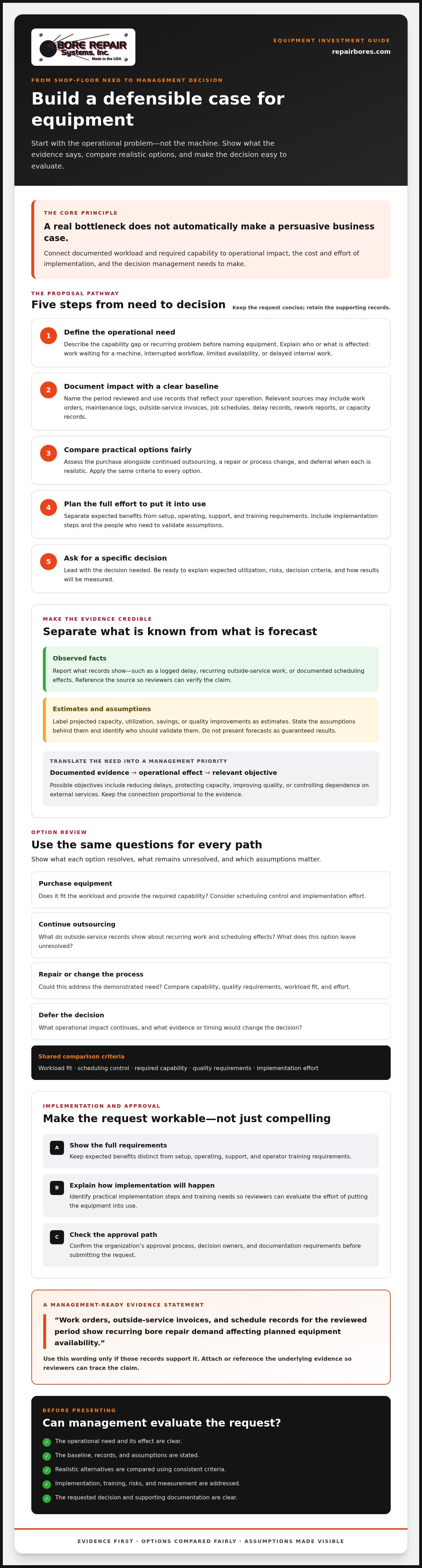
What if the equipment you need is obvious on the shop floor but invisible in the numbers management uses to approve spending? That’s the challenge of justifying equipment purchase to management: a real bottleneck does not automatically make a persuasive business case.
You may see delays, quality issues, limited capacity, or work sent outside the shop. Management needs to understand how those problems affect operational goals and whether buying equipment is the best way to address them. For bore repair equipment, connect the expected workload and required capability to the cost and effort of putting the equipment into use.
This article shows you how to build a concise, evidence-based proposal. You’ll learn how to document operational impact, compare purchasing with outsourcing or deferral, and explain assumptions, risks, and decision criteria. It also covers practical details that can make or break a proposal, including implementation steps and operator training. The goal is a clear request management can evaluate, supported by measurable objectives and realistic next steps.
Table of Contents
How to Frame an Equipment Purchase Around an Operational Need
An equipment justification shows why a specific operational need merits investment review. It is not simply a request for a machine. Start with the problem the organization needs to solve, then explain how the proposed purchase addresses it and what evidence supports that connection. This fits the broader capital budgeting process, where organizations assess whether a long-term investment is worth pursuing.
A concise request should answer four questions: What need exists? What operational impact can you document? What decision are you asking management to make? What evidence supports the request? Keep product features secondary until the need is clear. A machine’s capabilities matter when they address a demonstrated workload or capability gap.
How to Describe the Current Operational Problem
Build the problem statement from records your organization already uses. For recurring bore repair work, relevant evidence might include work orders, maintenance logs, outside-service invoices, job schedules, delay records, or rework reports. Use records that reflect your operation, and state the period they cover so reviewers can interpret the baseline.
Separate what the records show from what you estimate. For example, report a logged delay as an observed fact, but label projected capacity gains as an estimate and explain the assumptions behind it. Do not present a forecast as a guaranteed result.
Show who or what bears the impact. Does the work wait for a machine, interrupt another workflow, limit equipment availability, or delay an internal customer? Describe the connection plainly. Avoid broad claims such as “production is suffering” unless specific records support them.
How to Connect the Need to Management Priorities
Translate shop-floor evidence into an objective management already tracks, such as reducing delays, protecting capacity, improving quality, or controlling dependence on external services. Keep the connection proportional to the evidence. If outside-service records show recurring work, report the documented frequency and scheduling effect. Do not claim savings or faster turnaround without support.
Explain why the issue needs a decision now. Refer to documented workload, upcoming schedules, repeated delays, or a known capability gap. If the evidence shows a recurring need but no immediate deadline, say so. A measured case is more credible than urgency without proof.
For example, if your shop regularly sends bore repair work outside because it lacks the required capability, describe the work volume, the workflow affected, and the resulting scheduling constraints using internal records. The case for line boring machines or bore welders should follow from that need, not lead it. This keeps justifying equipment purchase to management grounded in operational facts and gives reviewers a clear basis for evaluating the request.
How to Build a Defensible Equipment Business Case
A sound case follows a repeatable sequence: establish the problem, gather evidence, compare viable options, assess implementation, then request a specific decision. Keep the main proposal concise enough for management to review quickly, but retain supporting records for finance, operations, and technical reviewers who need to check the details.
Start by naming the baseline period and the records behind each claim. State which months or operating cycles you reviewed, then identify the work orders, repeat-repair records, outside-service invoices, schedule data, or capacity records you used. Explain gaps or unusual peaks. A busy period may not represent normal demand, while incomplete records may understate the need.
Separate measured results from estimates. Mark assumptions clearly, such as expected utilization or the share of work that could be handled internally, and identify who should validate them. Do not present projected capacity, quality improvements, or savings as established facts.
Make the evidence easy to verify
Include one direct, extractable sentence that states the basis of the request: “Work orders, outside-service invoices, and schedule records for the reviewed period show recurring bore repair demand affecting planned equipment availability.” Use this wording only if those records support it. Attach or reference the underlying evidence so reviewers can trace the claim without searching the full proposal.
Compare options against the same criteria
Assess the purchase alongside continued outsourcing, a repair or process change, and deferral when each is a realistic option. Use consistent criteria: workload fit, control over scheduling, required capability, quality requirements, and implementation effort. Note what each option resolves, what it leaves unresolved, and which assumptions could change the comparison. For a focused discussion of internal capability versus outsourcing, see this in-house line boring versus outsourcing guide.
Include readiness in the comparison. For bore repair equipment, consider whether the expected workload supports regular use, what setup is required, and whether operators need line boring or bore welding training. These factors determine whether the organization can put the capability to work, not just whether the equipment can perform the task.
Use a one-page executive summary to state the problem, strongest evidence, options considered, recommended decision, and immediate next step. Put the detailed analysis behind it: baseline records, assumptions, option comparison, implementation needs, and risks. This gives management a clear first read and gives reviewers enough detail to test the case. A structured approach makes justifying equipment purchase to management more transparent and easier to evaluate. If you’re assessing bore repair equipment and training needs, you can discuss your equipment requirements with Bore Repair Systems.
How to Compare Equipment Options Without Overpromising ROI
A fair comparison shows management what each option can and cannot solve. Use the same evidence and decision criteria for every path, and separate documented results from estimates. Do not promise a payback period unless the inputs behind it are supported by your organization’s records.
Build a comparison matrix with columns for option, evidence, assumptions, risks, capability, and decision required. Consider purchasing, continuing to outsource, changing the current process, or deferring the decision when those alternatives are viable. For each option, record how it fits the workload, affects scheduling and quality control, meets capability needs, and changes demands on staff.
Keep costs in distinct categories rather than reducing the case to a purchase price. Identify one-time acquisition and setup considerations separately from ongoing operation and support requirements. Include applicable operator training and the time needed to prepare staff. Use organization-specific inputs, and flag missing information for validation rather than filling gaps with optimistic estimates.
Choose measures that reflect the work
Select measures tied to the operational need. These might include repair turnaround, repeat work, externally handled jobs, or available shop capacity. Define each measure before forecasting: specify its baseline, data source, and review period. For example, if measuring turnaround, clarify when the clock starts and stops and which jobs are included. Control over scheduling can also matter, but present it as a qualitative consideration for management to weigh, not a guaranteed financial gain.
Show uncertainty and risks plainly
Use conservative, expected, and higher-workload scenarios only when records support the inputs for each one. State what could change the recommendation. Low utilization, insufficient operator availability, process changes, or limited training capacity may weaken the case for buying now. If bore welding is one of the options under review, this professional bore welder buying guide can help inform equipment evaluation.
Make the recommendation conditional where appropriate: proceed if projected work is validated and trained operators can be assigned; otherwise, continue the current approach and revisit the decision when workload or readiness changes. This gives management a clear decision rule without claiming guaranteed ROI. For a proposal about justifying equipment purchase to management, transparent assumptions are more useful than a confident forecast the available evidence cannot support.
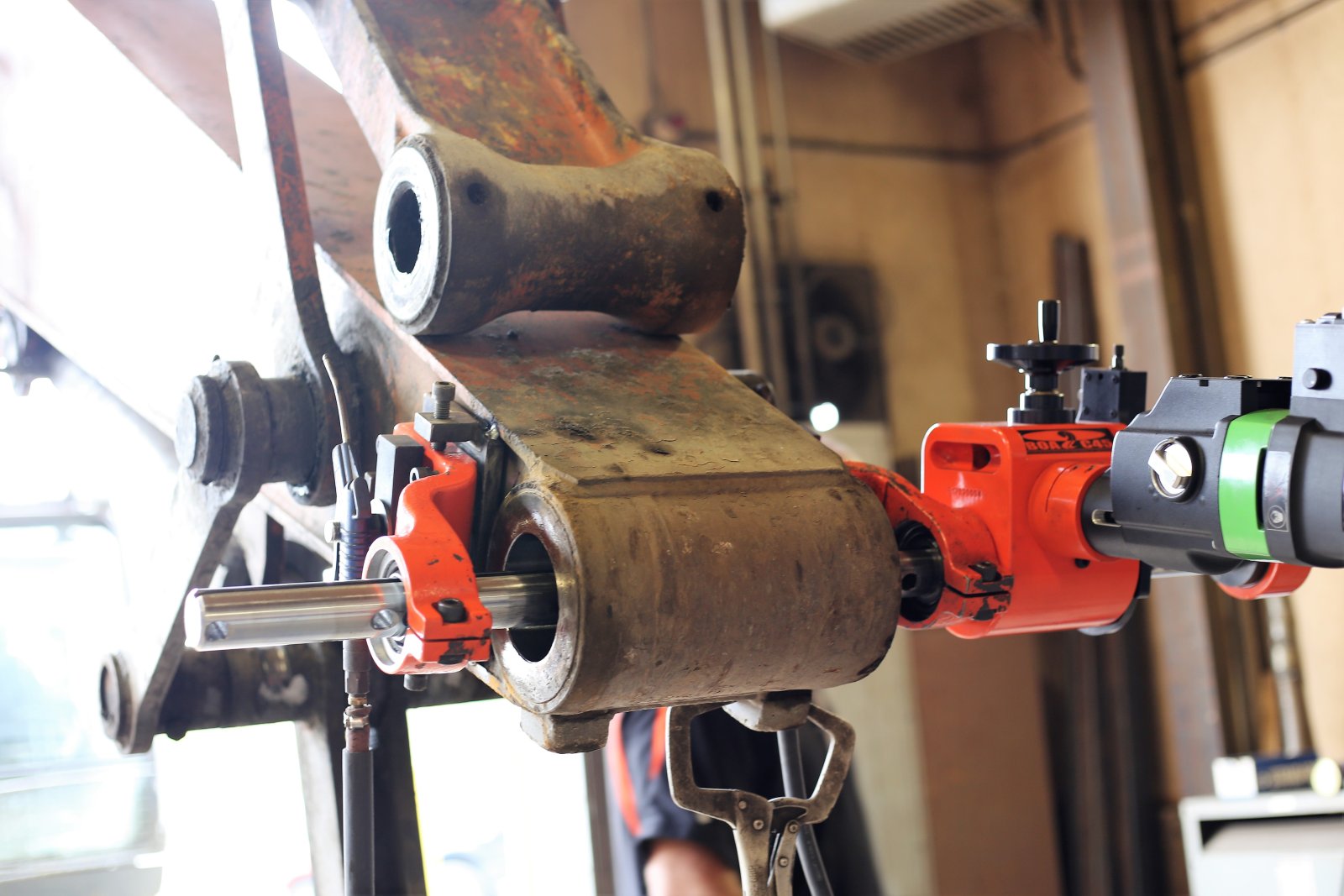
How to Prepare the Request, Budget, and Implementation Plan
A strong proposal makes the approval path and the work after approval clear. Identify the decision owner, reviewers, required documents, and sequence your organization uses. Check internal policy rather than assuming a standard capital process. Procurement, finance, safety, or funding reviews may apply, depending on the organization and equipment.
In the written request, summarize the operational problem, supporting evidence, alternatives considered, preferred option, key risks, and decision needed. Keep raw records and detailed calculations in an appendix. Show the source and assumptions behind each calculation so reviewers can check the logic without losing the main point in supporting data.
Lay out the budget by category, not as an unsupported total. Separate equipment acquisition from setup or installation needs, accessories, operator training, and ongoing operating or support requirements. Identify which figures are confirmed, which need quotes or internal estimates, and who will verify them. Do not leave training or setup out simply because they are not part of the equipment line item.
Plan for ownership and operator readiness
Name an implementation owner and the people responsible for operating the equipment. List dependencies such as workspace preparation, workflow changes, commissioning, and maintenance planning, where applicable. When accommodating new equipment requires reallocating floor space or updating warehouse racking, providers such as colbydandenong.com.au illustrate practical industrial storage configurations. Set a target start date only after required approvals, delivery assumptions, and preparation work are understood. If line boring is part of the proposed capability, review this line boring operator training guidance when planning operator readiness.
Before implementation, establish how and when the organization will review results. Choose measures tied to the original need, record the baseline, and set a review date. Compare actual results with the proposal’s assumptions, and document where the outcome differs. This makes accountability part of the plan, not an afterthought.
Use a short approval checklist
End the request with a compact checklist that separates approvals from open questions:
Approve: the recommended option, budget categories, responsible owner, and requested decision.
Confirm: internal approval requirements, final estimates, setup dependencies, operator availability, and training needs.
Track: target start date, baseline measures, and the post-implementation review date.
This structure keeps justifying equipment purchase to management connected to practical execution. For bore repair equipment or training considerations, review your equipment and training needs with Bore Repair Systems.
How to Present the Recommendation and Choose the Next Step
Lead with the decision you need, not a long equipment description. In a short presentation, state the operational problem, strongest evidence, recommended option, and next action management should approve. Keep the detailed analysis available for questions, but make the recommendation understandable on its own.
Be ready to explain the limits of the case as well as its strengths. Management may ask whether the workload supports the equipment, whether operators are available, what training or setup is needed, and how results will be measured. Answer with the records and assumptions already documented. If a key workload, technical, or budget input remains unverified, make the recommendation conditional and identify what must be confirmed before purchase.
How to Handle Common Management Questions
“Why now?” Point to documented workload, delays, or capacity constraints, then explain the operational consequence of waiting. Avoid urgency the records cannot support.
“Why this option?” Compare viable alternatives against the same criteria, such as capability, scheduling control, quality requirements, and implementation effort.
“How will we know?” Name the baseline measures, the person responsible for tracking them, and the date or review point for checking actual results against the proposal.
If the evidence is incomplete, ask management to approve a defined next step, such as validating demand or confirming implementation requirements, rather than presenting an uncertain purchase as a settled decision. This keeps justifying equipment purchase to management focused on a decision the evidence can support.
When to Explore Bore Repair Equipment
If documented work points to an in-house bore repair capability gap, first review the bore welder overview to help define the requirements. Then compare your actual work with relevant bore repair equipment options. Consider operator readiness alongside equipment selection. Bore Repair Systems manufactures and sells bore welders and line boring machines, and provides training for line boring and bore welding operations.
Once your requirements and open questions are clear, contact Bore Repair Systems to discuss equipment and training needs. Use that discussion to inform your evaluation, then confirm the final decision against your organization’s evidence, budget, and approval process.
Turn Your Equipment Case Into a Clear Next Step
A persuasive equipment request starts with a documented operational need, not a preferred machine. Show how the issue affects capacity, quality, scheduling, or dependence on outside services, then compare viable options using consistent criteria. Keep measured facts separate from estimates, and state the assumptions, risks, and implementation requirements management should consider.
Make the decision easy to act on. Recommend a clear next step, identify what still needs verification, and explain how your team will measure results after implementation. For bore repair work, readiness includes both the right equipment and operators prepared to use it.
Bore Repair Systems manufactures professional-grade bore welders and line boring machines, with training available for line boring and bore welding operations. If those capabilities may fit your documented workload, discuss your equipment requirements with Bore Repair Systems.
With a fact-based case and a practical plan, justifying equipment purchase to management becomes a focused decision rather than a sales pitch.
Frequently Asked Questions
How do you justify an equipment purchase to management?
Connect the equipment request to a documented operational need and a decision management can evaluate. Identify how the current process affects capacity, quality, scheduling, or dependence on external services, then show the evidence and compare viable alternatives. State assumptions separately from measured facts. A clear request also identifies implementation requirements, risks, and how results will be reviewed. Keep the recommendation proportional to what your records actually support.
What should an equipment purchase business case include?
An equipment business case should include the problem, supporting evidence, options considered, recommended decision, and implementation plan. Name the baseline period and records behind workload or performance claims. Show the budget categories and assumptions, including setup and training needs, without mixing estimates with confirmed figures. Identify risks, the responsible owner, the approval path under internal policy, and the measures you’ll use to check whether the investment addresses the original need.
How do you calculate the ROI of new equipment?
Calculate ROI using organization-specific costs and benefits over a defined period. A common structure is net benefit divided by total investment, multiplied by 100. Define what counts as a benefit, such as documented reductions in outsourcing or rework, and include relevant acquisition, setup, training, and operating costs. The same principle applies across various commercial purchases—whether evaluating shop machinery or mobile vending units from BizzOnWheels, managers must balance upfront build costs against expected yields. Use measured inputs where available, label estimates clearly, and test assumptions. If the inputs are not reliable, present the calculation as provisional rather than a guaranteed return.
How can I compare buying equipment with outsourcing the work?
Compare both options over the same period and against the same workload. For outsourcing, use actual invoices and records of scheduling, turnaround, quality requirements, and delays. For buying, include acquisition, setup, staffing, training, operation, and support considerations. Assess capability and control as well as financial inputs. Include process changes or deferral if they are viable alternatives. Make assumptions visible, and do not treat potential savings as certain unless records support them.
What if management says the equipment will not be used enough?
Answer with workload records, not an unsupported utilization forecast. Show the relevant jobs, their frequency, and any periods when demand rises or falls. Explain how you estimated the share the equipment could handle and identify constraints such as operator availability or competing work. If utilization remains uncertain, compare deferring the purchase with continuing the current process. State what additional evidence would change the recommendation and when to review it.
How do you justify equipment when the benefits are difficult to quantify?
Use operational measures even if the benefit does not translate neatly into immediate savings. Define indicators such as turnaround time, schedule control, repeat work, or available capacity, then identify the baseline, data source, and review period. Explain why the measure matters to the organization, and distinguish observed change from interpretation. Present qualitative benefits as considerations, not financial returns. A transparent measurement plan gives management a way to assess value without overstating precision.
Who should approve an equipment purchase request?
The approver depends on your organization’s authority levels and internal purchasing policy. Confirm who owns the decision, which reviewers must assess the request, what documentation they need, and how the request moves through approval. Depending on the organization, reviewers may include operations, finance, procurement, or safety staff. Do not assume one manager’s support completes the process. Verify the required sequence and funding rules before submitting, then make clear which decision or approval you’re requesting.
Comments