

How to Fix Egg-Shaped Pin Holes in Heavy Equipment

Updated: Oct 14
Filling an egg-shaped pin bore isn’t enough if the finished hole is still out of round or off-axis. If you’re researching how to fix egg shaped pin holes, the repair needs to restore the bore’s geometry so the pin fits and the joint works as intended.
Start by identifying the wear pattern and measuring the bore. Infrequent lubrication, dirt and debris, and overloading can all contribute to pin-bore wear. Then decide whether the component can be machined in place or needs to be removed for a suitable setup. Welding can add material, but it doesn’t establish a precise, aligned finished bore.
This guide covers how to assess an elongated bore, rebuild worn material with bore welding, and machine the bore to the required diameter and axis with line boring. It also explains how equipment selection, setup, and operator training support a repeatable repair process. The goal is a secure, even pin fit, not just a hole that looks filled.
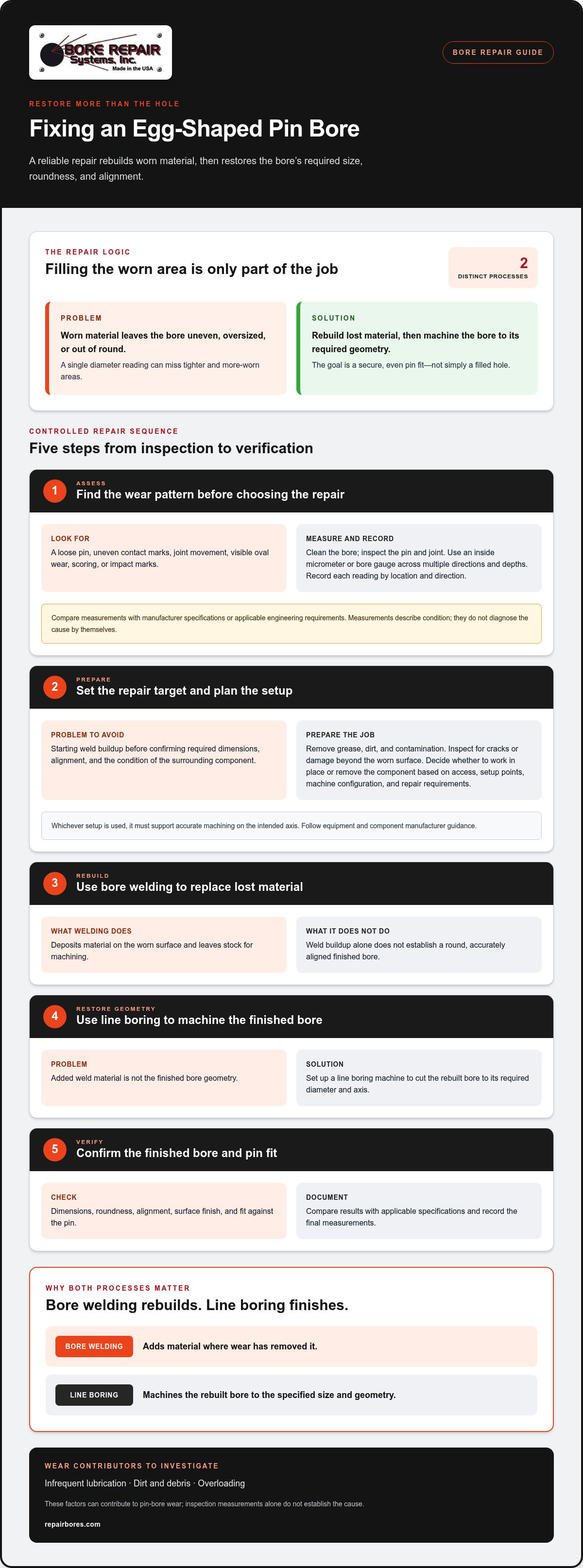
Table of Contents
How to Identify an Egg-Shaped Pin Hole Before Repair
A pin bore can look enlarged without being uniformly worn. An egg-shaped pin hole has more wear in some directions than others, leaving an out-of-round profile. A single diameter reading can miss the tighter and more worn areas that determine how the pin contacts the bore.
Look for a loose pin, uneven contact marks, movement in the joint, or visible oval wear. These are reasons to inspect and measure, not proof of the bore’s dimensions or the cause of the wear. Measurements describe the bore’s condition, but they don’t diagnose the cause by themselves.
What makes a pin hole egg-shaped?
Repeated pin movement and concentrated contact can contribute to uneven wear, but other factors may also be involved. The direction of loading can concentrate contact on one part of the bore, gradually wearing that area more than the rest. An oval bore therefore has different diameters in different directions. A uniformly oversized hole has a more consistent increase around its circumference. Measure the bore before deciding which condition you’re dealing with or planning a repair.
How to inspect and measure bore wear
Start with a clean inspection. Remove dirt and grease that could hide wear or interfere with a measurement. Examine the bore, pin, and surrounding joint for scoring, impact marks, uneven contact, or other damage. Inspect the pin as well as the bore, since a worn or damaged pin can affect fit and complicate assessment.
Use a suitable measuring tool, such as an inside micrometer or bore gauge, and take readings across the bore in more than one direction and at multiple depths. This helps reveal localized wear and changes along the bore’s length. Record each reading by location and direction rather than relying on a single maximum diameter. Compare the results with the component manufacturer’s specifications or applicable engineering requirements. Don’t substitute a generic tolerance.
Note where each measurement was taken and in which direction.
Compare readings across the bore and along its depth to identify variation.
Check bore alignment against the component’s specifications and its relationship to mating bores.
Record visible wear and pin condition alongside the measurements.
These findings provide a baseline for planning further inspection and repair. They don’t establish the cause on their own. Before deciding how to fix egg shaped pin holes, use the measurements to define the bore’s condition and investigate possible contributors separately. Understanding the basics of Welding can help put material buildup into context, but inspection measurements guide the repair plan.
How to Fix Egg-Shaped Pin Holes: Rebuild Material and Restore the Bore
Restoring an egg-shaped pin bore takes more than filling the worn area. The repair needs to return the bore to its required size, roundness, and alignment. Follow a practical sequence: assess, prepare, rebuild, machine, and verify. Each step sets up the next, so don’t skip straight to weld buildup.
Prepare the component and plan the rebuild
Use the inspection findings and the component’s service specifications to plan the repair. Confirm the target bore dimensions and alignment before choosing a setup. Clean away grease, dirt, and other contamination, then inspect the bore and surrounding component for cracks or damage beyond the worn surface. Damage outside the bore may affect the repair plan.
Component removal isn’t always required. Access, available setup points, the machine’s configuration, and the repair requirements determine whether work can be done in place or the component needs to be removed. In either case, the setup must support accurate machining on the intended axis. Follow the equipment and component manufacturers’ guidance for procedures, dimensions, and safety controls.
Build up worn material, then machine the bore
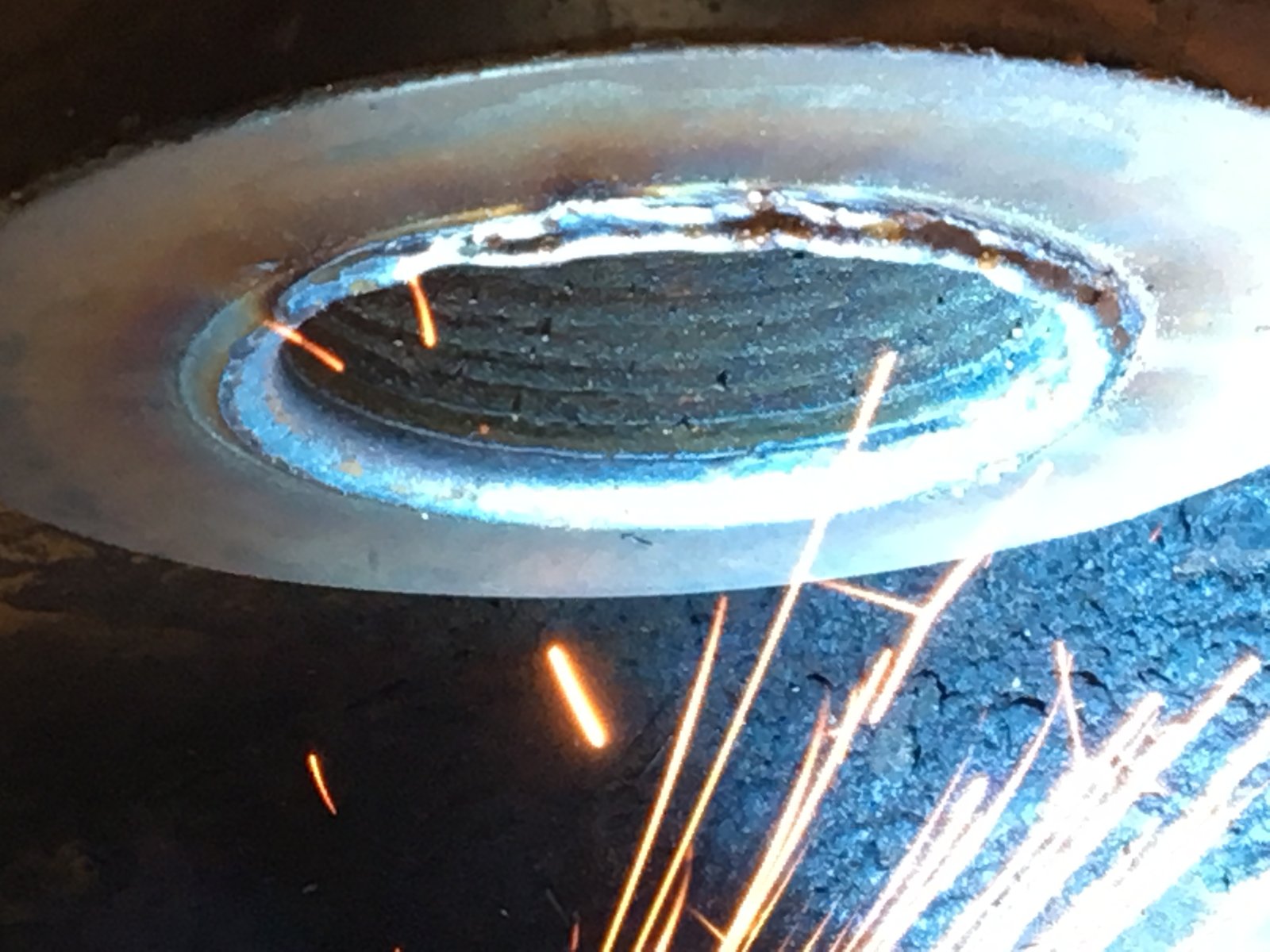
Controlled bore welding deposits material on the worn surface, leaving stock to machine back to specification. The welding approach and parameters depend on the component, equipment, and repair plan. TWI’s overview of welding processes provides useful background, while job-specific instructions should follow applicable manufacturer guidance and established procedures.
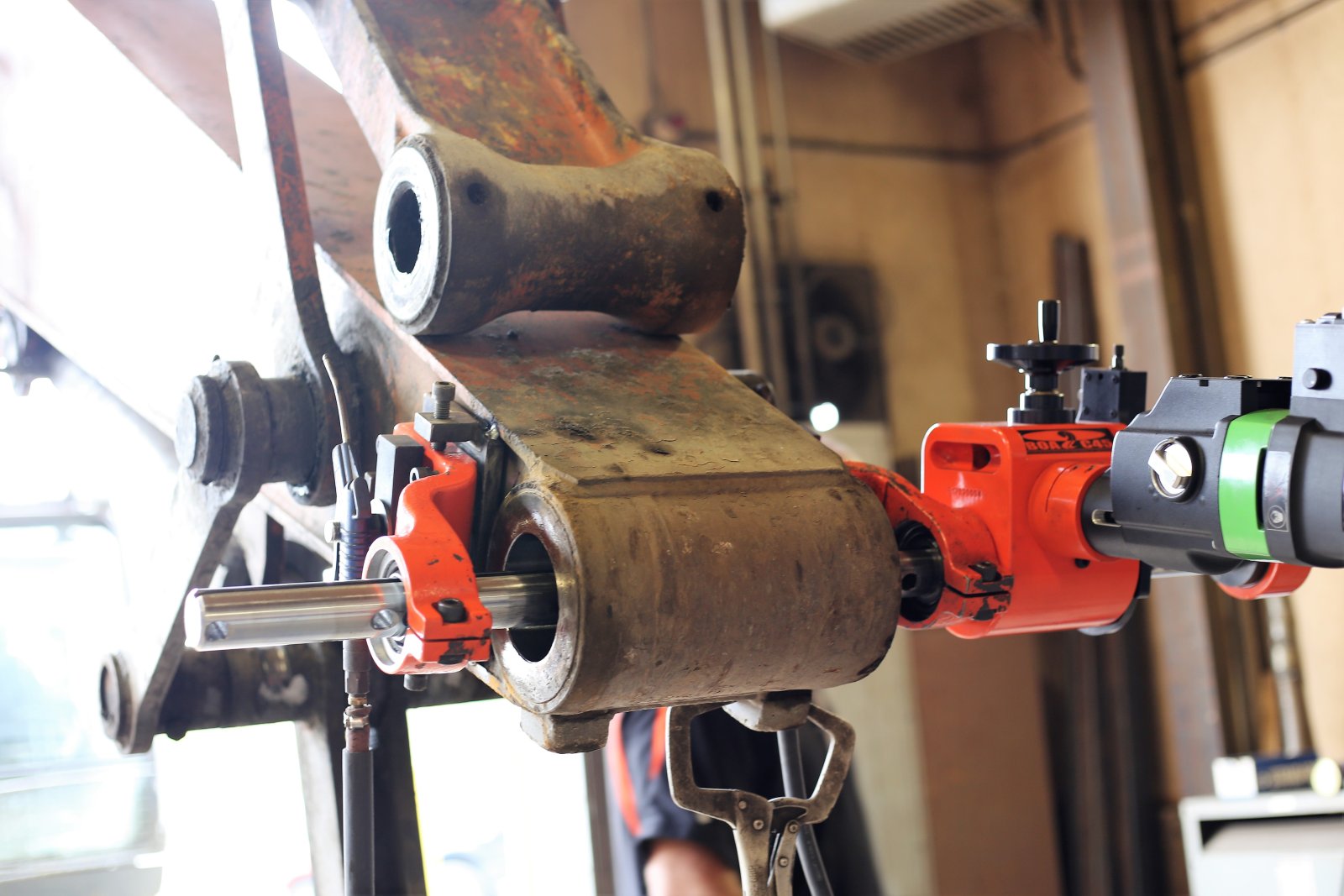
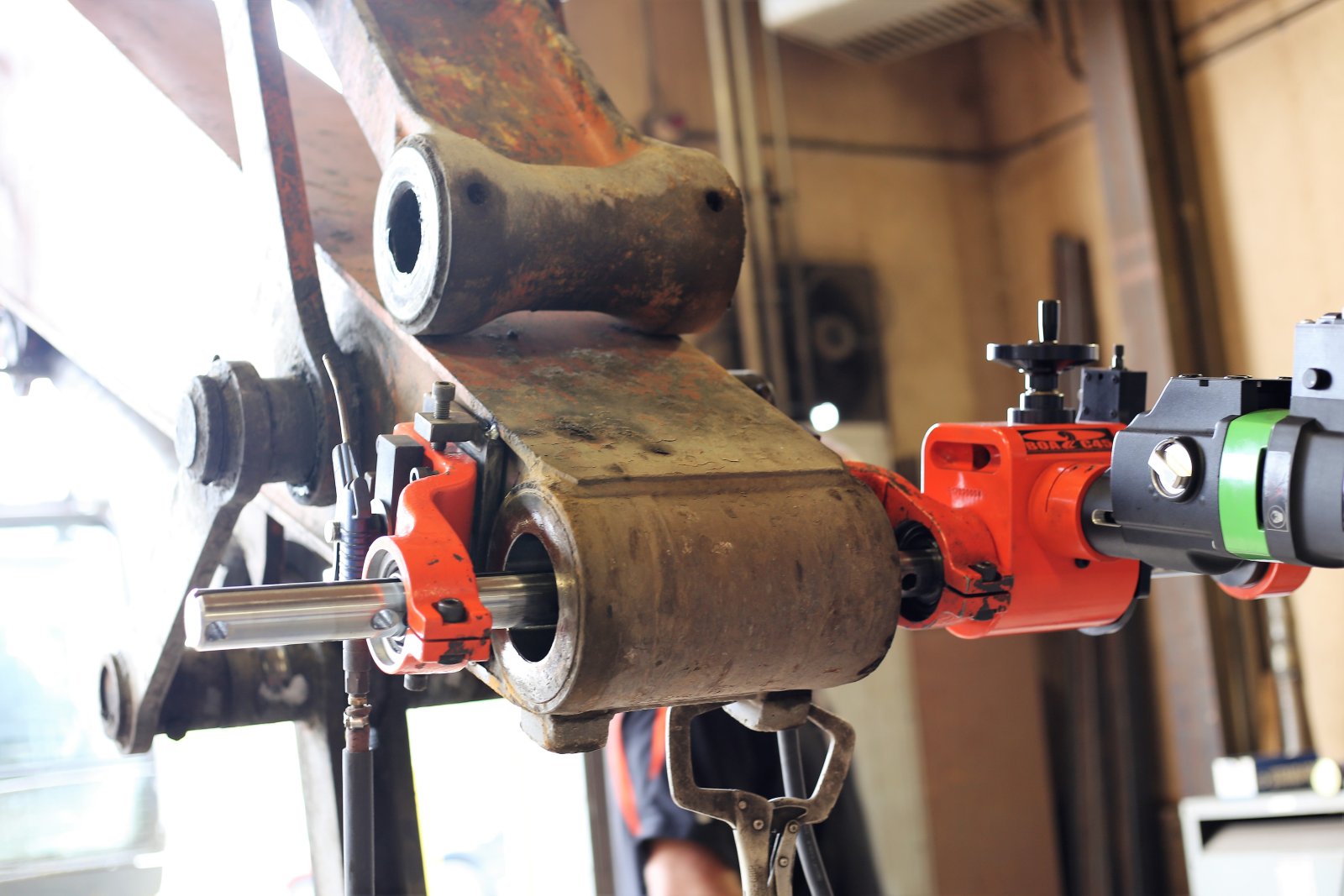
Once the weld buildup is complete and ready for machining, set up a line boring machine to cut the bore to its required geometry. Bore welding and line boring do different jobs: welding restores material, while line boring establishes the finished bore’s diameter and axis. Added weld material alone doesn’t make the hole round or aligned. Don’t assume universal weld settings or machining allowances, as these depend on the job and equipment.
Check the machined bore against the required dimensions and alignment, then verify the fit against the pin and applicable specifications. Record the final measurements. Setup and execution require suitable bore welding and line boring equipment, as well as operators trained to use it correctly. Explore bore repair equipment and training from Bore Repair Systems, Inc.
Bore Welding vs. Line Boring: Why an Egg-Shaped Hole Needs Both
Bore welding and line boring address different parts of an egg-shaped pin-bore repair. Welding restores material where wear has removed it. Line boring machines the rebuilt bore to the specified size and geometry. Understanding the difference helps prevent a common mistake: treating a filled hole as a finished, accurately aligned bore.
What bore welding contributes to the repair
Bore welding builds up the worn surface so it can be machined back to specification. The result depends on the repair plan, machine setup, and how the material is deposited and inspected. Weld buildup alone doesn’t establish final roundness or alignment. If the bore is severely worn, rebuilding material may be needed before machining can produce the intended geometry.
What line boring contributes to the repair
Line boring cuts the bore to the required size and geometry. The setup establishes the machining axis, which matters when related bores must align for the pin to fit and the joint to move properly. If wear has removed substantial material, machining alone may not correct the condition because there may not be enough sound material to cut the bore to specification.
The repair plan depends on the component’s condition and required dimensions. Poorly controlled weld buildup can leave uneven material for machining, while an incorrect boring setup can produce a bore that is round but off-axis. Use the component’s specifications to define the target geometry, and select suitable equipment and tooling for the work. Bore welding and line boring machines support separate, complementary stages of the process. Explore bore repair equipment to compare the equipment categories used in this workflow.
Alignment needs particular attention when a pin passes through more than one bore. The finished openings must work together, not just meet a diameter measurement individually. For more context on this setup challenge, consult a guide to misaligned bore repair techniques and consider how appropriate line boring accessories can support a stable machining setup. A reliable explanation of how to fix egg shaped pin holes starts with this distinction: rebuild the material first, then machine the bore to its required geometry.
How to Verify the Pin-Bore Repair and Prevent Repeat Wear
A machined bore isn’t ready for service just because it looks smooth. Verify that its dimensions, shape, alignment, and fit meet the component manufacturer’s requirements. Use appropriate measuring methods and compare the results with manufacturer or engineering specifications, not a generic tolerance that may not apply to the joint.
What to check before returning equipment to service
Use a consistent acceptance check. Record the readings and note the measurement locations so the results can be reviewed later.
Dimensions: Measure the bore at the specified points and compare each reading with the required dimensions.
Roundness: Check across multiple directions for any remaining out-of-round condition.
Alignment: Verify the bore’s axis and relationship to connected bores using a method appropriate for the component.
Surface finish: Inspect for marks or irregularities that could affect the intended fit.
Fit: Check the mating pin and bushing for damage, uneven wear, or a fit inconsistent with component requirements.
Don’t assess the repaired bore in isolation. A worn pin or bushing can undermine the joint’s fit even when the bore meets its specified dimensions. Follow the component manufacturer’s instructions for assembly, lubrication, and inspection before returning equipment to service. If the pin or bushing shows related damage, include it in the overall joint assessment. For operations requiring custom fit-check components or replacement prototypes for hard-to-source parts, resources like formaqam.com.au show how digital designs can be transformed into functional parts.
How to reduce the chance of repeat bore wear
A repair restores the bore, but it can’t guarantee that wear won’t return. Review the original wear pattern and operating conditions for clues. Uneven contact, recurring looseness, or damage at connected joints may point to issues to address in maintenance planning.
Schedule inspections of pins, bushings, and connected joints according to the equipment manufacturer’s maintenance guidance. Keep a repair record with before-and-after measurements, visible damage, parts inspected or replaced, and relevant maintenance observations. Comparing future readings with this baseline can help identify changes early and support more informed repair decisions.
Careful verification and documentation complete the process of how to fix egg shaped pin holes. Bore Repair Systems, Inc. offers bore repair equipment and training to support accurate measurement and machining. Explore equipment and training options.
Choose Bore Repair Equipment and Training for Repeatable Results
Repeatable bore repairs depend on matching equipment and operator capability to the work. Before selecting a setup, consider how often your team repairs bores, the range of bore sizes involved, access around the component, and whether the job requires portable equipment. These factors shape the workflow, from rebuilding worn material to machining the bore accurately.
Match bore repair equipment to the work
Assess the component geometry and repair requirements first. Consider the space available to mount and align equipment, the bore range your work demands, and whether repairs take place in a workshop or at the machine. Then account for the complete setup, not just the main machine. Accessories and workholding choices can affect access, stability, and how consistently the equipment can be positioned.
Bore welders and line boring machines support different stages of the repair. A bore welder rebuilds worn material; a line boring machine cuts the bore to the required geometry. Selecting equipment for both stages helps your team plan the full process instead of treating weld buildup as the finished repair. Review Bore Repair Systems, Inc.’s bore repair equipment to explore the equipment categories for this workflow.
Build operator capability alongside equipment
Suitable equipment is only part of a repeatable process. Consistent setup, alignment, and process control help operators follow the repair plan and measure results against component requirements. Training in bore welding and line boring helps teams understand how each stage fits into the workflow and how to use the equipment effectively. Choose training that reflects operators’ experience and the types of repairs they perform.
Before choosing a setup, list your common bore sizes, component access constraints, repair frequency, and portability needs. Then identify the accessories and operator skills required for the full rebuild-and-machine sequence. Bore Repair Systems, Inc.’s bore welder information and repair demonstrations can help you understand the equipment and workflow in practice.
With those requirements defined, you can decide which equipment and training support your operation. Bore Repair Systems, Inc. offers professional-grade bore welders, line boring machines, accessories, and training in line boring and bore welding. A clear assessment is a practical first step toward learning how to fix egg shaped pin holes with a controlled, repeatable process.
Restore Bore Geometry With a Controlled Repair Plan
A dependable pin-bore repair starts with measuring the damage and identifying the required dimensions and alignment. Bore welding rebuilds worn material, while line boring machines the bore back to its specified geometry. Verify the finished bore and mating components against manufacturer or engineering requirements, then use inspection and maintenance records to guide future decisions.
Understanding how to fix egg shaped pin holes means treating the repair as a complete process, not a weld-only correction. Suitable equipment and a well-prepared operator help make each stage more consistent. Bore Repair Systems, Inc. - Bore Repair Made Easy with our USA made Lineboring and Boreweld solutions offers professional-grade bore welders and line boring machines designed for heavy machinery bore repair, along with training in bore welding and line boring operations.
Build a repair workflow that fits your components, access requirements, and team’s experience. Discuss your bore repair equipment and training needs with Bore Repair Systems, Inc. - Bore Repair Made Easy with our USA made Lineboring and Boreweld solutions.
Frequently Asked Questions
What causes an excavator pin hole to become egg-shaped?
An excavator pin hole can wear unevenly when repeated movement concentrates contact on one side of the bore. Infrequent lubrication, dirt or debris, and operation beyond the machine’s specified capacity can contribute to premature wear. The direction of loading and the condition of the pin and bushing also matter. Inspect the joint and measure the bore before deciding what caused the damage or what repair it needs.
Can an egg-shaped pin hole be fixed without replacing the component?
Often, a worn pin bore can be rebuilt without replacing the component, provided the surrounding material and structure are suitable for repair. The decision depends on the extent of wear, any cracks or damage beyond the bore, and the component’s service requirements. A typical repair rebuilds lost material with bore welding, then machines the bore to its specified geometry. Inspection findings and manufacturer guidance should determine the repair plan.
Can you fix an egg-shaped pin hole with welding alone?
No. Welding can add material to worn areas, but it doesn’t establish the bore’s finished roundness, diameter, or alignment. After rebuilding, line boring machines the hole to the required geometry. The repair plan depends on the component’s condition, the amount of material lost, and applicable specifications. Welding without finish machining can leave an uneven or misaligned bore, so don’t treat weld buildup alone as a completed repair.
How do you measure an oval pin bore?
Clean the bore, then use a suitable measuring tool, such as an inside micrometer or bore gauge. Take readings across multiple directions and at more than one depth to reveal out-of-round wear and variation along the bore. Record where each reading was taken. Compare the measurements with the component manufacturer’s specifications or applicable engineering requirements. A single diameter reading may miss the difference between an oval bore and a uniformly enlarged one.
Does line boring make an egg-shaped hole round again?
Line boring can machine a bore to the specified roundness, diameter, and axis when the setup and repair plan are correct. If wear has removed too much material, machining alone may not leave enough material to produce the required bore size. In that case, the worn area may need rebuilding before machining. Verify the finished geometry against the component specifications rather than assuming the bore is correct because it looks round.
Can an egg-shaped pin hole be repaired in place?
Sometimes. Whether an in-place repair is practical depends on access to the bore, the ability to secure and align the equipment, and the repair requirements. Some components may need removal to allow a suitable setup or inspection. Assess the component geometry and work area before choosing an arrangement. Follow equipment and component manufacturer guidance for setup, procedures, dimensions, and safety controls.
How can I prevent a repaired pin hole from wearing oval again?
Investigate the wear pattern and operating conditions, then follow the equipment manufacturer’s maintenance instructions. Keep pins, bushings, and connected joints clean, lubricated, and under routine inspection. Check for looseness, uneven contact, or damage that could contribute to recurring wear, and avoid operating beyond the machine’s specified capacity. Record repair measurements and maintenance observations so future inspections can identify changes. No repair method can eliminate wear under all operating conditions.
Comments