

How to Calculate Line Boring Machine Costs and Payback

Renting isn’t automatically cheaper than buying. The better choice depends on how often you’ll use the equipment and what each job costs your operation. To calculate line boring machine ROI, compare the savings and income the machine may generate with its purchase, operating, and maintenance costs. Estimate payback by dividing the investment by the net benefit it produces over time.
It’s reasonable to focus on the upfront investment, but the decision also affects job scheduling, outside service expenses, and how much work your team can handle in-house. A machine that sits idle may tie up capital, while frequent use can make ownership worth evaluating.
This guide compares buying, renting, and outsourcing, outlines cost factors for portable line boring equipment, and explains a straightforward ROI calculation. You’ll see how utilization, labor, setup, and maintenance influence payback, so you can build an estimate around your actual workload rather than rely on a one-size-fits-all figure.
Table of Contents
Purchasing and renting line boring equipment
Compare ownership, rental, and outsourced repair against the same workload and cost categories. Use these steps to assess equipment fit, expected use, and the factors behind line boring machine ROI.
Compare Buying, Renting, and OutsourcingMap the shop’s recurring bore work before deciding how to access equipment. Compare purchase and rental costs with outsourcing invoices, transport, scheduling delays, and downtime for each job type. Buying may suit steady demand that keeps the machine productive; renting can suit occasional or specialized work. Outsourcing avoids equipment ownership but leaves timing and job capacity outside the shop.Estimate local demand from maintenance records, customer fleets, and repeat bore failures. Construction, agriculture, mining, and industrial maintenance can generate work on excavators, loaders, tractors, and other heavy equipment. Assess competition by reviewing local repair capabilities, mobile coverage, and stated specialties. Use that picture to estimate likely work, not assumed market share. For field examples of line boring work, see portable line boring examples.
Evaluate Investment, Lifespan, and Ownership RisksList the full ownership investment, including the machine, compatible tooling, transport, storage, maintenance, and operator training. Estimate useful life from expected workload, care, wear, and repairability rather than assuming a fixed service life. A portable boring machine also needs suitable mounting, access, and power arrangements at the job site. Check that its capacity matches the bore sizes and repair tasks the shop expects to handle.Define ROI as the net benefit from owning equipment relative to the total investment over a stated period. One practical calculation is net savings divided by total investment, multiplied by one hundred. Count avoided outsourcing and recovered production time as benefits, then subtract operating, maintenance, and training costs. Ownership risks include idle capacity, breakdowns, tooling gaps, and reliance on trained operators. In the United States, financing terms depend on the lender, while tax deductions and depreciation depend on equipment use, classification, and applicable federal and state rules. Separate loan cash flow from tax treatment, then apply current rules to the shop’s circumstances with a tax professional.
A simple annualized-cost check can make the comparison more concrete. Treat that annual amount as a starting point for evaluating ownership, not as the complete cost of operating the machine. Add the relevant ownership expenses already identified, then compare the total with outsourcing or rental for the same workload.
The comparison is most useful when it reflects the shop’s expected jobs and actual use, not an assumed level of demand. If the machine is likely to sit idle, its annualized cost still matters. If it supports recurring work, weigh its contribution against the costs it may help avoid. Keep assumptions visible, including workload, operating costs, and the period assessed. Revisiting them as demand or equipment needs change helps the shop judge whether ownership remains practical, while retaining rental and outsourcing as alternatives when they better match the work.
ROI considerations for portable line boring
Track the labor, tooling, power, maintenance, and transport costs for each portable boring job. Then compare those costs with time saved and work completed in-house.
Identify Operating CostsBuild a job-level cost record for each portable boring setup. Include operator time, power or hydraulic supply, cutting tools, wear parts, maintenance, transport, and setup materials. Separate costs incurred on every job from periodic service and repairs. This reveals which tasks consume resources and prevents recurring tool replacement from disappearing into general shop overhead.Also record rework, idle time, and delays caused by missing tooling. For example, a bore that needs another pass uses additional operator time and cutting tools. Track the cause, such as setup alignment or a worn insert, so you can address the expense instead of treating every job as identical.
Allocate shared expenses consistently across jobs. If a power unit supports several machines, assign its energy and maintenance costs using actual operating time. Apply the same method to vehicle use, storage, and shop support. Consistency makes month-to-month comparisons useful; changing allocation rules can make a cost shift look like a productivity gain.Separate billable work from internal maintenance. A machine used to restore a fleet’s own pin bores can reduce outside repair spending, while customer work can generate revenue. In both cases, count only the value the work actually delivers. Don’t count the same labor as both an avoided invoice and added production value.
Estimate Labor and Setup Time SavedMeasure setup and cutting time separately for each recurring repair. Include mounting, alignment, tool adjustment, machining, and cleanup. A documented LBM250 case study reports portable line boring setup took around 14 minutes. Treat that as a case example, not a default for every bore, because access, mounting, and component condition affect setup.Compare in-house hours with the complete outside-repair cycle, including coordination and equipment downtime. Count labor savings only when those hours are freed for other productive work or avoid a real expense. Keep technician training in a separate record, since learning and repeatable setup affect how much potential time savings the shop can capture.
Review records by job type before judging profitability. Compare similar repairs, such as repeated pin bores, rather than combining unlike components. Check whether travel, access, wear, or setup changes the balance. If one job category repeatedly requires extra tooling or corrective passes, revise its cost assumptions instead of applying the average to every repair.Use the resulting cost profile to decide where workflow changes matter most. A faster setup helps only if alignment and machining remain accurate. Track finished bore quality alongside labor and tooling use, then use those records to refine operator training and job planning. For a discussion of your equipment workflow, contact the team.
ROI calculation formula
Use a consistent period and separate gross savings from operating costs. These steps turn job records into a useful return and payback estimate.
Set the measurement period and define the investment scope. Include the machine, compatible tooling, setup equipment, and training in the initial investment total. Choose an annual or project-based analysis and apply that period consistently. Keep financing cash flow distinct from equipment investment so you don’t count loan payments and the purchase cost twice.
Establish the cost baseline before adding projected savings. In the high-school field-marking example, five fields are marked weekly for 35 weeks.That example shows why the baseline needs separate categories. Labor, materials, and other operating costs can change differently after an equipment purchase. Use actual records for the work being evaluated, not field-marking values as a line boring estimate.
Calculate annual net benefit by adding avoided outside costs and the contribution from new work, then subtracting operating expenses. Include maintenance, tooling, power, labor, and other recurring costs. Count each benefit only once. For example, don’t add a saved outsourcing invoice and the same repair expense under another label.Then calculate ROI as annual net benefit divided by total investment, multiplied by 100. Keep the inputs tied to the same period. A documented high-school example reports a 16.75% annual ROI in Year 1; use it as an example of an outcome, not a forecast for a machine purchase.
Estimate payback separately from ROI. Divide the initial investment by the expected net benefit per period to estimate how many periods recovery will take. If annual net benefit varies with workload, calculate separate low-use and high-use cases instead of treating one busy period as typical.
Test the result with a sensitivity check. Recalculate using lower job volume, higher maintenance, or less time saved. If a small change sharply shifts payback, the decision depends heavily on that assumption. Keep inputs visible, update them with completed-job records, and compare each period’s actual net benefit with the original estimate.
What is a line boring machine used for?
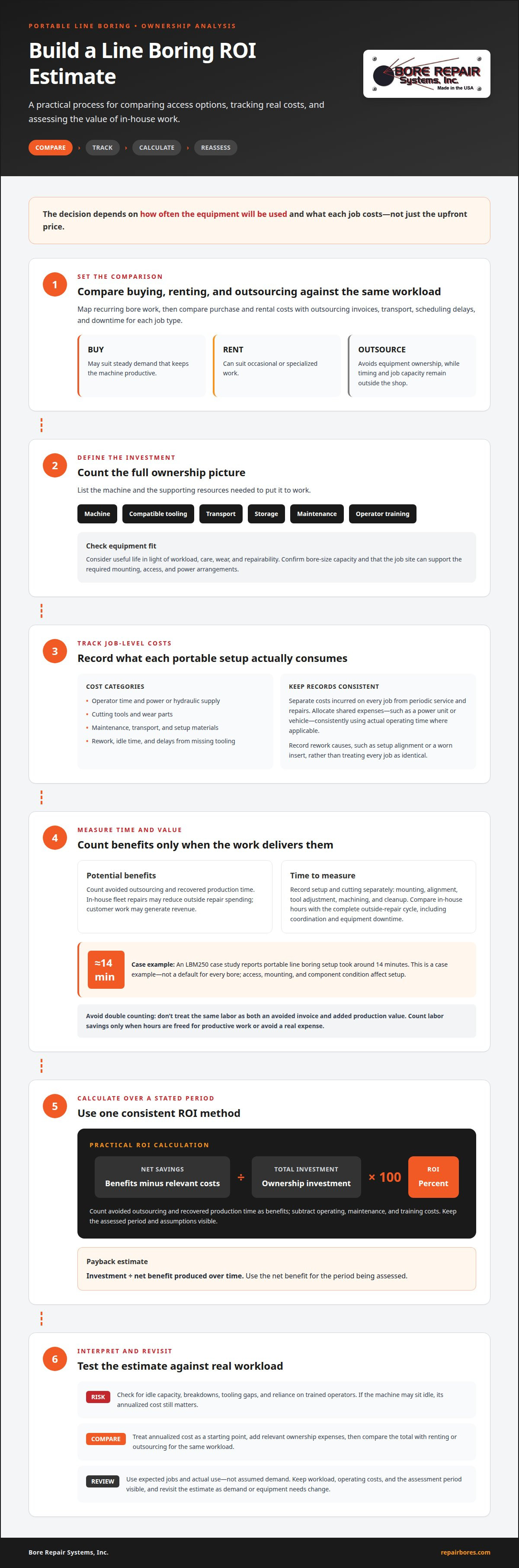
A line boring machine restores worn or misaligned bores in heavy equipment. The process machines a bore around an aligned boring bar, helping return connected holes to a common axis.
Identify the bore and its function before selecting a repair method. Line boring is used on pin, pivot, and bearing bores in equipment such as excavators, loaders, and industrial machinery. Wear can leave a bore enlarged, tapered, or out of alignment, affecting how connected components fit and move. The repair target is a correctly aligned bore suited to its mating pin, shaft, or bushing.
Establish the component’s functional references before setting up the boring bar. The worn bore itself may no longer provide a reliable alignment reference, so align the bar to the component’s functional references instead. This matters when connected bores must share an axis. A setup that follows the wear can reproduce the defect rather than restore the intended geometry.
Match the finished bore to its application and tolerance requirements. Engineers use line boring machines to achieve workpiece precision to the nearest micrometer, depending on the sector and machinery. H7 is a typical tolerance class for bushing and bearing seats. The needed fit depends on the mating component and its function, so the machining plan must account for the final seat, not just the bore’s visible wear.
Assess whether the bore has enough material for machining. If an ovalized bore cannot be restored within the available stock, use welding overlay followed by line boring to size. The overlay rebuilds material before machining establishes the final bore. This sequence applies to heavy equipment repair when a worn pin bore has lost too much material for a direct cut to restore the required fit.
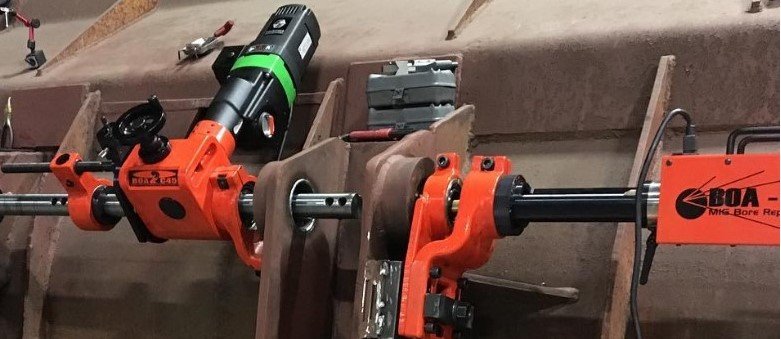
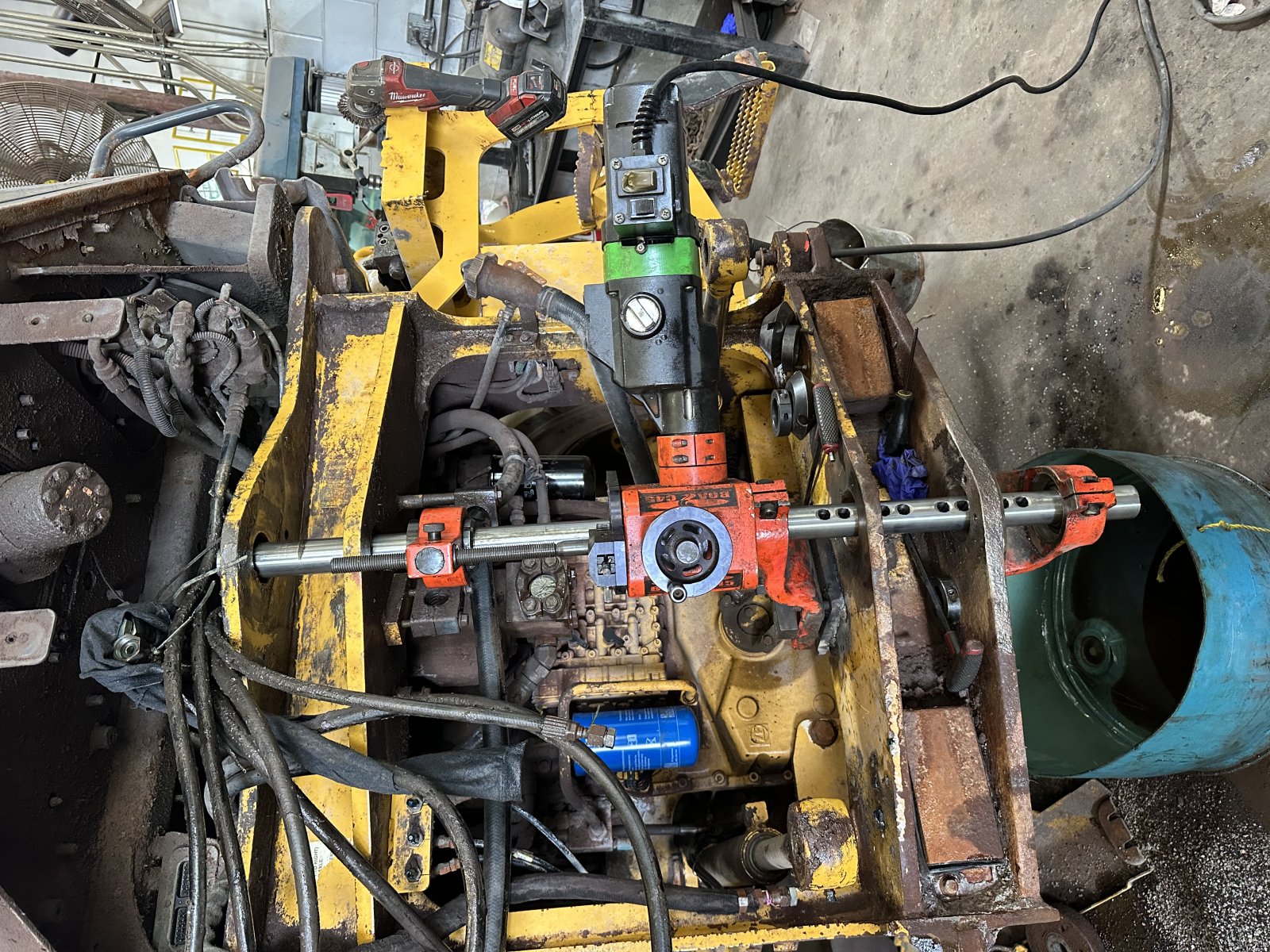
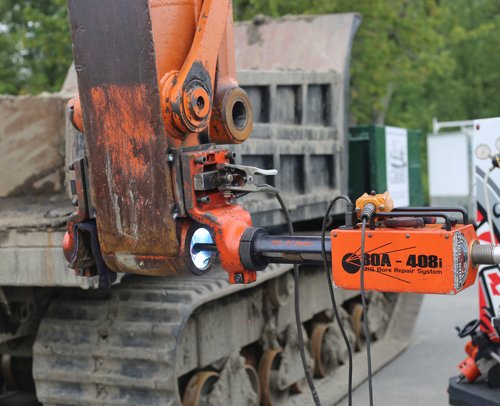
Choose portable equipment when the component is difficult to move or the repair location makes transport impractical. Portable line boring lets you machine at the equipment rather than move a large assembly to a fixed machine. For example, an excavator linkage can be set up for bore repair while remaining with the machine. Confirm that the bar, supports, and tooling suit the bore’s access and required dimensions.
Check whether the repair requires additional operations. Some line boring systems support related work such as drilling, tapping, or welding overlay, depending on their configuration. These steps can matter when a repair involves damaged mounting features alongside worn bores. Define the component’s required final condition first, then choose the machining sequence and equipment to match the repair scope.
What labor and setup time does in-house line boring save?
Measure each stage of an in-house repair, then compare it with the complete outside-repair process. The useful saving is time that avoids cost or can be reassigned to productive work.
Record the outside-repair timeline for a specific bore job. Include arranging the repair, preparing and moving the component, waiting for machining, and reinstalling it. For an excavator pin bore, note when the machine becomes unavailable and when it returns to work. These stages show how elapsed time differs from hands-on labor.Keep technician hours separate from equipment downtime. A repair may involve limited machining labor but still interrupt a larger maintenance sequence. Record each delay by cause, such as transport, scheduling, or waiting for the component. This breakdown lets the shop compare equivalent work rather than treating the entire outage as labor saved.
Time each in-house task from preparation through inspection. Record setup, alignment, machining, tool changes, and cleanup separately. For example, a linkage bore may need additional alignment work if access is restricted. Break the job into stages so one slow operation doesn’t distort the estimate for every repair.Use the same start and finish points for each recorded job. Include operator time spent securing the component and setting up the boring bar. Keep interruptions separate from active work. This creates a reliable comparison between a completed in-house repair and the outside process for the same component type.
Calculate labor hours avoided by subtracting in-house labor from comparable outsourced labor. Convert hours into financial benefit using only the shop’s actual labor cost. Don’t count downtime as labor unless technicians were paid for idle time or reassigned work created measurable value.For example, if a maintenance team can use freed technician hours on another scheduled repair, record that work separately. If the hours remain unused, treat them as available capacity, not automatic savings. This distinction keeps the return estimate grounded in what the shop can actually capture.
Track setup consistency across repeat jobs. A trained operator may follow a standard sequence for mounting, alignment, and cutting, while unfamiliar work may require more preparation. Record the bore location, access conditions, tooling, and corrections. Those details help explain why setup varies between a loader linkage and an industrial machine housing.Review rework alongside elapsed time. A fast cut that requires correction can erase the apparent gain. Record inspection results and any additional machining, then compare finished jobs. Reliable time savings come from completing the required repair correctly, not simply shortening the initial setup.
Use job records to update the payback model as workloads change. Separate recurring bore repairs from unusual jobs, and compare similar components. If setup time falls as operators repeat a process, update future estimates using completed jobs. Keep training and equipment costs visible so the time calculation reflects the full in-house workflow.For help matching training needs to your repair workflow, discuss your line boring requirements.
Bore Repair Systems, Inc. - Bore Repair Made Easy with our USA made Lineboring and Boreweld solutions: Line Boring Machines
Bore Repair Systems, Inc. - Bore Repair Made Easy with our USA made Lineboring and Boreweld solutions offers line boring machines and portable machine tools for shops assessing in-house bore repair. Match equipment capabilities to the bore work your team expects to handle, then weigh that fit against workload, operating costs, and operator readiness.
For shops building in-house capability, Bore Repair Systems offers line boring and bore welding training. Bore welders are relevant when worn bores need material restored before machining. The right combination depends on the repair tasks and workflow you plan to bring in-house.
Contact Bore Repair Systems, Inc. - Bore Repair Made Easy with our USA made Lineboring and Boreweld solutions to discuss your equipment and training needs.
Turn Your Cost Model Into a Practical Next Step
Use your estimate to decide what the shop should measure next. If projected results depend on repeat work, start by organizing upcoming jobs by bore type, access conditions, and required repair process. This gives your team a clearer basis for matching equipment and training to real shop needs.
Keep the model active after the decision. Compare completed jobs with the assumptions behind your line boring machine ROI, then adjust the plan when workload or repair requirements change. An estimate is not a fixed promise; it is a working tool for deciding how to build capability and allocate shop resources.
Bore Repair Systems, Inc. - Bore Repair Made Easy with our USA made Lineboring and Boreweld solutions can help you discuss the equipment and training options relevant to your bore repair work. Contact Bore Repair Systems, Inc. - Bore Repair Made Easy with our USA made Lineboring and Boreweld solutions to discuss your needs and take the next step with a clearer plan.
Frequently Asked Questions
How much does a line boring machine cost?
The investment depends on the machine configuration and the tooling needed for your repair work. A portable setup for specific bore tasks may require different equipment and accessories than a system intended for broader shop use. Compare the equipment scope with your expected applications, operator training needs, and ongoing operating costs. This gives you a more useful investment figure than considering the machine alone.
How many jobs per year are needed to pay off a line boring machine?
Divide the total investment by the net contribution from each completed job. Net contribution is the value retained after job-specific labor, tooling, maintenance, and other operating expenses. For example, a shop handling several bore types should calculate contribution separately for each type, then use its expected job mix. This avoids assuming every repair produces the same savings or revenue.
How do you calculate line boring machine ROI and payback period?
Calculate ROI by dividing net benefit over a chosen period by total investment, then multiplying by 100. Estimate payback by dividing the investment by net benefit per period. For a practical projection, separate internal repairs from customer jobs and use the contribution each actually creates. Keep the period consistent, and update the inputs as completed-job records replace estimates.
Comments