

Choosing a Bore Repair System for Worn Bores

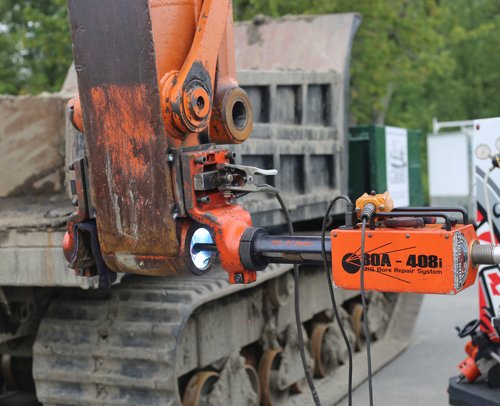
A worn bore doesn’t always require removing the component. A bore repair system can rebuild a damaged surface with bore welding, then machine it to the required dimensions with line boring. Portable systems can perform this work in situ, keeping the repair focused on the bore.
Choosing the right approach depends on the damage and what is needed to restore the bore’s size, shape, and alignment. Each core part of the equipment has a specific role: the boring bar and cutting tools machine the bore, while the welding equipment adds material where wear has removed it.
This guide explains how bore welding and line boring work together, what the main system components do, and which factors matter when selecting equipment for worn or damaged bores. It offers a practical framework for understanding the repair process and matching a system to the job.
Table of Contents
Bore repair system
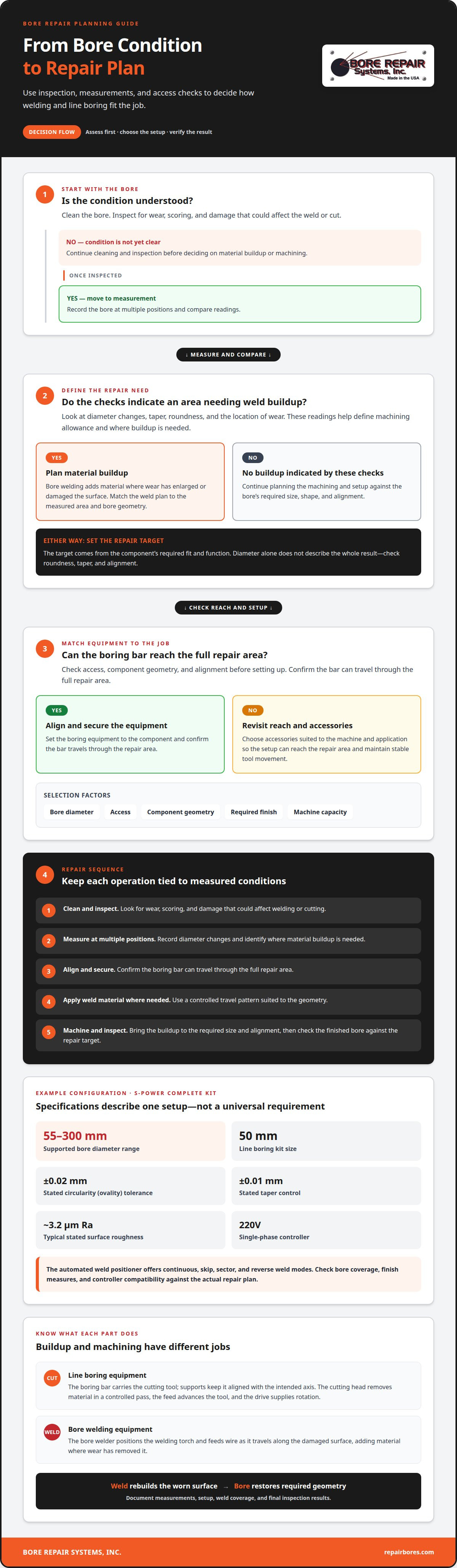
A bore repair system combines material buildup and precision machining to restore a worn opening. Portable line boring and bore welding systems can work in situ without removing components. Bore welding adds material where wear has enlarged or damaged the surface. Line boring then machines the repaired bore to the required geometry. The two operations address different parts of the same repair: welding rebuilds the surface, while boring restores shape and alignment.
Start by identifying the damage. Uneven wear in a pin bore calls for a different repair plan than localized scoring or damage. Measure the opening at several positions and compare the readings. Changes in diameter, taper, and roundness help define the machining allowance and indicate where weld buildup is needed. Inspect access, component alignment, and nearby surfaces before setting up equipment. These checks help shape the repair plan before machining or welding begins.
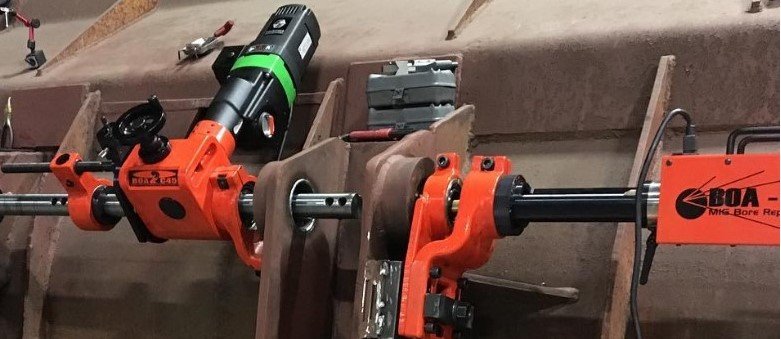
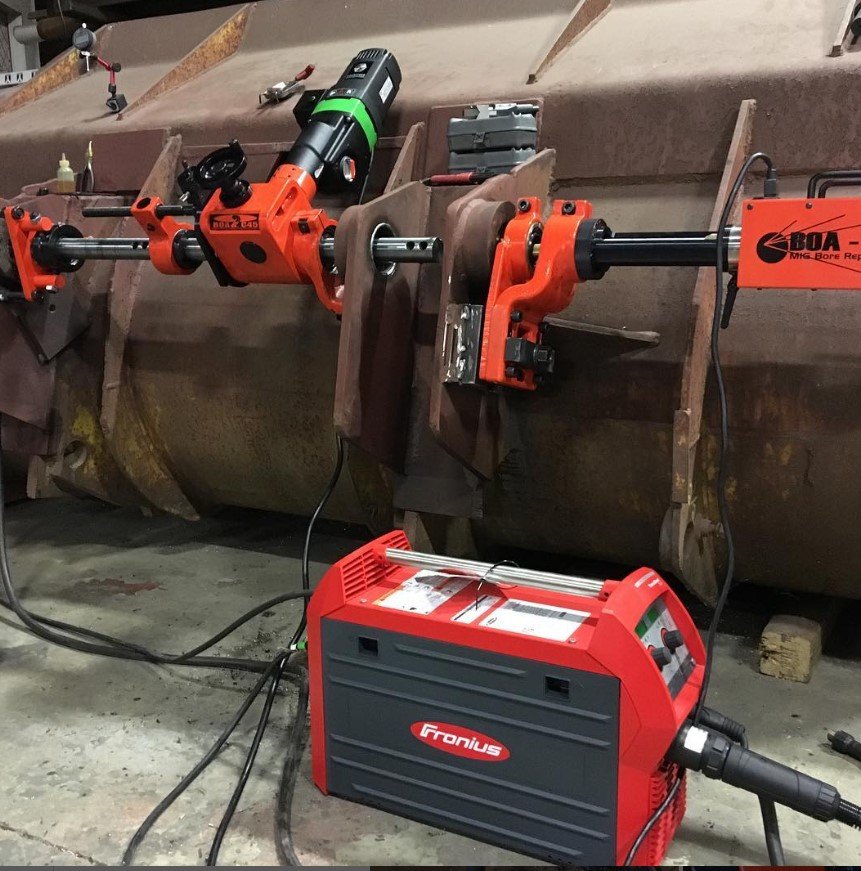
Each core component controls a specific part of the work. A boring bar carries the cutting tool through the bore, and its supports keep the tool aligned with the intended axis. The cutting head removes material in a controlled pass. A feed mechanism advances the tool, while the drive supplies rotation. For material buildup, a bore welder positions the welding torch and feeds wire as it travels along the damaged surface. Select accessories to suit the machine and application so the setup can reach the repair area and maintain stable tool movement.
A practical sequence keeps machining and material buildup tied to measured conditions:
Clean the bore and inspect its surface for wear, scoring, and damage that could affect the weld or cut.
Measure the bore at multiple positions. Record diameter changes and identify the area requiring material buildup.
Align and secure the boring equipment to the component. Confirm that the bar can travel through the full repair area.
Apply weld material to the worn surface using a controlled travel pattern suited to the geometry.
Machine the buildup to the required size and alignment, then inspect the finished bore against the repair target.
Equipment selection depends on bore diameter, access, component geometry, and the required finish. For example, a system with a 50 x 1600 mm boring bar has a different reach and setup profile from equipment using another bar size. A 3100-watt brushless servo motor and a 400-watt feed stepper motor are specified on one configuration. Those figures describe drive components, not a universal requirement for every repair. Match machine capacity to the job rather than treating one configuration as a standard.
Accuracy targets also depend on the component. The National Institute of Standards and Technology states that fuel-injector plunger-bore assemblies have form tolerances of less than ± 1 pm and size-class tolerances of ± 0.5 pm. These figures apply to those assemblies, not automatically to heavy-equipment pin bores. Set the repair target from the component’s required fit and function. Check roundness, taper, and alignment after machining; a correct diameter alone does not describe the whole result.
Keep unrelated testing limits separate from bore-repair specifications. According to the Federal Energy Regulatory Commission, during hydraulic pressure testing, water pressure should be limited to 1 pound per square inch per foot of depth in rock and 0.5 pound per square inch per foot of depth in overburden. That guidance concerns hydraulic pressure testing. It does not set a bore diameter, welding parameter, or machining tolerance. A sound repair plan uses the right criteria for each task.
Finally, document the measurements, setup, weld coverage, and final inspection results. This record connects the observed wear to the repair performed and supports consistent work on similar components. A bore repair system depends on correct alignment, suitable buildup, controlled machining, and inspection against the component’s actual requirements.
The S-Power Complete 50 mm Line Boring and Bore Welding Kit supports bore diameters from 55-300 mm, and its automated weld positioner provides continuous, skip, sector, and reverse weld modes. Its stated circularity (ovality) tolerance is ±0.02 mm, while its stated taper control is ±0.01 mm.
The kit lists typical surface roughness as ~3.2 µm Ra and uses a 220V single-phase controller. These specifications help match a setup to a repair target: the diameter range frames bore-size coverage, the weld modes describe positioner options, and the tolerance and roughness figures provide stated finish measures. The controller supply is another compatibility detail to check when planning equipment use.
Bore Repair Systems, Inc. - Bore Repair Made Easy with our USA made Lineboring and Boreweld solutions
Bore Repair Systems, Inc. - Bore Repair Made Easy with our USA made Lineboring and Boreweld solutions helps equipment teams select the tools and training needed to approach bore repairs methodically. Turn to its bore welders, line boring machines, accessories, and training when you’re building or improving an equipment repair process and need support matching the work to the right setup.
Review the line boring and bore welding equipment to understand the tools available for machining and weld buildup. Training helps operators develop practical skills in line boring and bore welding, while accessories support the equipment used for the job. The right combination depends on the repair task, equipment, and operator needs.
For guidance on equipment and training for your repair work, contact Bore Repair Systems, Inc. - Bore Repair Made Easy with our USA made Lineboring and Boreweld solutions.
Put the Next Repair Plan Into Motion
Use the next worn bore as an opportunity to build a more consistent repair process. Define the condition to address, the equipment required, and the skills your team needs to carry out the work. This planning helps make a bore repair system a practical part of equipment maintenance.
Bore Repair Systems, Inc. - Bore Repair Made Easy with our USA made Lineboring and Boreweld solutions offers bore welders and line boring machines, along with line boring and bore welding training services. These offerings can support teams selecting equipment or developing their repair capabilities.
When you’re ready to discuss equipment or training for your repair work, contact Bore Repair Systems, Inc. - Bore Repair Made Easy with our USA made Lineboring and Boreweld solutions. Take the next step with a clear repair objective and a plan that fits your operation.
Comments