

Excavator Pin Hole Repair: A Professional Guide to Restoring Worn Bores

Updated: Sep 1
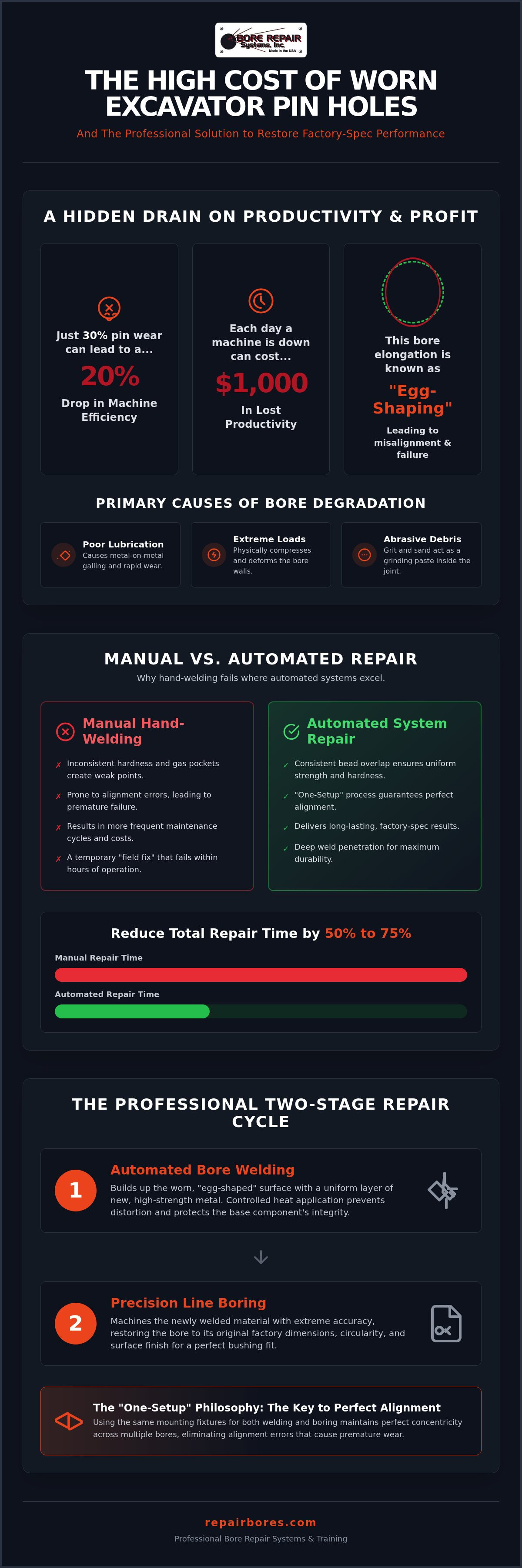
When critical pins wear by just 30%, your excavator's operational efficiency can drop by as much as 20%. This makes professional excavator pin hole repair a necessity rather than a luxury for any serious job site. It's a hidden drain on your productivity that often goes unnoticed until the bucket starts slumping or the boom begins to wander.
You've likely dealt with the frustration of egg-shaped bores and the rapid wear that follows a low-quality manual repair. When a machine is down, it can cost you $1,000 per day in lost productivity. Relying on temporary fixes only leads to alignment issues and more frequent maintenance cycles that eat into your bottom line.
This guide explains the precise mechanical process of restoring worn bores to original factory tolerances. We'll show you how a combination of automated bore welding and precision line boring restores the mechanical integrity of your equipment and eliminates the need for expensive component replacement.
We will break down the workflow for achieving perfect concentricity across multiple bores. You'll see how professional techniques and proper training can significantly reduce your long-term maintenance costs and keep your heavy machinery in the field where it belongs.
Table of Contents
Understanding Excavator Pin Hole Wear: Why Bores Go Egg-Shaped
Excavators operate in some of the harshest environments on earth. Constant friction and extreme pressure eventually lead to bore elongation, a phenomenon commonly known as egg-shaping. This occurs when the once-perfect circle of the pin hole stretches into an oval. It's a fundamental part of heavy equipment maintenance to monitor these pivots, as even small amounts of wear can compromise the entire machine's structural integrity.
Three primary factors drive this degradation. First, a lack of consistent lubrication causes metal-on-metal contact, leading to rapid galling. Second, extreme pivot loads during heavy digging create immense pressure on the bore walls, physically compressing the metal over time. Finally, abrasive debris like sand or grit enters the joint, acting as a grinding paste that eats away at the housing. Ignoring minor play in the joint is a costly mistake. Once a pin starts "walking" inside the bore, the damage accelerates exponentially. When wear exceeds 30%, your machine's operational efficiency can drop by as much as 20% because hydraulic force is wasted on taking up mechanical slack before the bucket moves.
The Anatomy of a Worn Pin Hole
Wear isn't symmetrical. Because an excavator boom primarily moves in a vertical arc, loads create specific wear zones at the top and bottom of the bore. You'll often find the hole has grown taller while the width remains relatively stable. Common visual signs include "slop" in the linkage, metal shavings around the pivot, or shiny spots where the bushing has begun to rotate against the housing. The point of no return occurs when the hole is so oversized that a standard replacement bushing no longer has a secure press-fit. At this stage, a professional excavator pin hole repair is the only way to avoid the massive expense of replacing an entire boom or arm section.
Consequences of Improper Alignment
When bores are out of round, pins cannot sit straight. Skewed bores force the pin to tilt, which puts uneven pressure on the bushings and seals. This misalignment creates a destructive ripple effect. It stresses the hydraulic cylinder rods and can even lead to cracked welds in the boom structure. If the bores on either side of a pivot aren't perfectly aligned, the pin will bind, causing excessive heat and premature metal fatigue. Bore concentricity is the foundation of heavy equipment longevity.
The Professional Repair Cycle: Bore Welding and Line Boring
Professional excavator pin hole repair is a two-stage engineering restoration. It isn't a temporary patch. The cycle begins with automated bore welding to build up the worn surface, followed immediately by precision line boring to restore factory dimensions. Attempting to weld a bore without machining it back to spec is a recipe for failure. You simply cannot achieve the necessary circularity or surface finish required for a proper bushing fit with a welding torch alone. This systematic approach ensures the repair lasts as long as the original component.
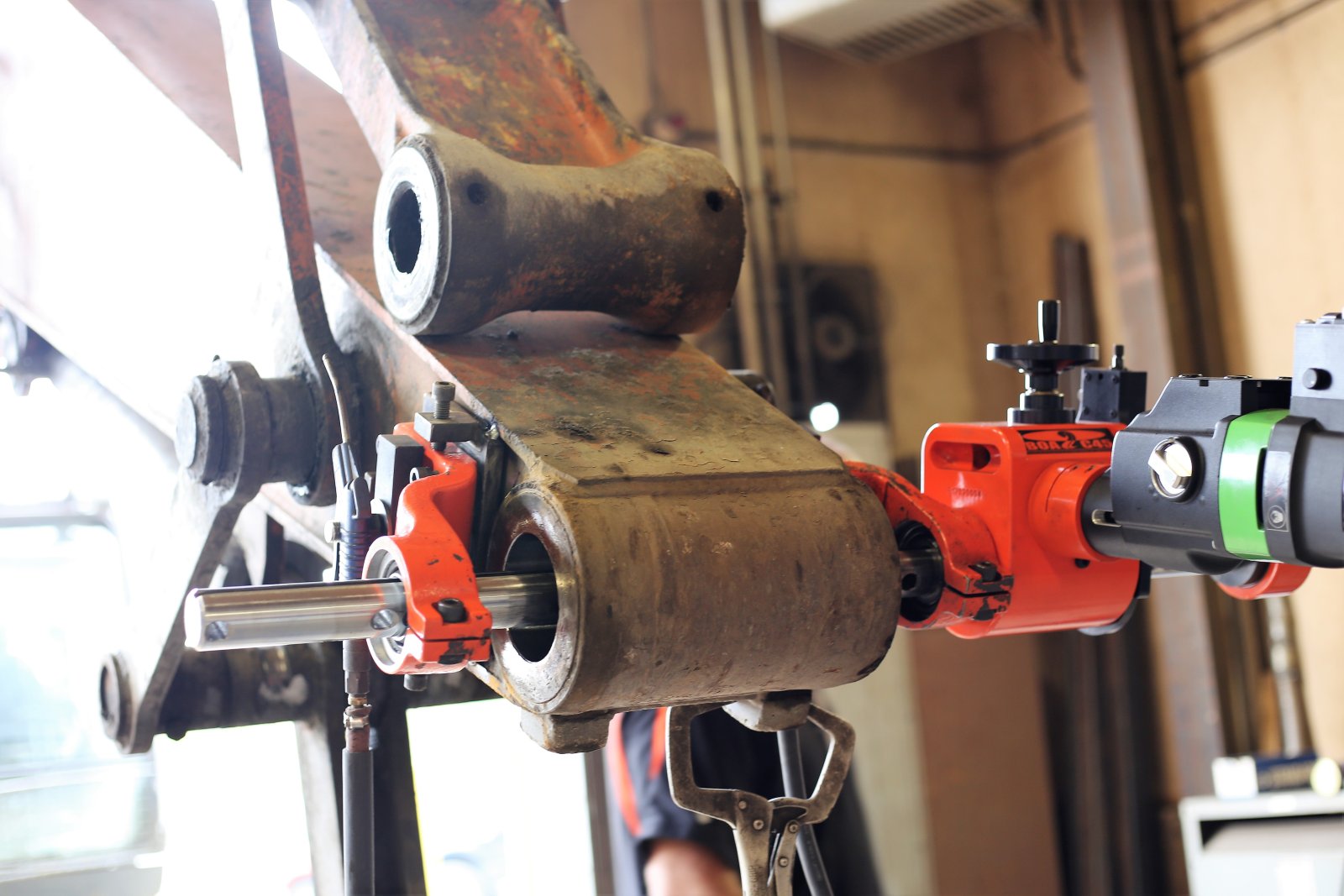
Selecting a professional bore welder for sale allows you to create a uniform base of new metal. Reliable excavator pin hole repair depends on the stability of your equipment. The most critical factor in this cycle is the "one-setup" philosophy. By using the same mounting fixtures for both the welder and the boring bar, you maintain perfect concentricity across multiple bores. If you tear down the setup between stages, you risk alignment errors that are nearly impossible to correct later. This precision is what separates a professional repair from a field fix that will fail in a few hundred hours.
Automated Bore Welding Fundamentals
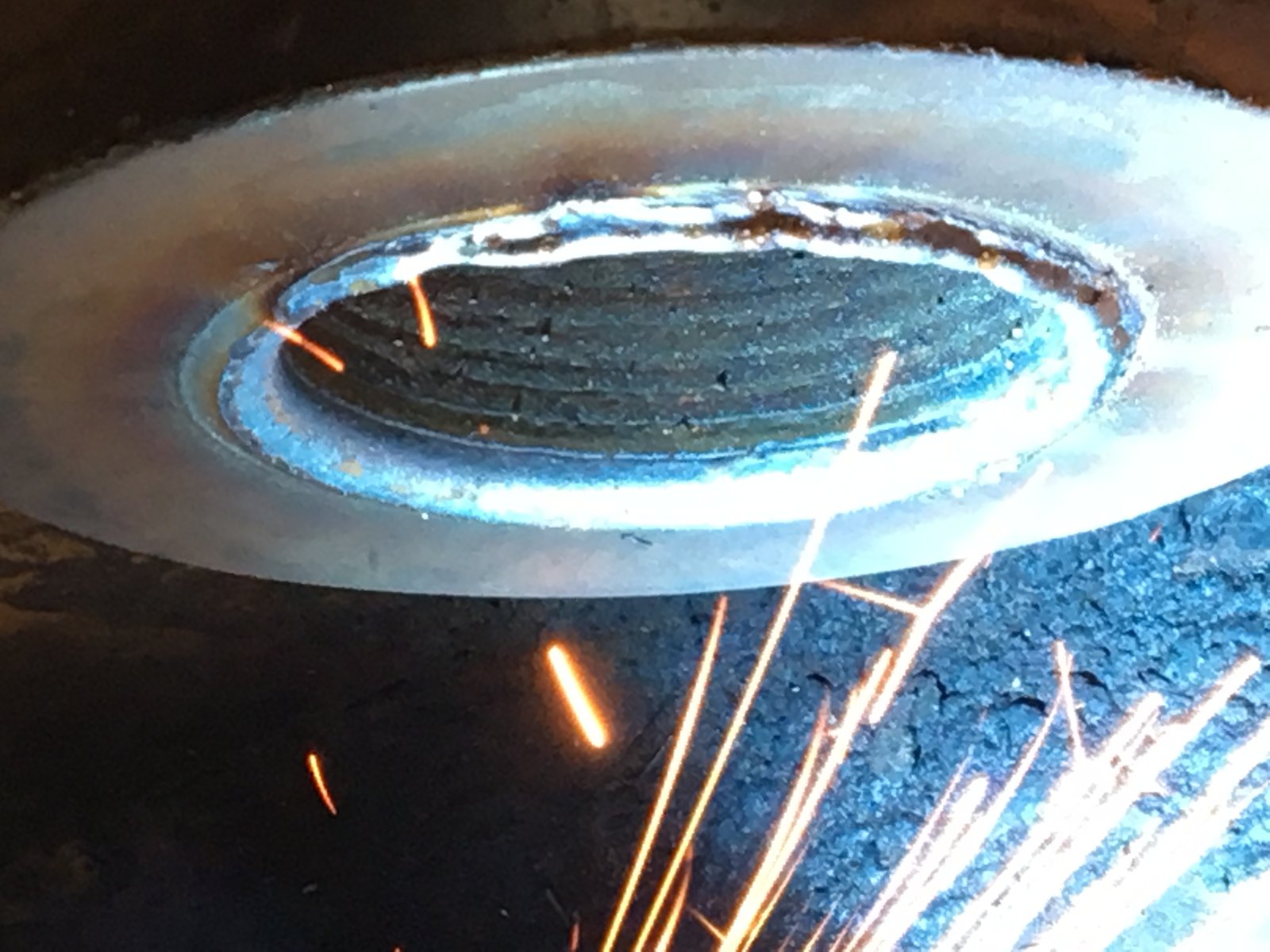
Automated systems outperform manual hand-welding by providing consistent bead overlap and deep penetration. Manual "padding" often results in gas pockets or inconsistent hardness, which can snap cutting inserts during the machining phase. Choosing the right filler metal is vital for excavator pivots that endure high-stress shock loads. Proper thermal management during this phase prevents the base metal from distorting. By controlling the heat, you protect the metallurgical properties of the arm or bucket.
Precision Line Boring Basics
Once welding is complete, precision line boring removes the excess material to reach original equipment manufacturer (OEM) tolerances. This phase requires a rigid mounting system for the boring bar to prevent chatter. If the bar vibrates, it leaves a "wavy" surface that won't hold a bushing. The final goal is to achieve a precise interference fit. This ensures the bushing remains locked in place under extreme pressure, preventing the "spinning bushing" syndrome that destroys housings.
If you're ready to stop outsourcing and start performing these repairs in-house, look at our industrial bore repair equipment to see the tools in action.
Manual vs. Automated Repair: Why Hand-Welding Fails
Many fleet managers view automated systems as a significant upfront expense. They often assume manual labor is the cheaper path because they already have the staff and basic welding equipment on hand. This is a false economy. In the context of excavator pin hole repair, manual labor is unpredictable and slow. Automated systems provide a level of precision that manual methods simply cannot replicate, turning a multi-day struggle into a predictable, high-quality process.
The hidden costs of manual repair are staggering. You spend hours on excessive grinding and re-welding to fix gaps or thin spots. Hand-welding often results in inconsistent hardness across the bore. These hard spots are "bit-killers" that snap expensive carbide inserts during the boring phase. Beyond the tool costs, manual errors lead to poor alignment. If the bore isn't perfectly concentric, the pin will "walk" within the housing, causing the joint to fail again in a fraction of its expected lifespan.
The Problem with "Weld and Grind"
Hand-welded bores frequently contain soft spots or slag inclusions that compromise metallurgical integrity. It's impossible to maintain perfect roundness using manual grinding tools. Even the most skilled welder can't match the consistent bead overlap of an automated system. When you rely on manual grinding, you create high and low spots that prevent a proper interference fit for new bushings. This leads to recurring maintenance issues and keeps your machine in the shop instead of on the job site. Manual "quick fixes" almost always result in doing the same job twice.
ROI of Automated Systems
Automated bore repair systems allow for a streamlined workflow. By using a single setup for both welding and boring, you eliminate the time wasted on constant recalibration. These systems can reduce total labor hours by 50% to 75% compared to hand-welding. When you analyze in-house line boring vs outsourcing, the return on investment is immediate. This equipment pays for itself by eliminating third-party repair bills and drastically reducing machine downtime. You gain total control over your repair schedule and ensure every job meets factory specifications.
Safety is another critical factor. Manual bore repair often requires technicians to work in awkward, confined positions where they are exposed to concentrated heat and fumes. Automated systems allow the operator to monitor the process from a safe distance. This reduces the risk of workplace injuries and long-term health issues associated with heavy industrial welding. A safer workshop is a more productive workshop.
Step-by-Step: How to Perform an Excavator Pin Hole Repair
Success starts before you strike an arc. Clean the bore to white metal. Use a wire wheel or abrasive to remove all grease, carbon, and old bushing remnants. Any contamination trapped under the weld will cause porosity. This leads to structural failure in the excavator pin hole repair. You also need to follow OSHA regulation 29 CFR 1926.600(a)(3)(i). Fully lower the bucket or boom and use substantial blocking to prevent any shifting during the repair. Safety isn't optional when working under heavy steel.
Phase 1: Setup and Alignment
Precision requires a stable foundation. You must ensure the boring bar is perfectly parallel to the machine's original centerline. Centering cones or dial indicators help establish this reference point. Proper anchoring of the line boring machine is critical, especially on heavy-duty excavator arms where vibration can ruin a finish. If the mounts aren't rigid, the bar will chatter, leaving a wavy surface. For more complex geometries or multi-bore setups, utilizing professional line boring machine accessories ensures your mounting is rigid and accurate.
Phase 2: Welding and Machining
Once aligned, switch to the welding phase. Set your parameters for automated spiral welding. You need to adjust the step-over distance on the bore welder to ensure a smooth, overlapping bead. This reduces the amount of material you have to machine later. After welding, let the component cool naturally. Forced cooling can make the metal too brittle for machining. The machining phase begins with roughing cuts to remove the bulk of the weld. Select the correct cutting speed (Surface Feet per Minute) based on the specific filler metal used. High-speed steel or carbide inserts have different requirements.
Take light finish passes as you approach the final dimension. This prevents heat buildup that can affect your final measurements. Always measure the final bore with a dial bore gauge at multiple points. You're looking for the exact interference fit specified by the OEM. A proper fit ensures the new bushing stays put under load and won't spin in the housing. Double-check your work before pressing the bushing. Precision at this stage prevents a repeat repair in six months.
To get the job done right, explore our range of industrial line boring machines and automated welders.
Mastering the Craft: Training and Equipment Selection
Owning a high-end line boring machine is only the first step. Even the most advanced equipment requires a skilled operator to deliver a factory-spec finish. Precision excavator pin hole repair is as much an art as it is a science. You need to understand how metal reacts to heat and how cutting tools behave under pressure. Without this technical foundation, you risk turning an expensive boom into scrap metal. Precision isn't just about the tool; it's about the technique.
Selecting the Right Equipment
You must match your boring bar diameter to the specific range of excavator sizes your shop services. A bar that is too small will flex and chatter during heavy cuts, compromising the surface finish. Conversely, a bar that's too large simply won't fit through smaller pivot points. Most versatile shops prioritize modular systems that handle everything from compact units to heavy mining machinery. Consider whether your primary need is portability for field repairs or the extreme rigidity required for shop-based restoration. Modular systems offer the best versatility for growing maintenance teams because they allow you to swap components to meet different mechanical challenges.
The Value of Professional Training
Investing in line boring operator training is the fastest way to ensure consistent, repeatable results. A professional program teaches far more than just how to turn a wrench. You'll learn to troubleshoot complex setup issues, select the right filler metals for different alloys, and master the "one-setup" philosophy. This ensures that every excavator pin hole repair meets the strict tolerances required for a long-lasting bushing fit.
High-quality line boring training provides an immediate return on investment by slashing the learning curve. It prevents those costly "rookie" mistakes that occur when a technician is left to figure things out on their own. When your team is properly trained, they work with more confidence and speed. This allows you to position your shop as a high-precision facility that fleet managers trust with their most critical assets. Bringing these capabilities in-house eliminates the logistical headaches of third-party scheduling and puts you back in the driver's seat of your maintenance schedule.
If you are ready to stop outsourcing and take full control of your equipment's health, explore our bore repair systems and training programs to see how we can help your team succeed.
Take Control of Your Equipment Maintenance
Restoring worn bores doesn't have to be a recurring headache for your maintenance team. By moving away from manual "patch" welding and adopting a systematic automated approach, you ensure every repair meets factory specifications. This shift protects your machine's structural integrity and extends the lifespan of expensive components. Professional excavator pin hole repair is an investment in your fleet's long-term productivity and mechanical durability.
Bore Repair Systems, Inc. brings over 20 years of manufacturing expertise to your workshop. Our equipment is trusted by top-tier mining and construction firms nationwide to deliver precision in the toughest environments. We provide more than just machinery; hands-on training is included with every equipment purchase to ensure your team is ready for the field on day one. You don't have to rely on third-party schedules or unpredictable manual results anymore.
Stop letting downtime dictate your project timelines. Equip your shop with the tools and knowledge needed to perform high-precision restorations in-house. View Our Full Line of Professional Bore Repair Systems and start maximizing your machine uptime today.
Frequently Asked Questions
Can I repair an excavator pin hole without a line boring machine?
You cannot achieve a factory-spec finish without a line boring machine. While some technicians attempt to weld and grind by hand, this method never produces the perfect circularity required for a press-fit bushing. Without the precision of a boring bar, the new bushing will have uneven contact with the housing. This leads to localized high-pressure spots and premature joint failure within a few hundred operating hours.
How much weld build-up is needed for a standard pin hole repair?
You should aim for approximately 3mm of weld build-up beyond the finished bore diameter. This machining allowance ensures the boring tool can take a clean, continuous cut through solid metal rather than just skimming the surface. Providing a consistent layer of new material allows the operator to remove all surface scale and porosity, resulting in a smooth finish that meets original equipment manufacturer tolerances.
How do I know if my excavator bore is beyond repair?
A bore is considered beyond repair if cracks have migrated deep into the structural parent metal or if the wear has removed too much of the original housing wall. If the structural integrity of the boom or arm is compromised, welding may not be enough to ensure safety. Most excavator pin hole repair projects are successful as long as the damage is limited to the bore housing itself.
Is it better to use a bushing or weld the hole back to original size?
You must always restore the bore to its original size to accept a sacrificial bushing. The bushing is designed to take the wear so that the expensive boom structure remains protected. Welding the hole to a smaller diameter to avoid using a bushing is a critical mistake. This causes the pin to wear directly against the boom, leading to catastrophic structural damage that is much harder to fix.
What type of welding wire is best for bore welding heavy equipment?
An ER70S-6 solid wire is the standard choice for most heavy equipment bore welding applications. It offers a reliable balance of tensile strength and ductility, making it easy to machine while providing a durable surface for the bushing. For specialized mining equipment or high-impact zones, you may need a specific alloy-matched filler, but solid carbon steel wire handles the vast majority of professional excavator repairs.
How long does a typical excavator pin hole repair take with automated tools?
A typical single-bore restoration takes between 4 and 8 hours with automated systems. This timeframe covers the entire professional cycle: setup, cleaning, automated spiral welding, and precision line boring. Because automated welders operate without the need for manual grinding between passes, they can reduce total repair time by as much as 75% compared to traditional hand-welding methods, getting your machine back to work faster.
Do I need to remove the excavator arm to perform a bore repair?
You don't need to remove the arm if you use portable excavator pin hole repair equipment. These systems are designed to mount directly to the machine in the field or the shop. As long as you follow OSHA safety protocols for blocking and cribbing the equipment, performing the repair in-place is highly efficient. This saves you the massive labor costs and downtime involved in total machine disassembly.
Comments