

Portable Line Boring Machine: The Ultimate Reference for In-Field Bore Repair

Updated: Sep 1
Why are you still paying thousands to haul a 40-ton machine across state lines just to fix a few worn-out pin holes? Every hour your heavy equipment sits in a specialized shop is an hour it isn't generating revenue. It's frustrating to watch egg-shaped bores stall a major project when the solution should be right there in the field. You shouldn't have to choose between high transportation costs and precision results.
Investing in a high-quality portable line boring machine allows you to bring shop-level tolerances directly to the job site. This guide will help you master the technical specifications and evaluation criteria needed to select a system that stands up to the rigors of field use. We'll break down the essentials of machine rigidity, drive systems, and bar selection so you can reduce your repair costs by 50% or more. By the end of this reference, you'll know exactly how to keep your fleet in the dirt where it belongs, without the unnecessary complication of shop-based logistics.
Table of Contents
What is a Portable Line Boring Machine and Why Use It?
A portable line boring machine is a precision machining tool designed to restore worn or oversized bores to their original manufacturer specifications. Unlike traditional shop-based equipment, these systems travel to the machine. They're essential for repairing excavators, loaders, mining equipment, and industrial hinge points that are too large or costly to transport—though for comprehensive refurbishment of such components, you may want to check out Kelsey Machine Services.
When pivot pins experience constant friction and heavy loads, the holes eventually become egg-shaped or wallowed out. This compromises safety and mechanical performance. Instead of scrapping a massive component or paying for heavy haulage, you bring the machine to the iron. The industry has shifted toward in-field maintenance because it eliminates the logistical nightmare of total machine disassembly. You don't need a lowboy trailer and a permit just to fix a single pin connection. You simply mount the boring system, align it, and cut a perfect circle again.
This emphasis on in-field reliability is common in heavy industries such as mining and oil and gas. Just as Water Services, Inc. provides robust pumping solutions to ensure site uptime, portable line boring allows technicians to maintain mechanical integrity without the need for complex off-site logistics.
The Mechanics of In-Field Precision
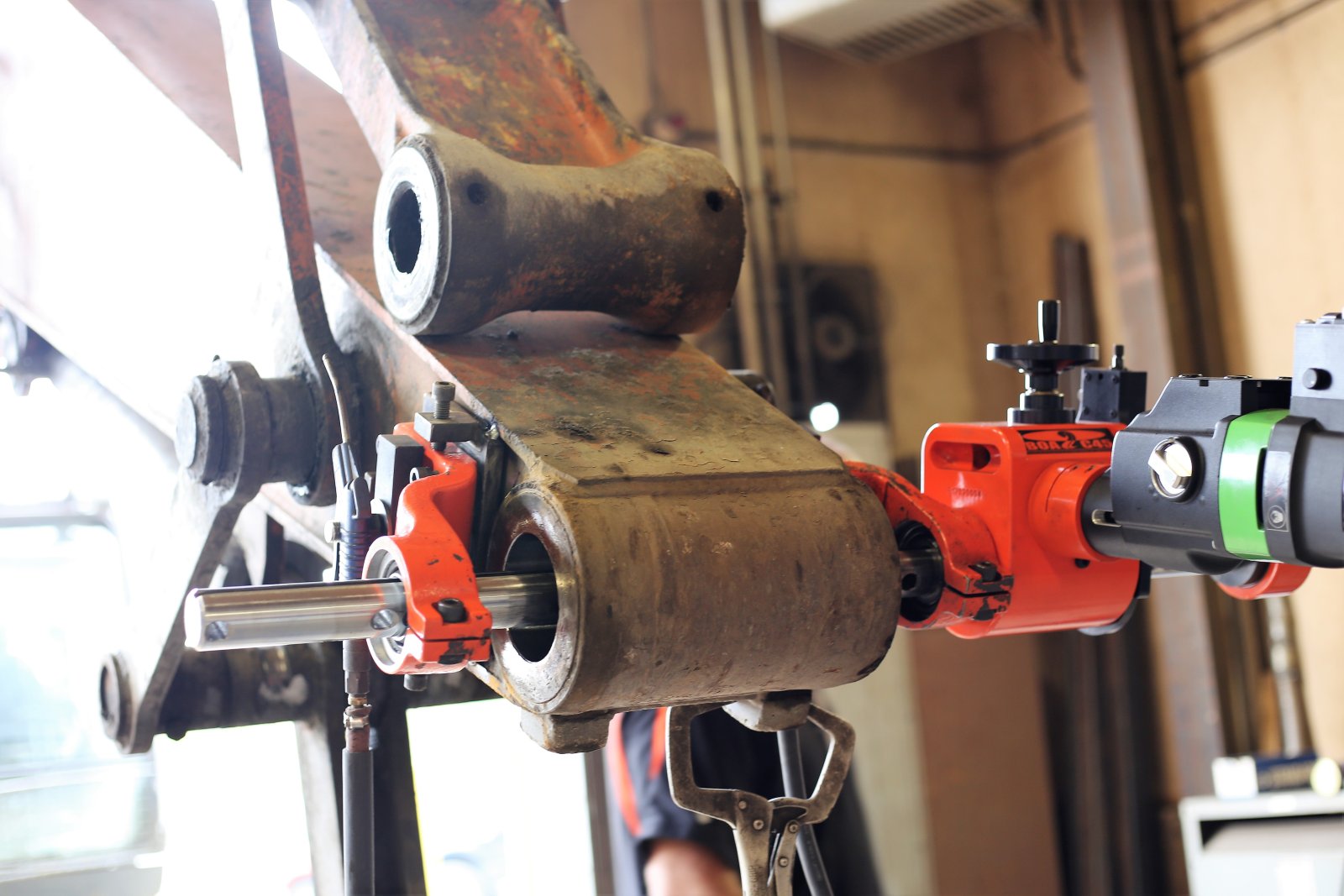
Precision starts with the boring bar. These bars must maintain perfect alignment across multiple bores simultaneously to ensure the final pin fit is square. A high-quality drive unit provides the consistent torque necessary for heavy, interrupted cuts without stalling. However, the most critical factor is rigidity. If your mounting system isn't rock-solid, you'll experience tool chatter. Chatter ruins the surface finish and destroys your tolerances. A professional setup uses heavy-duty mounting brackets and spherical bearings to dampen vibration and ensure the tool remains steady throughout the pass.
Key Benefits of In-Situ Machining
The most immediate advantage is the massive reduction in equipment downtime. By performing repairs in-situ, you avoid the days or weeks spent waiting for shop availability and transportation. This keeps your projects on schedule. You'll also see significant cost savings. You aren't just saving on shop labor; you're eliminating third-party haulage fees and the overhead of a specialized facility.
Regular line boring machine maintenance ensures your own equipment stays accurate for years of service. Taking control of the repair process means you control the timeline. It turns a week-long shutdown into a one-day fix. This autonomy is why more operations are moving bore repair in-house. It's about mechanical integrity and protecting your bottom line.
Critical Components of a Professional Line Boring System
A professional portable line boring machine is a collection of high-precision components that must work in perfect unison. If any part of the system lacks the necessary strength or alignment, the final cut will fail to meet the required tolerances. Understanding these individual parts is the first step toward achieving shop-quality results in the field. Every component, from the drive motor to the smallest cutting insert, plays a role in restoring those wallowed-out or egg-shaped pin holes to their original state.
Boring Bars: These are the backbone of the repair. You must select a bar diameter that provides maximum stiffness while still fitting through the bore with enough clearance for the cutting tool.
Rotational Drive and Feed Units: These provide the muscle and the movement. The drive turns the bar, while the feed unit moves the cutting tool through the bore at a consistent, controlled rate.
Mounting and Alignment Tools: These secure the machine to the workpiece. Using spherical bearings is essential because they allow the bar to self-align, compensating for minor mounting irregularities that would otherwise cause binding.
Cutting Tools: Most technicians rely on carbide inserts for their durability and heat resistance. High-speed steel (HSS) is still valuable for custom profiles or softer materials where a specialized edge is required.
The Importance of Bar Rigidity
Rigidity is the most important factor in preventing tool chatter. When a bar is too long relative to its diameter, it will deflect under the pressure of the cut. To prevent this, you should maintain a conservative ratio between the bar's diameter and its unsupported length. Industrial-grade bars are typically made from chrome-plated or induction-hardened steel. These materials provide the surface hardness needed to resist scarring from debris or bearing contact. If a bar becomes damaged, it won't slide smoothly through the bearings, which introduces vibration and ruins the finish. If you're looking to upgrade your current setup, browsing professional bore repair systems can help you identify the right bar specifications for your equipment.
Power Units: Electric vs. Hydraulic
The choice between electric and hydraulic power depends on the scale of your repairs. Electric drives are the most common for standard field work. They're lightweight, easy to transport, and plug into standard outlets. They provide plenty of torque for the bores found on most excavators and loaders. Hydraulic drives are the heavy hitters. They deliver the immense torque required for large-diameter mining or industrial bores. While they're more powerful, they require a separate hydraulic power pack. This increases the total weight of the system and extends the setup time. Most field technicians prefer electric units unless the bore diameter exceeds the capacity of standard motors.
How to Choose a Portable Line Boring Machine: Evaluation Criteria
Selecting the right portable line boring machine isn't about buying the biggest unit on the market. It's about matching the tool to the specific steel you repair most often. If you're a field tech working on backhoes, a massive 300-pound drive unit will only slow you down. Conversely, a light-duty setup will chatter and fail when faced with a 12-inch mining bore. You need a balanced system that fits your workflow and your equipment fleet.
Consider the stroke length of the feed unit before you commit. If the feed can't traverse the entire depth of the bore in one pass, you'll have to stop, reset the tool, and restart the cut. This often leaves a visible "step" or witness mark in the bore, which can affect pin fit and longevity. You also need to evaluate mounting flexibility. Excavator arms and H-links are notoriously cramped. If the machine's mounting brackets are too bulky, you'll waste hours fabricating custom stand-offs just to get the bar through the hole.
Finally, think about the full repair cycle. Most worn bores aren't just oversized; they're misshapen. You'll likely need to weld material back into the hole before you can bore it out. Ensuring your machine is compatible with a professional bore welder for sale allows you to swap between welding and machining without stripping the entire setup. This integrated approach is the fastest way to get a machine back into service.
Matching Machine Specs to Equipment Types
For compact construction equipment, look for machines optimized for 1.5 to 4 inch bores. These units prioritize portability and quick setup, allowing a single technician to handle the repair. If you are working with specialized machinery, you can check out Ayr Tracked Plant & Equipment Hire to see examples of the mini excavators and tracked plant that frequently require this type of precision maintenance. Heavy mining and earthmoving equipment require much larger setups, often handling bores from 6 inches to well over 24 inches. Don't fall into the trap of over-speccing your machine; carrying a unit designed for 20-inch bores to fix a 2-inch pin hole adds unnecessary weight and makes precision alignment harder than it needs to be.
The Manual vs. Automated Feed Debate
Manual feed systems are cheaper upfront, but they're hard on the operator and the tooling. It's difficult to maintain a steady hand for an hour-long cut, and any hesitation leads to an uneven surface finish. Automated feed units are the professional standard. They provide a consistent chip load, which extends the life of your carbide inserts and ensures a mirror-like finish. Chip load is the thickness of material removed per cutter revolution. By automating this process, you eliminate the "human element" that causes tool breakage and out-of-round bores. For those in the fabrication sector looking to apply similar automation and precision to their welding tasks, check out TME Systems Pty Ltd for collaborative robotic solutions.
Operating Best Practices for Shop-Quality Results
Achieving shop-quality results with a portable line boring machine requires a disciplined process. It isn't just about turning the motor on and hoping for the best. Precision in the field is a product of your setup. If you rush the preparation, you'll spend twice as long fixing a tapered or off-center bore. Follow these four steps to ensure every repair meets OEM tolerances.
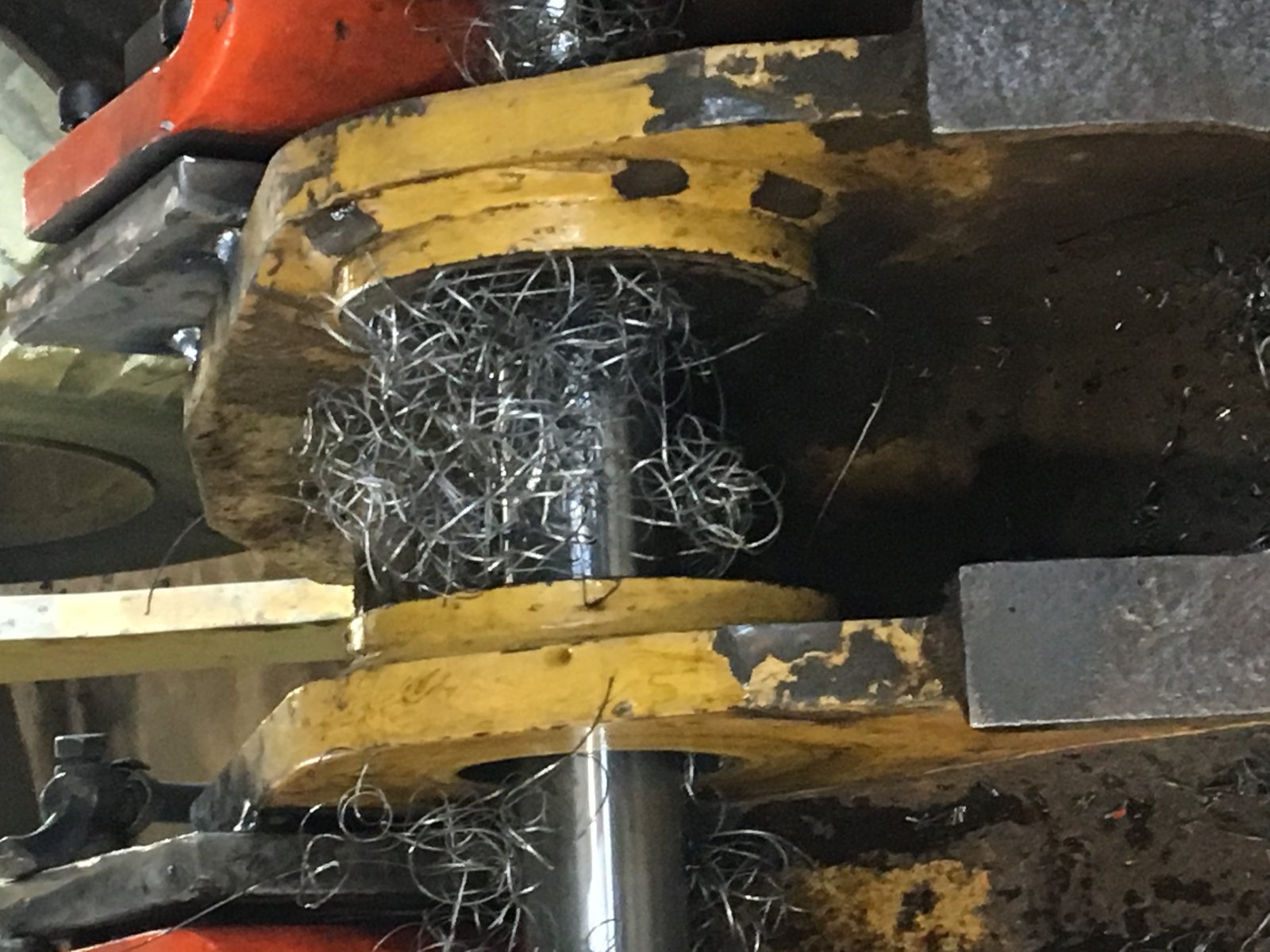
Step 1: Thorough Cleaning and Inspection. Remove all old grease, rust, and slag from the work area. You can't get an accurate measurement on a dirty surface. Use a wire wheel or a specialized cleaning tool to expose the base metal.
Step 2: Precision Alignment. Use centering cones for a quick initial setup. For final precision, switch to dial indicators. You're looking for perfect concentricity between the bar and the original bore center.
Step 3: Secure Mounting. Bolt your rotational drive and support bearings to the workpiece. Use the spherical bearings discussed earlier to allow for self-alignment. If the mounts flex during the cut, your bore won't be straight.
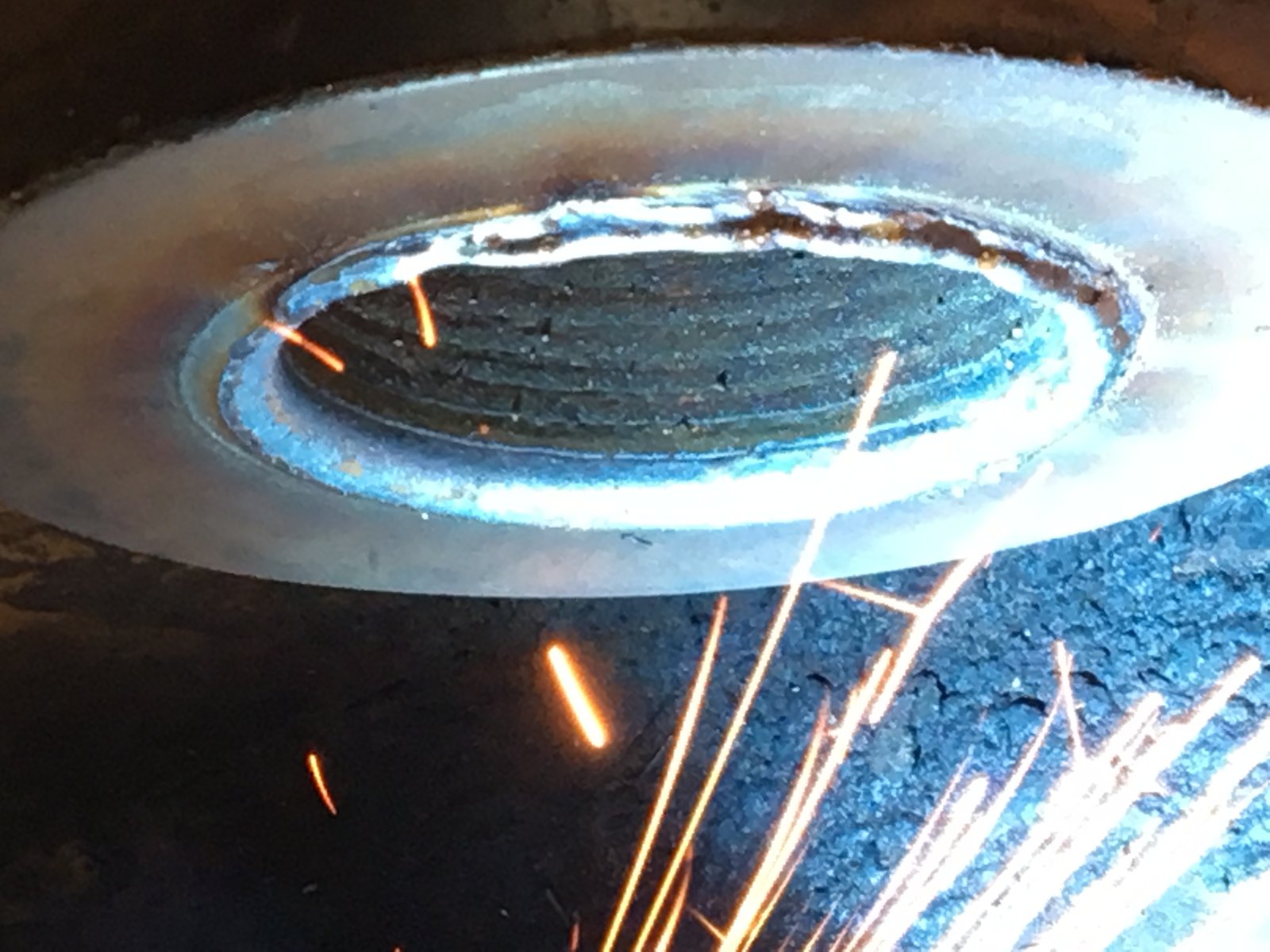
Step 4: Roughing and Finishing Passes. Take heavy roughing passes to remove the bulk of the material. Save the last 0.010 to 0.020 inches for a slow, steady finishing pass at a higher RPM to achieve a mirror finish.
The Secret to Perfect Alignment
Experienced technicians use the "four-point" check method. Measure the distance from the bar to the bore at the 12, 3, 6, and 9 o'clock positions. If these numbers don't match, your bar isn't centered. Don't forget to account for heat expansion. During long machining runs, the bar and the workpiece will grow. If you don't monitor this, you'll end up with a bore that's slightly smaller once the metal cools. Common mistakes in bearing placement, such as spacing them too far apart, often lead to bar sag and tapered bores. Keep your supports as close to the cutting area as the job allows.
Tooling and Speed Selection
Your cutting speed depends on the material's Surface Feet Per Minute (SFM). Harder steels require lower RPMs to prevent tool burnout. If the bore is severely oversized, use professional bore welding accessories to build the surface back up before you begin machining. This ensures you're cutting through consistent material rather than trying to bridge massive gaps. Maintain tool sharpness at all costs. A dull bit pushes against the metal instead of cutting it, which causes work hardening. This makes the surface so hard that even carbide inserts will struggle to bite. If you're ready to upgrade your field capabilities, explore our full range of American-made line boring machines to find the right fit for your shop.
The ROI of Investing in Bore Repair Systems Equipment
Investing in a portable line boring machine is a strategic financial decision. It isn't just a purchase; it's a shift in how you manage your fleet. By moving these repairs in-house, you capture the high margins that usually go to a specialized machine shop. You also eliminate the variables of third-party scheduling. When you buy direct from a US manufacturer like Bore Repair Systems, Inc., you secure a reliable supply chain. You won't wait weeks for a proprietary part to cross an ocean. We build our tools in New Hampshire for decades of service, not just a few years of light use.
The real profit comes from integrating line boring with bore welding. Most operations treat these as separate silos, but they're two halves of the same coin. When you can build up a surface and machine it back to spec in a single workflow, you become a full-service solution provider. This integration maximizes the utility of your equipment and ensures that egg-shaped pin holes are resolved correctly the first time. It turns a massive liability into a controlled, predictable maintenance task that keeps your iron earning money.
For those looking to expand their portfolio and explore Septic Field Installation, having the in-house capability to repair digging equipment is a significant advantage in the rural residential market.
Beyond the Hardware: Training as a Competitive Advantage
Precision machining is only as good as the person behind the bar. Operator skill is the deciding factor in whether a repair meets OEM specs or fails in the field. This is why Bore Repair Systems, Inc. includes integrated training programs with our equipment sales. We focus on reducing the "cost of mistakes" by teaching your team the nuances of alignment and tool pressure. Building an in-house maintenance team that can handle any bore failure gives you a massive competitive advantage. You stop being dependent on outside vendors and start controlling your own project timelines.
Next Steps: Building Your Custom Repair Kit
Start by identifying your most frequent repair needs. Look at the pin sizes on your most active machines to select the right base kit. Don't fall into the trap of buying a massive system for small, nimble repairs. It's better to have a machine that fits your daily workflow perfectly than one that sits in the corner because it's too heavy to set up. Consult with an expert to ensure all necessary linear boring machine accessories are included in your package. This ensures you have the centering cones, spacers, and cutting bits required for a professional start. Since comprehensive field maintenance often involves more than just bore repair, you can discover Ms. Hydraulics LLC for specialized resources on managing hydraulic systems effectively.
Ready to take control of your equipment repairs? Contact Bore Repair Systems, Inc. for a custom equipment quote and speak with a veteran engineer about your specific operational challenges.
Master Precision Repairs on the Job Site
Restoring worn pin holes doesn't have to involve expensive haulage or weeks of shop downtime. By applying the right alignment techniques and choosing a rigid, high-torque portable line boring machine, you bring shop-level precision directly to the iron. Success in the field depends on the synergy between professional-grade hardware and the operator's skill. It's about having the right tool for the specific steel you work with every day and the knowledge to use it correctly.
Bore Repair Systems, Inc. provides tools built for decades of industrial use, manufactured right here in the USA. We don't just sell you a machine; we provide the expert operator training necessary to ensure you achieve perfect results from your first cut. This combination of proven industrial durability and technical support eliminates the steep learning curve of in-field machining. It's time to stop paying for transportation permits and start controlling your own maintenance schedule.
Request a Quote for a Portable Line Boring System today and take the first step toward reducing your heavy equipment downtime. Your fleet is built to move dirt, and now you have the tools from Bore Repair Systems, Inc. to keep it in the field where it belongs.
Common Questions About Portable Line Boring
What is the difference between a line boring machine and a standard boring bar?
A line boring machine is the complete operational system, while a boring bar is the specific steel rod that holds the cutting tool. You can't restore a hole with just a bar; you need the rotational drive unit to provide torque and the feed unit to move the tool. The machine includes the mounts, bearings, and power source that allow the boring bar to function as a precision instrument.
Can one person operate a portable line boring machine?
Yes, most professional systems are designed for single-operator use. Compact machines for excavator repairs are lightweight enough for one technician to transport and set up using centering cones. While larger mining-scale systems might require a crane for initial bar placement, the actual machining process is typically handled by one person. This efficiency is a key factor in reducing total labor costs during field repairs.
How do I know if I need to weld a bore before machining it?
You must weld if the bore is oversized, egg-shaped, or has deep gouges that exceed your final target diameter. If you machine a worn bore without adding material, the finished hole will be too large for a standard replacement pin. Welding builds the surface back up so you can cut it back to original factory specifications. This ensures a perfect interference or clearance fit for the new hardware.
What power source is best for field-based line boring?
Electric power is the most practical choice for standard construction equipment repairs. It's lightweight, runs off common job-site generators, and provides consistent torque for bores up to 12 inches. Hydraulic power is reserved for massive industrial or mining bores where extreme torque is mandatory. For most daily field work, electric drive units offer the best balance of portability and mechanical performance.
How long does it take to set up a portable line boring machine on an excavator?
An experienced technician can typically set up a portable line boring machine in 45 to 90 minutes. This timeframe includes cleaning the area, mounting the support bearings, and performing the final alignment check with dial indicators. If the bores are severely damaged and require extensive welding prep, the total time before the first cut will increase. Using centering cones significantly speeds up the initial bar positioning phase.
What tolerances can I realistically achieve with a portable system?
You can achieve shop-quality tolerances of 0.001 inches or better with a high-quality system and proper technique. Precision depends on the rigidity of your mounting and the accuracy of your alignment. By using dial indicators and taking light finishing passes, you can meet or exceed the original manufacturer's fitment specifications. This level of accuracy is what prevents premature pin wear and ensures equipment safety.
Is training included when I buy a line boring machine from Bore Repair Systems, Inc.?
Yes, we include comprehensive training with every equipment sale to ensure your team is field-ready. We don't just ship a crate; we provide the technical knowledge needed to master setup, alignment, and cutting. This support helps you avoid common mistakes and ensures you get the maximum ROI from your new equipment immediately. Bore Repair Systems, Inc. focuses on making the process straightforward and repeatable.
Can I use a portable line boring machine for blind holes?
Yes, but you need specialized blind-bore tooling and a cantilevered mounting setup. Standard line boring relies on support bearings on both sides of the hole for maximum stability. For a blind hole, the bar is supported entirely from one side. This requires a very rigid bar and shorter stroke lengths to prevent deflection and tool chatter at the bottom of the bore where you can't place a support bearing.
Comments