

Building an In-House Equipment Repair Program: The 2026 Heavy Machinery Guide

Unplanned heavy equipment breakdowns currently cost between $500 and $20,000 per hour depending on the machine. When your fleet sits idle waiting for a third-party technician to arrive for a line boring job, you're hemorrhaging profit. Building an in-house equipment repair program isn't just a luxury for massive operations anymore. It's a pragmatic necessity for managers who value precision and time-efficiency. The 2026 landscape demands that you take back control of your asset lifecycles rather than settling for exorbitant outsourcing fees.
You know that relying on external schedules compromises your operational control and inflates your maintenance budget. We'll show you how to establish a highly profitable, self-sufficient shop that eliminates these bottlenecks and maximizes fleet utilization. This guide provides a roadmap for selecting portable machine tools and implementing training that turns your team into precision experts. We'll also examine how the latest EPA Right to Repair guidance supports your transition, ensuring your internal program remains both compliant and highly efficient.
Table of Contents
The Operational Case for Building an In-House Equipment Repair Program
Assessing Your Fleet and Identifying High-Frequency Repair Needs
Selecting Capital Equipment for Precision Bore and Structural Repair
Designing a Phased Implementation and Operator Training Strategy
Partnering with a Specialized Equipment Manufacturer for Long-Term Success
The Operational Case for Building an In-House Equipment Repair Program
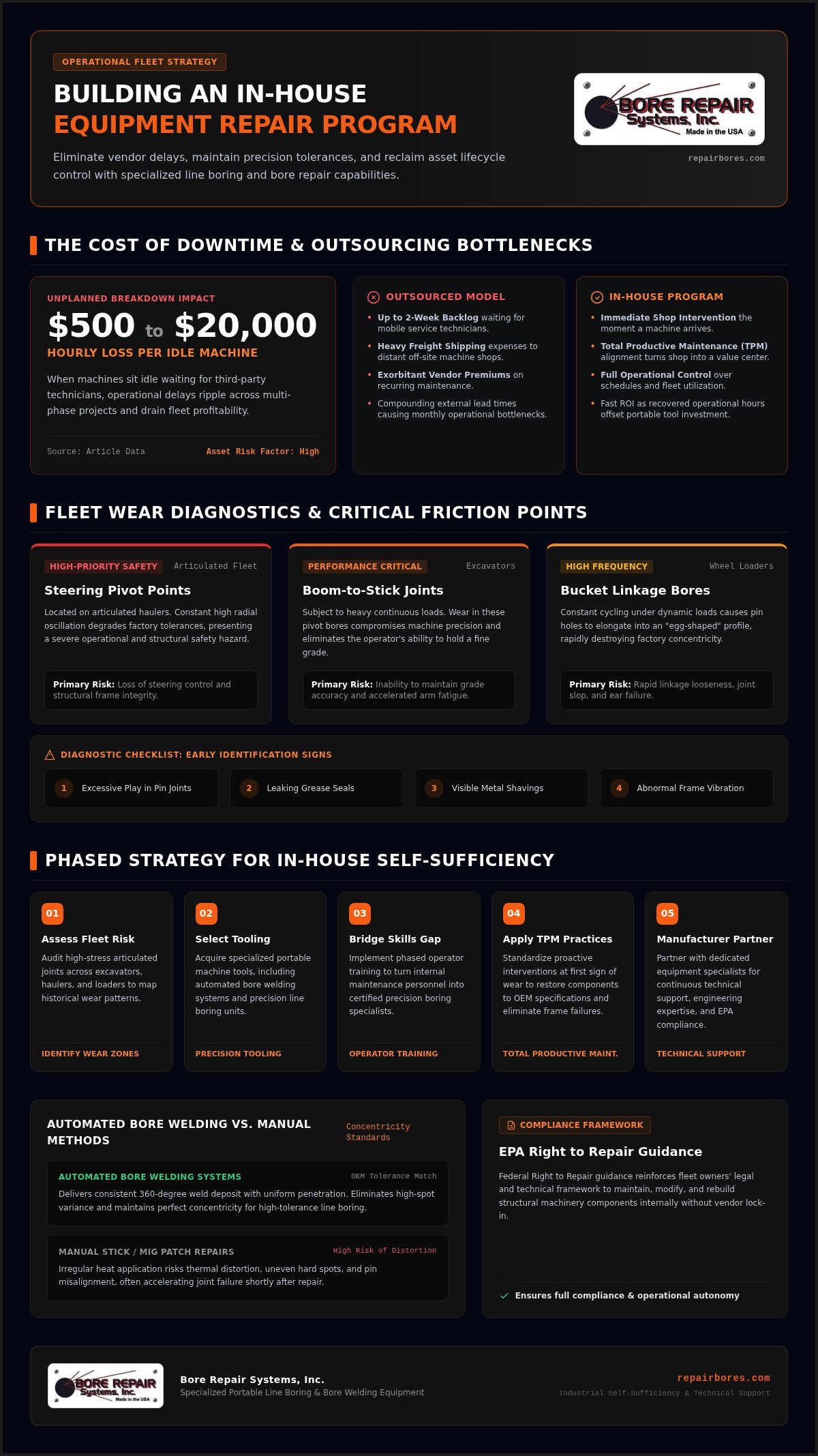
Building an in-house equipment repair program defines a shift in how heavy industrial fleets manage their assets. Instead of viewing structural repairs as external service events, managers integrate precision machining and welding capabilities directly into their shop workflows. This framework prioritizes self-sufficiency. It focuses on maintaining critical pivot points, such as hinge pins and linkage bores, without relying on the availability of outside vendors. By owning the tools and the process, you eliminate the middleman and take full responsibility for your fleet's mechanical integrity.
There's a direct, measurable correlation between internal repair capabilities and minimized machine downtime. Unplanned heavy equipment failures can cost an operation anywhere from $500 to $20,000 per hour. When you rely on third-party line boring technicians, you're at the mercy of their backlog. A two-week wait for a mobile repair truck isn't just an inconvenience; it's a massive drain on project profitability. Internalizing these repairs allows your team to start the reclamation process the moment a machine enters the shop.
Evaluating the Total Cost of Outsourcing
Outsourcing costs go far beyond the technician's hourly rate. You must calculate hidden expenses like heavy freight for shipping components to distant machine shops and the cumulative field delays that ripple through multi-phase projects. External lead times often compound, turning a simple bore repair into a month-long operational bottleneck. To understand the full economic impact of these choices, review the In-House Line Boring vs. Outsourcing: Heavy Equipment Repair Guide 2026. This analysis helps frame the decision to invest in internal tooling versus continuing to pay vendor premiums.
The Long-Term ROI of Internal Capabilities
Adopting principles of Total Productive Maintenance (TPM) shifts maintenance from a necessary expense to a strategic asset. Proactive structural interventions, such as immediate bore welding and line boring at the first sign of wear, significantly extend the lifecycle of your machinery. You're no longer letting small issues turn into catastrophic frame failures. Keeping these repair profits internal transforms your shop into a value center. Internal repair ROI is achieved when fleet utilization rates increase by even a small percentage, as recovered operational hours quickly offset the initial investment in specialized portable machine tools.
Assessing Your Fleet and Identifying High-Frequency Repair Needs
Successful fleet management requires a forensic understanding of wear patterns. In construction, mining, and agricultural sectors, the highest stress points are almost always the articulated joints. Constant oscillation under heavy loads degrades the factory tolerances of pivot pin locations. Over time, the radial force exerted by pins causes bores to elongate. This creates the "egg-shaped" profile that ruins machine precision and compromises operator safety. You can't ignore these structural ears; once the hole is out of round, the machine's efficiency drops significantly.
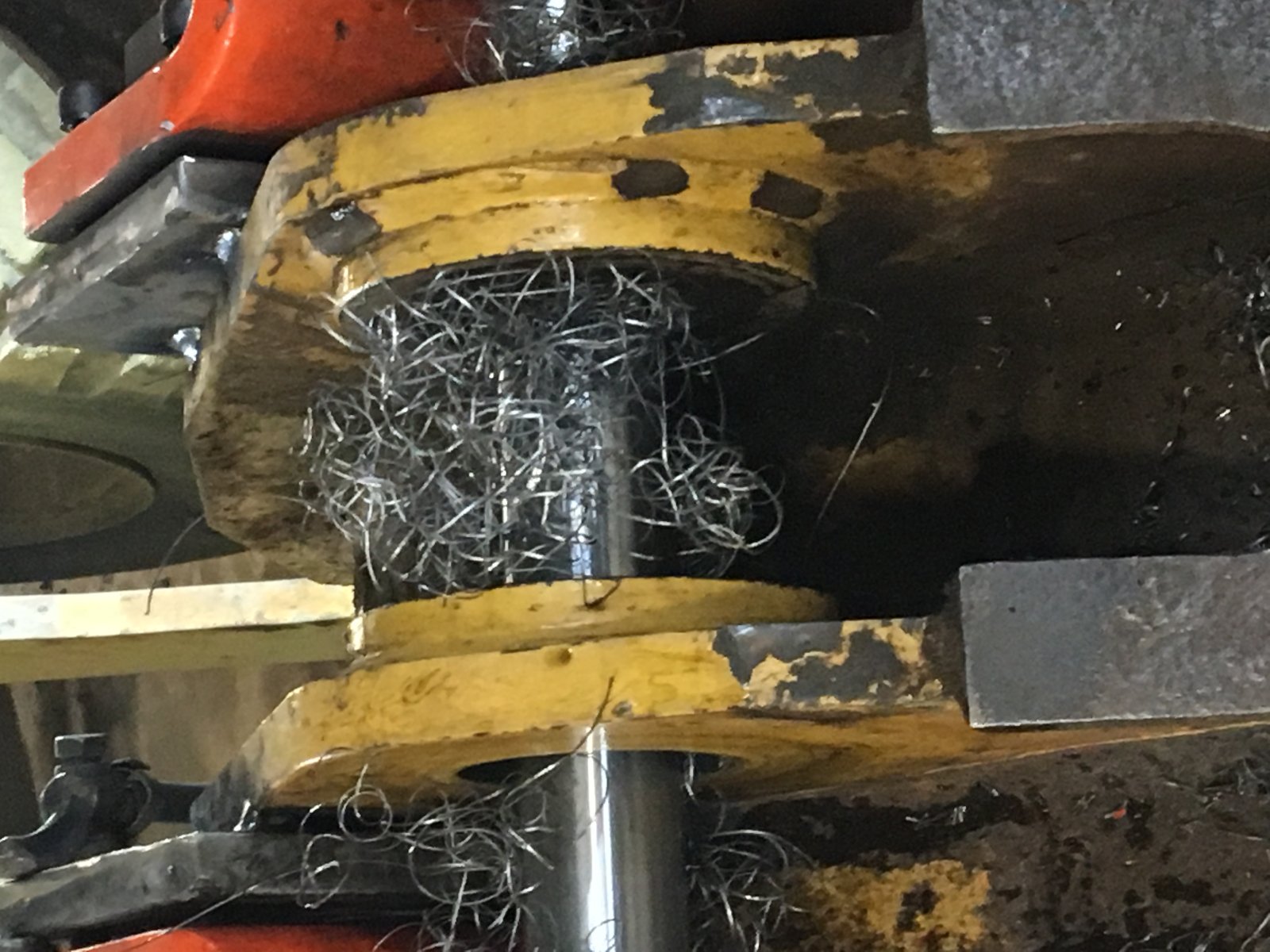
Identifying these issues early prevents catastrophic failure. Technicians should look for diagnostic signs like excessive play in joints, leaking grease seals, or visible metal shavings. If a pin isn't seated perfectly, the resulting vibration accelerates structural fatigue across the entire boom or frame. Prioritize repair classifications based on risk. A worn steering pivot on an articulated hauler is a high-priority safety risk, while a bucket linkage bore might be a performance-driven repair. Addressing these needs proactively is a core component of building an in-house equipment repair program.
Common Mechanical Failures in Heavy Equipment Bores
Excavators, loaders, and articulated haulers face unique stresses. Loader bucket linkages and excavator boom-to-stick joints are primary candidates for reclamation. When friction wears down these surfaces, the machine loses its ability to hold a precise grade. To fix these issues, technicians must employ specific Misaligned Bore Repair Techniques to restore the equipment to OEM specifications. Replacing entire components is rarely necessary if you catch the wear before it reaches the structural casting.
Mapping Fleet Vulnerabilities to Tooling Requirements
Effective planning for building an in-house equipment repair program starts with a detailed inventory. Map out the bore diameters across your entire fleet. A mix of compact loaders and massive mining shovels requires different bar sizes and mounting hardware. This data determines whether you need a field-based mobile setup or a dedicated shop station. By tracking how often specific pin holes fail, you can reduce maintenance costs by prioritizing the acquisition of tooling for your most frequent failure points. If you're unsure which machine sizes fit your current fleet, speak with a technical specialist to review your equipment list and determine the right tooling fit.
Selecting Capital Equipment for Precision Bore and Structural Repair
Setting up a shop requires more than just standard welding rigs. If you're building an in-house equipment repair program, you need machinery designed for the specific tolerances of heavy equipment pivot points. Generic shop tools can't maintain the concentricity required for modern industrial pins. You need a system where the boring bar and the welding unit work in tandem to restore factory specs. Professional-grade equipment must be rugged; it has to withstand the grit of a busy workshop and the harsh environments of field repairs without losing accuracy.
The Role of Portable Line Boring Machines
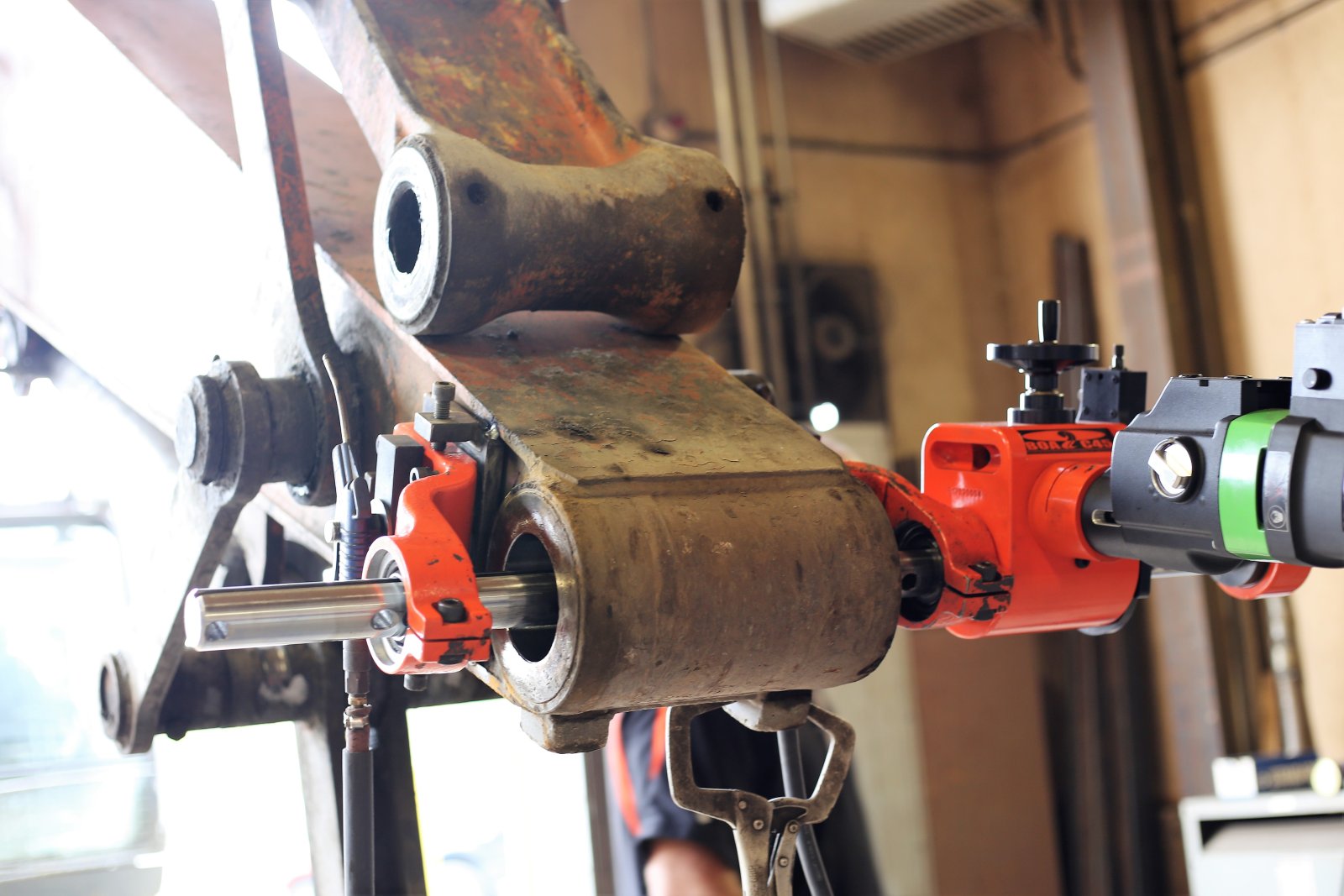
Portable line boring machines are the workhorses of structural reclamation. They restore concentricity by machining a worn, egg-shaped hole back to a perfect circle. When selecting a machine, consider your fleet's range. You'll need bar diameters that accommodate everything from small linkage pins on compact loaders to massive boom pivots on mining excavators. Versatile mounting kits are essential. They allow your technicians to secure the machine in diverse industrial configurations, whether the component is still attached to the chassis or sitting on a shop table.
Why Automated Bore Welders Are Non-Negotiable
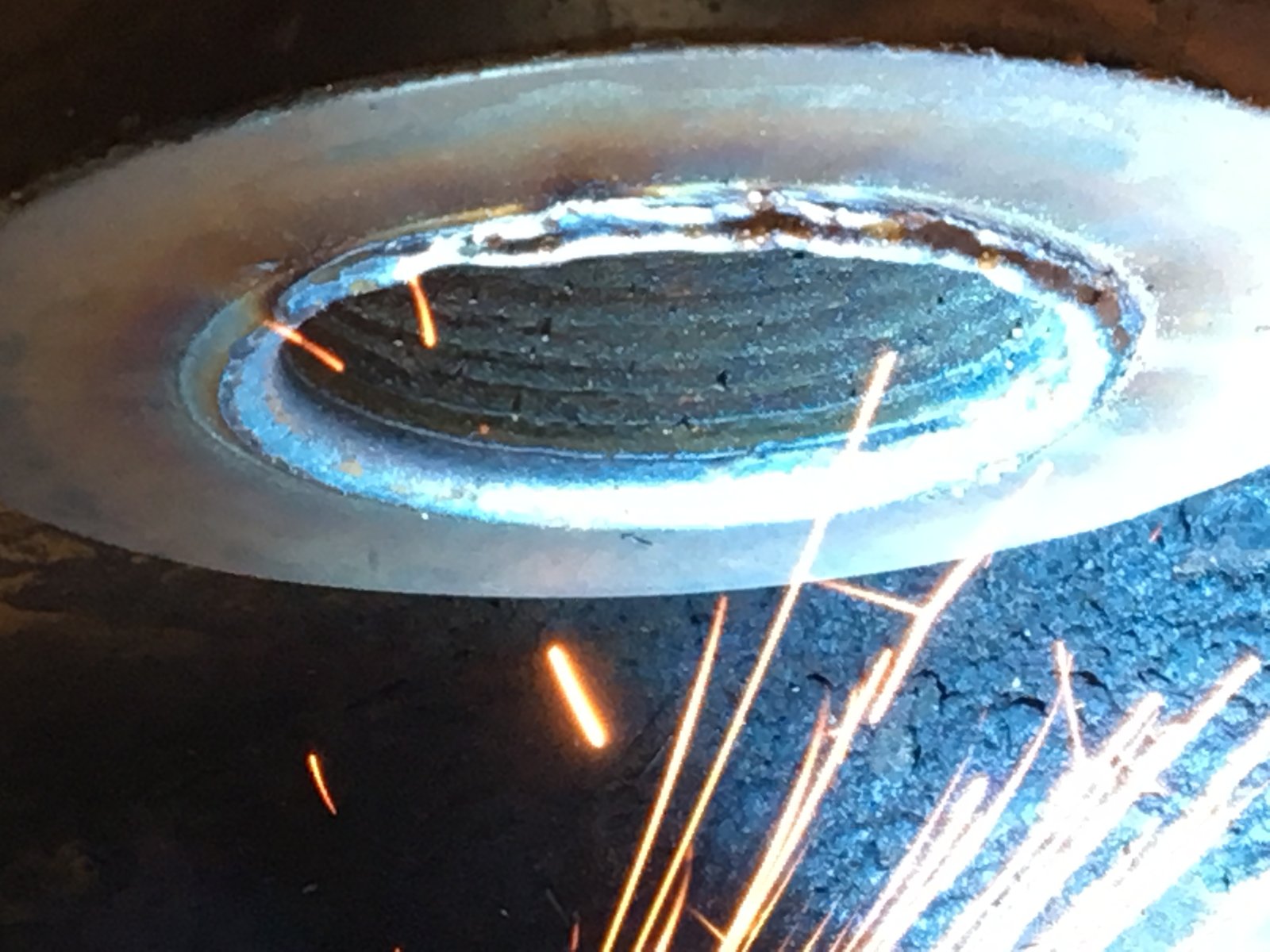
Precision is the difference between a repair that lasts years and one that fails in weeks. Automated bore welders lay down uniform, consistent beads inside worn cavities, creating a perfect foundation for the subsequent machining pass. Manual welding is prone to high error rates, heat distortion, and inconsistent penetration. Automated systems eliminate these variables, ensuring the bore is built up evenly before the final cut. To understand the technology behind these units, check out the Professional Bore Welder Systems: 2026 Buying Guide.
Essential Tooling Accessories and Consumables
The core machines are only as good as their support components. You'll need specialized jump-size kits to handle varying bore diameters and heavy-duty boring bars that resist tool deflection during deep machining passes. Deflection is the enemy of accuracy. If your bar flexes, your bore won't be straight. Investing in essential bore welding accessories for heavy equipment bore repair ensures your technicians have the reach and stability required for complex jobs. Proper accessory selection is a foundational step in building an in-house equipment repair program that delivers professional-grade results every time. High-torque motors and durable mounting systems ensure your tools stay productive rather than becoming another maintenance headache.
Designing a Phased Implementation and Operator Training Strategy
Launching an internal heavy equipment repair division requires a structured timeline to ensure safety and quality. You can't just buy a machine and expect immediate perfection. Success depends on a phased approach that prioritizes operator competence before moving to complex field repairs. Building an in-house equipment repair program is a marathon, not a sprint. It starts with establishing firm safety protocols for operating high-torque portable machine tools and automated welders.
There's a critical workforce skills gap between general shop welding and precision line boring. A welder understands heat and penetration; a line boring operator must understand concentricity, tool deflection, and tight tolerances. Bridging this gap is the biggest hurdle when you're building an in-house equipment repair program. You need a continuous evaluation system to monitor repair quality and ensure every job meets OEM specifications.
Workforce Development and Technical Training
Structured operator education is the best way to protect your investment. Ruining a boom or a frame through improper machining is an expensive mistake. Professional instruction ensures your team knows how to set up the bar, select the right feed rates, and integrate automated bore welders correctly. Using Line Boring Operator Training: Mastering Precision Bore Repair in 2026 as a benchmark provides the technical foundation your staff needs to handle high-value assets with confidence.
Phased Rollout from Shop to Field Operations
Start in a controlled shop environment. In Stage 1, focus on component reclamation using fixed setups where variables like wind, uneven ground, and limited power aren't factors. This allows your team to master the equipment without the pressure of a field breakdown. Once the team is proficient, move to Stage 2: mobile field repairs. This transition allows you to fix frames without dismantling the entire machine, saving days of labor. Ensure your shop has the right safety infrastructure, including dedicated ventilation for welding fumes and stable power supplies for high-torque motors. If you're ready to start training your team, contact our technical experts today to discuss a customized implementation plan.
Partnering with a Specialized Equipment Manufacturer for Long-Term Success
Generic industrial supply houses sell tools, but they don't sell solutions. When you're building an in-house equipment repair program, a catalog entry won't help you when a boring bar deflects on a 10-inch diameter mining pivot. You need a manufacturer that understands the mechanical stress factors of the field. Bore Repair Systems, Inc. operates as a neutral partner because we don't provide on-site repair services. Our success is entirely tied to your team's proficiency and the dependability of the machinery we provide. Sourcing directly from the manufacturer ensures you aren't just buying a kit; you're gaining a seasoned partner in industrial expertise.
The Value of Direct Technical Expertise
Access to engineering expertise is the ultimate risk-mitigation strategy for fleet managers. If a technician hits a snag during a complex field setup, they shouldn't be stuck on hold with a generic call center. Direct access to equipment designers accelerates troubleshooting and keeps the project moving. We provide extensive resources, including Bore Repair Systems product and training videos, to ensure your operators have a visual reference for every stage of the process. Sometimes, a standard kit doesn't fit a unique wear pattern. In those cases, custom accessory manufacturing ensures your program can handle any challenge without reverting to expensive third-party vendors.
Launch Your Internal Repair Program
Building an in-house equipment repair program transforms your shop from a reactive cost center into an agile internal powerhouse. You regain operational control over your critical fleet assets and eliminate the logistics bottlenecks caused by external lead times. The transition starts with a thorough facility asset evaluation. Identify the machines that drive your downtime and map their bore diameters to specific tooling requirements. Once you have a clear picture of your fleet's needs, you can coordinate the necessary training to bridge the skills gap. Don't wait for the next catastrophic failure to decide on a better way forward. Contact Bore Repair Systems to specify your in-house tooling package today and take the first step toward total mechanical self-sufficiency.
Take Control of Your Fleet's Mechanical Integrity
Building an in-house equipment repair program is the most pragmatic step you can take to protect your operational margins. You've seen how vendor lead times and high outsourcing fees compromise your project schedule. By internalizing these critical repairs, you reclaim control over your fleet's lifecycle and eliminate unnecessary downtime. Success relies on two foundational pillars: precision engineering and operator proficiency.
Bore Repair Systems provides the Made-in-USA industrial durability and precision engineering required for professional-grade results. We don't just sell machinery; we provide comprehensive operator training programs to ensure your team is competent from day one. Our decades of specialized focus on automated bore welding and portable machining mean we understand the mechanical hurdles you face in the field. Don't let external bottlenecks dictate your project timelines any longer.
Build your internal repair capabilities with Bore Repair Systems, Contact Us Today. Your team has the hands; we provide the tools and the knowledge to get the job done right.
Frequently Asked Questions
What are the core benefits of building an in-house equipment repair program?
The primary benefit is the immediate reduction of unplanned machinery downtime, which can cost up to $20,000 per hour for large assets. By internalizing your maintenance, you eliminate the logistics bottlenecks and long lead times associated with third-party mobile repair vendors. This strategy allows your shop to reclaim full operational control over critical fleet asset lifecycles, turning a recurring outsourcing expense into a highly profitable internal capability.
Do my technicians need specialized certification to operate automated bore welders?
No formal state or federal certification is legally mandated to operate these systems, but specialized technical training is critical for success. Operating automated bore welders requires an understanding of concentric alignment and precise heat input rather than just basic stick welding skills. Investing in structured manufacturer training ensures your operators achieve rapid proficiency and prevents the costly risk of ruining expensive machine components during the reclamation process.
What size portable line boring machine does an average heavy equipment fleet require?
An average fleet typically requires a versatile line boring system that can handle bar diameters ranging from 1.25 inches to 2 or 3 inches. This range covers the most common pivot points, including bucket linkages on compact loaders and main boom pivots on mid-sized excavators. Choosing a modular system with adaptable mounting kits allows a single machine to service diverse industrial machinery configurations across your entire inventory.
Can automated bore welding systems be used on-site without machinery disassembly?
Yes, portable machine tools are specifically designed to perform in-place repairs directly on the machine frame. This capability allows technicians to weld and bore worn cavities without dismantling large heavy equipment structures, saving days of heavy rigging labor. It is an essential strategy for transitioning from basic shop work to agile field operations, provided you have a stable power supply and proper ventilation.
How long does it take to train a standard welder to perform precision line boring?
A standard welder can typically master precision line boring within a few days of hands-on, structured instruction. While they already understand metallurgy and arc behavior, they must learn to navigate the precision machining aspects of the tool. Comprehensive technical training programs bridge this specific skills gap quickly, focusing on proper bar setup, feed rates, and preventing tool deflection during heavy machining passes.
What safety equipment is mandatory for an internal bore repair shop?
Mandatory safety infrastructure includes high-capacity local exhaust ventilation systems to manage toxic welding fumes inside confined cavities. Operators must also use personal protective equipment that properly fits each individual employee to comply with current construction safety mandates. Because portable machine tools utilize high-torque motors, stable mounting fixtures and clear emergency stop access are required to prevent mechanical binding hazards.
How do I calculate the payback period on line boring capital equipment?
Calculate the payback period by comparing your annual outsourcing expenses, including vendor premiums and freight, against the cost of the new machinery. You must also factor in the recovered revenue from minimized machine downtime, as avoiding just a few hours of catastrophic field delays can offset the initial investment. For most fleets, the capital equipment pays for itself within the first few major pivot point reclamation jobs.
Comments